
 +86-574-5680 8878

0102030405
Company News
Can You Replace the Battery in a Robotic Pool Cleaner?
2026-09-27
Can You Replace the Battery in a Robotic Pool Cleaner?
A cordless robotic pool cleaner is convenient because it does not require a floating power cable during operation.
But cordless operation also introduces an important long-term ownership question:
What happens when the battery eventually needs to be replaced?
This question is easy to overlook when buying a new pool robot. A new machine may have excellent runtime, strong cleaning performance and convenient cordless operation. However, rechargeable batteries naturally age with repeated use.
When battery capacity eventually decreases, the ability to replace the battery can make a significant difference in how the product is maintained.
So, can you replace the battery in a robotic pool cleaner?
It depends on how the robotic pool cleaner was designed.
Some products use highly integrated battery architectures, while others are designed with removable or replaceable battery modules.
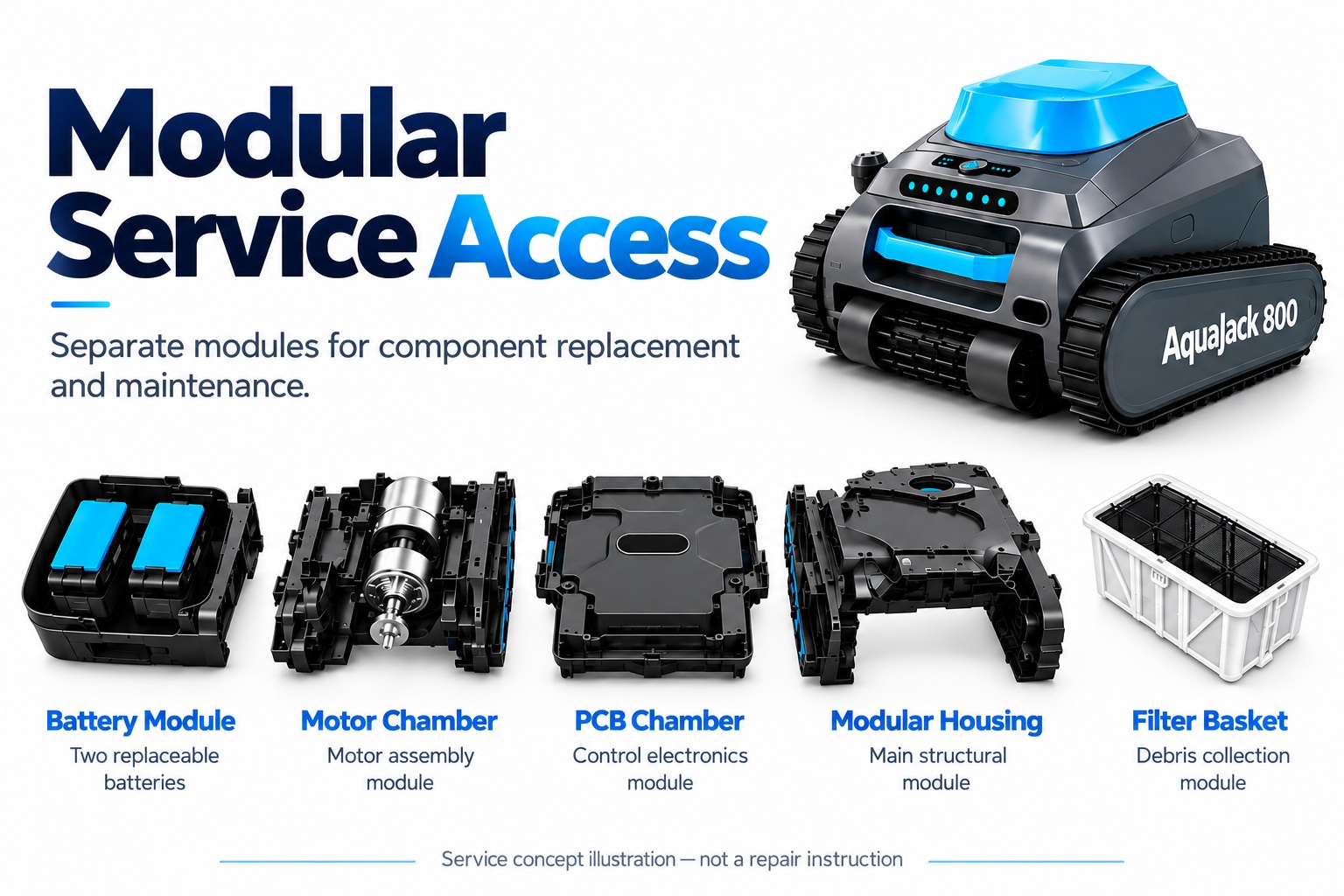
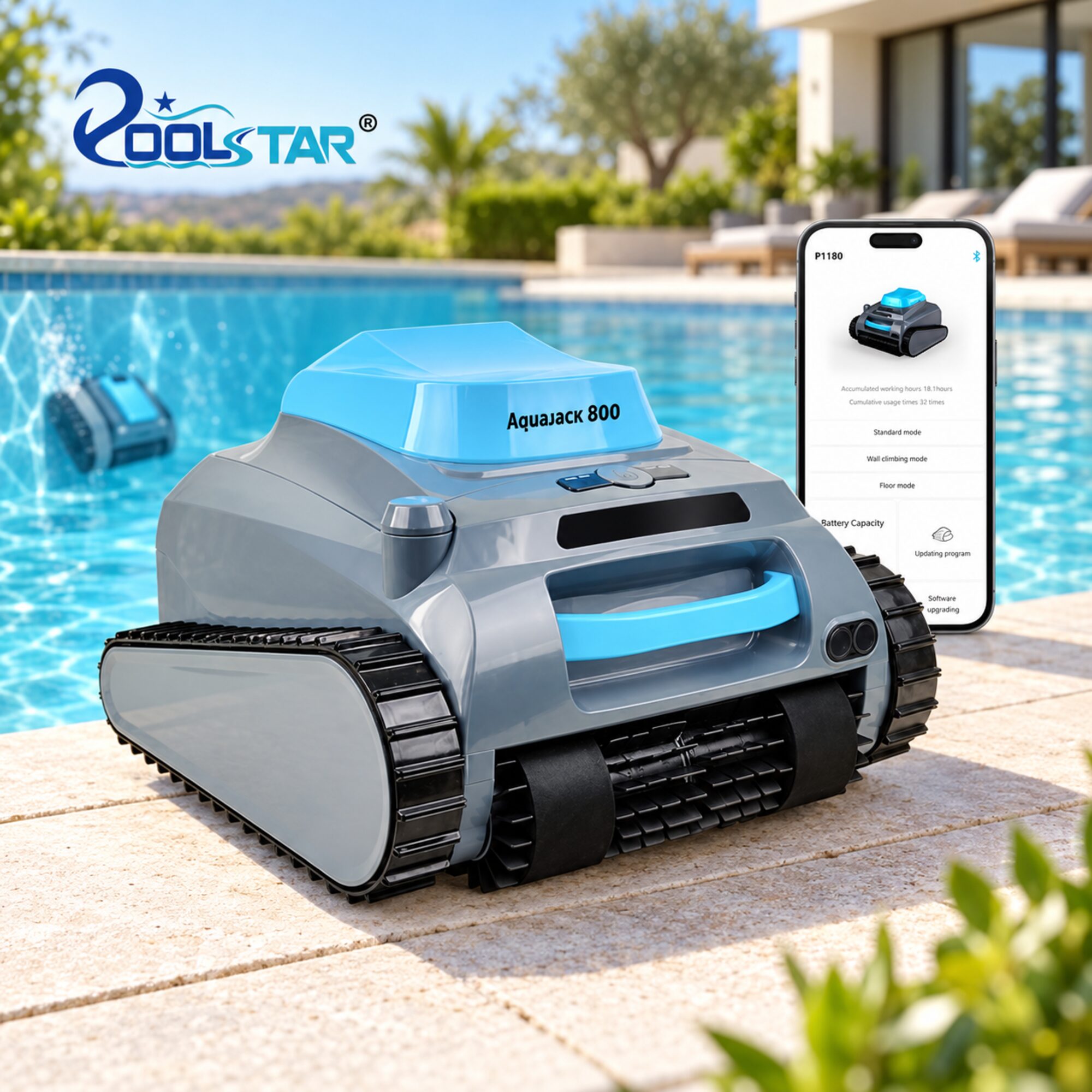
The AquaJack 800 takes the second approach.
Why Modular Design Matters in a Cordless Robotic Pool Cleaner
2026-09-27
Why Modular Design Matters in a Cordless Robotic Pool Cleaner
When choosing a cordless robotic pool cleaner, most buyers naturally focus on cleaning performance, battery runtime, navigation and price.
But there is another question that is often overlooked:
What happens when one of the important components eventually needs to be replaced?
A cordless robotic pool cleaner is still a piece of equipment with batteries, motors, electronics, seals and other working components. Over time, some of these components may require maintenance or replacement.
This is where modular design can make a meaningful difference.
A modular robotic pool cleaner is designed so that important components can be accessed, removed and replaced more easily, rather than treating the entire machine as one highly integrated unit.
For pool owners, this can mean easier maintenance and potentially longer product service life. For pool distributors, it can also mean a more service-friendly after-sales model.
Can a Robotic Pool Skimmer Replace Your Pool Filtration System?
2026-09-30
Can a Robotic Pool Skimmer Replace Your Pool Filtration System?
A robotic pool skimmer can automatically collect leaves and other floating debris from the water surface, but it is not a replacement for a pool’s main filtration system.
These two types of equipment perform different jobs.
A pool filtration system circulates pool water through a filter as part of the pool’s circulation system. A robotic pool surface skimmer operates independently on the water surface and collects floating debris such as leaves.
Understanding the difference is important when choosing pool cleaning equipment.
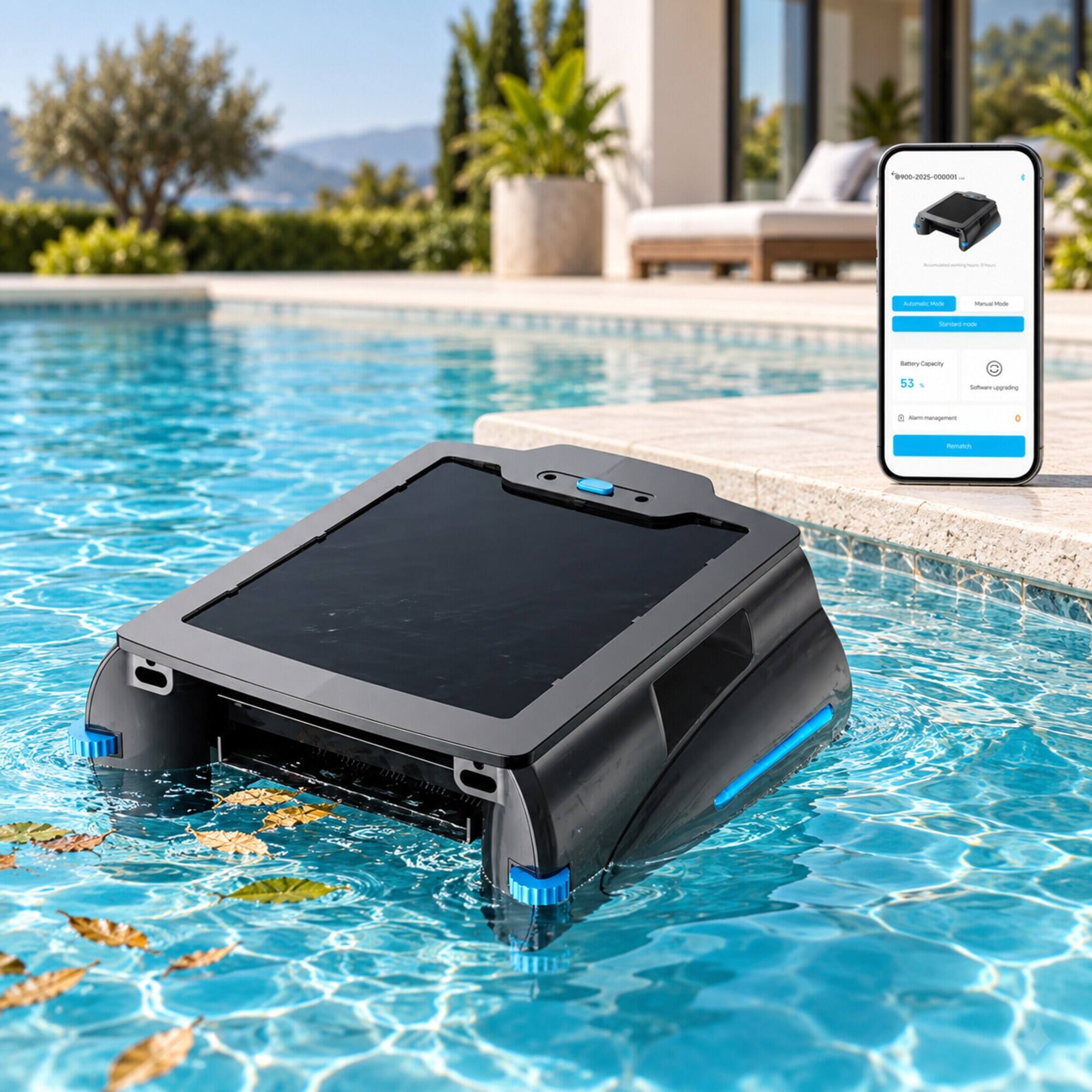
For example, AquaJack 900 is a cordless robotic pool surface skimmer designed specifically to collect leaves and other large floating debris from the pool surface. It complements the pool’s existing filtration and cleaning equipment rather than replacing it.
Why Filter Capacity Matters in a Robotic Pool Skimmer
2026-09-30
Why Filter Capacity Matters in a Robotic Pool Skimmer
When choosing a robotic pool surface skimmer, shoppers often focus on battery life, cleaning coverage, navigation, or price.
One specification that is sometimes overlooked is filter capacity.
For a robotic pool skimmer designed to collect leaves, filter capacity can have a direct impact on how often the debris container needs to be emptied.
This is particularly important for pools surrounded by trees or exposed to heavy seasonal leaf fall.
But there is an important distinction to understand:
Filter capacity is not the same as filtration fineness.
A larger filter can hold more debris without necessarily being designed to capture smaller particles.
Understanding this difference makes it easier to evaluate a robotic pool skimmer correctly.
What Should You Look for in a Robotic Pool Surface Skimmer?
2026-09-29
What Should You Look for in a Robotic Pool Surface Skimmer?
If your pool regularly collects leaves and floating debris, a robotic pool surface skimmer can reduce the amount of manual skimming required.
But not every automatic pool surface skimmer is designed in the same way.
Before choosing one, it is important to look beyond marketing terms such as "robotic," "automatic," or "cordless."
The more useful questions are:
-
What type of debris does it collect?
-
Where does it operate?
-
How much debris can it hold?
-
How often does it need to be emptied?
-
How does it move around the pool?
-
How is it powered?
-
How easy is it to maintain?
-
Is it designed for the type of pool you have?
For pool owners and professional pool-equipment buyers, these factors can be more useful than simply comparing the purchase price.
Pool Skimmer vs. Pool Surface Cleaner: Are They the Same?
2026-09-29
Pool Skimmer vs. Pool Surface Cleaner: Are They the Same?
When shopping for pool-cleaning equipment, you may come across several similar terms:
-
Pool skimmer
-
Pool surface skimmer
-
Pool surface cleaner
-
Robotic pool skimmer
-
Automatic pool skimmer
-
Robotic pool surface cleaner
Because these names sound similar, it is easy to assume they all describe the same type of product.
They do not always mean exactly the same thing.
The biggest source of confusion is that “pool skimmer” can refer to different products depending on the context.
Some skimmers are part of the pool's built-in circulation system. Others are manual tools. Newer products can also be robotic devices that move across the water surface and collect floating debris.
Understanding these differences makes it easier to choose the right cleaning equipment.
Robotic Pool Skimmer vs. Pool Vacuum: What's the Difference?
2026-09-28
Robotic Pool Skimmer vs. Pool Vacuum: What's the Difference?
When people search for automatic pool cleaning equipment, two product categories often get confused:
Robotic pool skimmers and pool vacuums.
Both can operate automatically. Both help reduce pool-maintenance work. And both collect debris.
But they are designed to solve different cleaning problems.
The simplest way to understand the difference is:
A robotic pool skimmer cleans the water surface. A pool vacuum cleans underwater areas, especially the pool floor.
For pools that regularly collect leaves, these two types of equipment can be complementary rather than interchangeable.
Robotic Pool Skimmer vs. Manual Pool Skimmer: What’s the Difference?
2026-09-28
Leaves floating on a swimming pool are one of the most common pool-maintenance problems.
For many years, the standard solution has been simple: use a telescopic pole and a manual skimmer net to remove the leaves.
💡
Today, pool owners also have another option: a robotic pool surface skimmer that automatically moves across the water and collects floating debris.
So what is the difference between a robotic pool skimmer and a manual pool skimmer?
The main difference is not necessarily what they clean.
🎯
Both are designed to remove floating debris from the pool surface. The major difference is how the cleaning work is performed.
A manual skimmer requires a person to do the work. A robotic surface skimmer automates the surface-cleaning process.
How Often Should You Remove Leaves From a Pool?
2026-09-28
How Often Should You Remove Leaves From a Pool?
Leaves are one of the most common types of debris found in outdoor swimming pools. During windy weather, autumn, or periods of heavy tree growth, leaves can accumulate on the water surface surprisingly quickly.
So how often should you remove them?
There is no single schedule that works for every pool. The right cleaning frequency depends on the number of trees around the pool, weather conditions, pool size, and how much debris typically falls into the water.
For many outdoor pools, the practical rule is simple:
Remove leaves whenever they accumulate on the surface rather than waiting for them to sink or build up.
For pool owners who deal with frequent floating debris, a robotic pool surface skimmer can make this routine much easier.
How to Keep Leaves Out of Your Pool During Fall and Windy Weather
2026-09-28
How to Keep Leaves Out of Your Pool During Fall and Windy Weather
For many outdoor pool owners, keeping the water clean is relatively easy during calm weather.
Then the wind picks up.
Leaves begin falling from nearby trees, branches move in the wind, and within a few hours the pool surface can be covered with floating debris.
This is especially common during autumn, but it can happen throughout the year in areas with mature trees or frequent wind.
The challenge is not simply removing the leaves once.
It is preventing a recurring buildup of floating debris and reducing the amount of manual cleaning required.
Fortunately, several practical strategies can help.