
 +86-574-5680 8878

0102030405
How to Remove Leaves From a Swimming Pool Without Skimming by Hand
2026-09-27
Leaves are one of the most common problems for outdoor swimming pools.
If your pool is surrounded by trees, even a clean pool can collect leaves within a few hours after strong wind or heavy weather. For many pool owners, the traditional solution is simple: pick up a pool net and skim the surface by hand.
But what if you want to reduce the amount of manual skimming?
There are several ways to reduce floating leaves in a swimming pool, including pool covers, automatic circulation systems, robotic surface skimmers and regular preventive maintenance.
The right solution depends on how many leaves your pool receives and how frequently you need to clean the surface.
Why Do Leaves Accumulate on the Pool Surface?
Leaves are relatively light and often remain floating on the water surface for some time before becoming waterlogged.
Wind can also push leaves across the pool, concentrating them in particular areas.
Pools located near:
-
Trees
-
Gardens
-
Parks
-
Open outdoor areas
-
Wind-exposed properties
may experience considerably more surface debris than enclosed or covered pools.
This means that removing leaves is often not a one-time cleaning task.
It can become a recurring part of pool maintenance.
1. Use a Manual Pool Skimmer
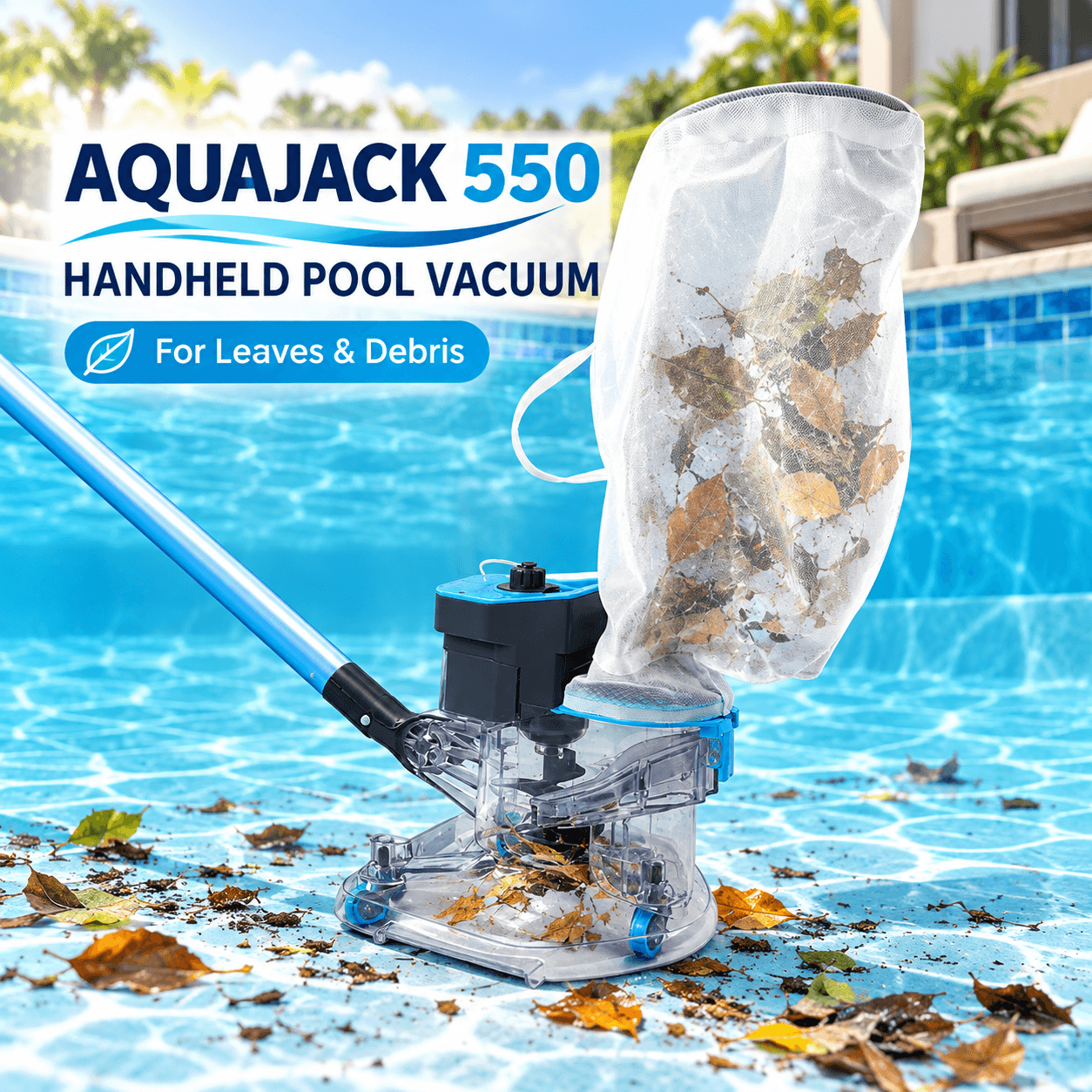
The simplest solution is a traditional manual pool skimmer.
A telescopic pole and skimming net can be used to collect leaves from the water surface.
Advantages
-
Low initial cost
-
Simple to use
-
No battery or electricity required
-
Useful for spot cleaning
-
Can remove large debris quickly
Limitations
The main limitation is labor.
Someone has to physically move the net across the pool surface.
For a pool that receives only a few leaves occasionally, this may be perfectly practical.
For a pool surrounded by trees, however, repeated manual skimming can become time-consuming.
2. Use a Pool Cover
A pool cover can prevent some leaves from entering the water in the first place.
When the pool is not being used, a suitable cover can reduce exposure to:
-
Leaves
-
Twigs
-
Wind-blown debris
-
Other outdoor contamination
A pool cover can therefore be an important part of preventive maintenance.
However, covers are not always practical for every situation.
If the pool is uncovered during the day, leaves can still accumulate.
The cover itself may also require cleaning.
For this reason, a pool cover and an automatic surface-cleaning solution can serve different purposes.
3. Maintain the Pool's Circulation and Filtration System
Your pool's circulation and filtration system plays an important role in overall water maintenance.
However, it is important to understand what the filtration system is designed to do.
A pool filtration system is primarily intended to circulate and filter pool water.
Large leaves floating on the surface may remain outside the main filtration flow.
This means that a pool can have clean, properly maintained water circulation while still having visible leaves floating on the surface.
In other words:
Water filtration does not necessarily eliminate the need for surface debris removal.
Surface cleaning and water filtration are related, but they are not the same task.
4. Remove Leaves Before They Sink
One practical strategy is to remove leaves while they are still floating.
Once leaves become waterlogged and sink, they can eventually settle on the pool floor.
At that point, surface skimming is no longer enough.
A pool-floor cleaner or vacuum may then be required.
This creates a simple maintenance principle:
The earlier floating leaves are collected, the less likely they are to become submerged debris.
For pools with frequent leaf accumulation, automatic surface cleaning can therefore be a useful part of preventive maintenance.
5. Use a Robotic Pool Surface Skimmer
A robotic pool surface skimmer is designed specifically for this purpose.
Instead of requiring a person to repeatedly skim the water with a net, the cleaner operates on the pool surface and collects floating debris automatically.
The basic process is:
Move across the surface
→
encounter leaves
→
collect debris
→
retain debris in the filter
This approach is particularly relevant for pools where surface debris is a recurring problem.
What Is the Difference Between a Robotic Surface Skimmer and a Pool Vacuum?
This distinction is important.
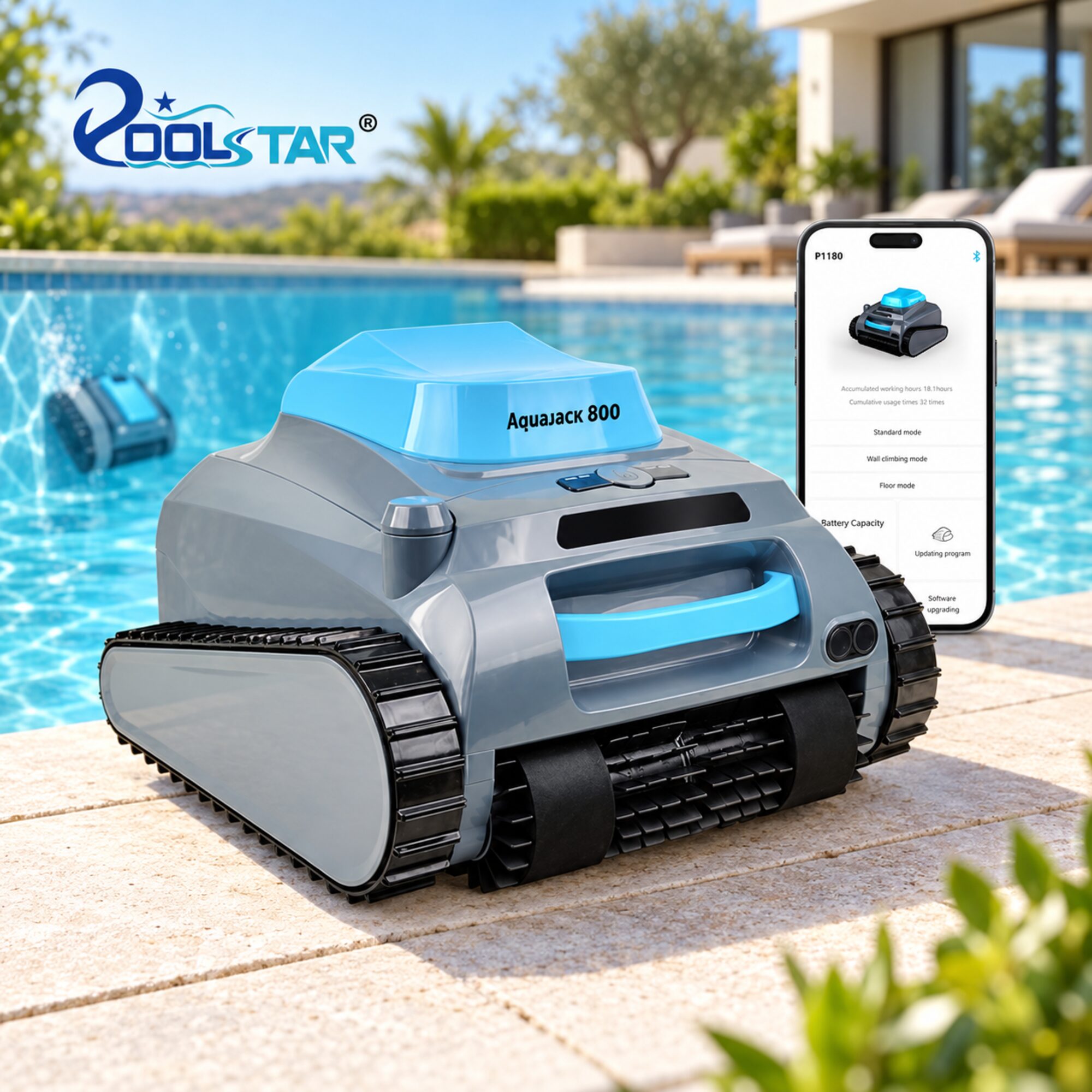
A pool vacuum is generally designed to clean submerged surfaces, especially the pool floor.
A robotic surface skimmer operates on the water surface.
| Cleaning Problem | Suitable Cleaning Approach |
|---|---|
| Leaves floating on water | Surface skimmer |
| Large floating debris | Surface skimmer |
| Dirt on pool floor | Pool vacuum / floor cleaner |
| Fine particles in circulating water | Pool filtration system |
| Leaves already settled on pool floor | Pool-floor cleaning |
These solutions are not necessarily alternatives.
A complete pool-maintenance routine may use several of them for different cleaning tasks.
6. Consider a Cordless Robotic Surface Skimmer
Cordless operation can make automatic surface cleaning more convenient.
A cordless robotic surface skimmer does not require a power cable trailing across the pool while it operates.
This allows the cleaner to move more freely across the water surface.
For routine leaf collection, the basic workflow can be simple:
-
Place the cleaner on the water.
-
Start the cleaning cycle.
-
Allow it to move across the pool surface.
-
Remove the cleaner when the cleaning cycle is complete.
-
Empty the collected debris.
-
Recharge the cleaner.
The exact operating procedure depends on the product design and manufacturer's instructions.
Featured Solution
AquaJack 900: Designed for Floating Leaves and Large Debris
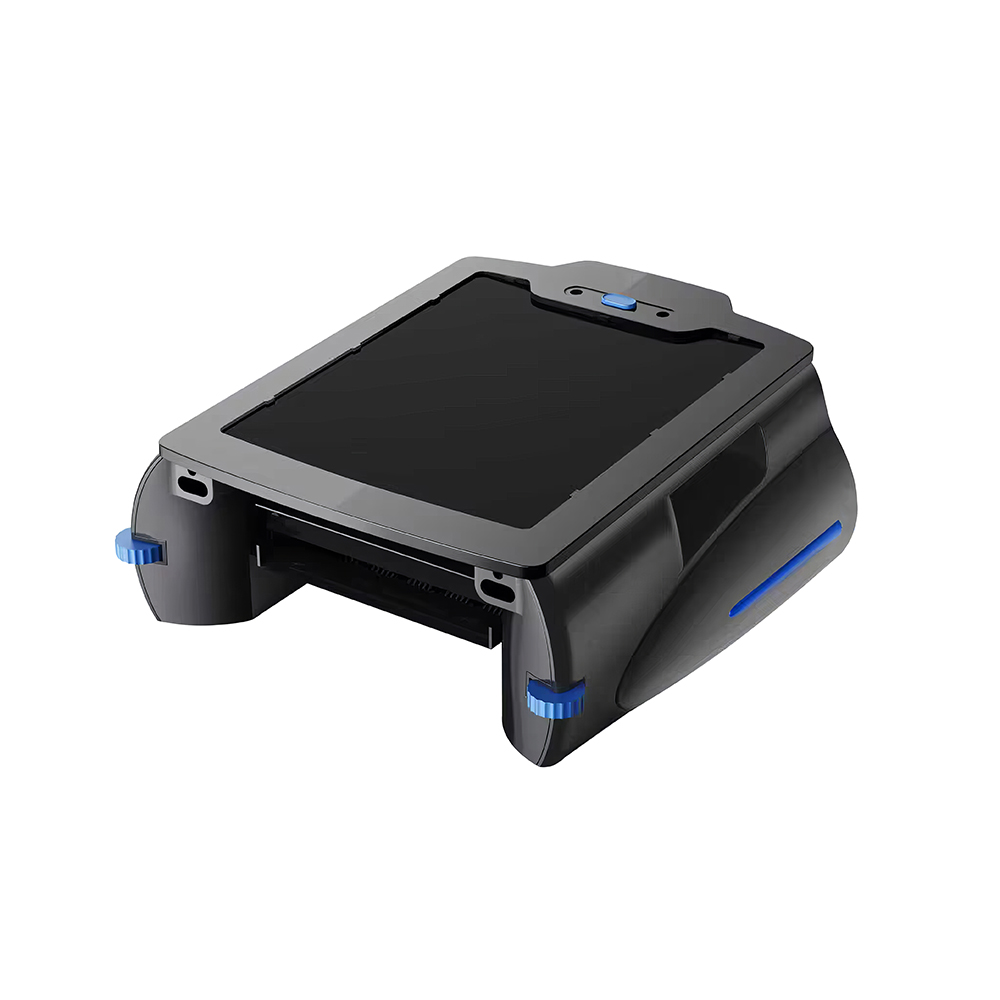
The AquaJack 900 is a cordless robotic pool surface skimmer designed specifically for collecting leaves and other large floating debris.
It operates on the pool surface rather than the pool floor.
One of its key features is a 10-liter single filter.
This large filter capacity is particularly relevant for leaf collection because leaves can occupy significant physical volume.
Instead of using a small filter intended for fine particles, AquaJack 900 is designed around the practical requirements of collecting larger floating debris.
Key characteristics include:
-
Cordless operation
-
Automatic pool surface cleaning
-
Rechargeable battery
-
10-liter filter capacity
-
Single large-capacity filter
-
Designed primarily for leaves and large floating debris
Why Does a 10-Liter Filter Matter for Leaves?
A filter's physical capacity can make a significant difference when dealing with leaves.
Imagine a pool located beneath several trees.
After a windy afternoon, the pool may contain a large amount of floating leaves.
If the collection container is small, it may need to be emptied frequently.
A larger filter provides more room for collected debris.
The AquaJack 900's 10-liter filter is therefore designed around a practical surface-cleaning problem:
collecting a substantial amount of leaves and large floating debris before the filter needs to be emptied.
This does not mean a 10-liter filter is intended for fine dust or pollen.
AquaJack 900 is primarily a large floating debris collector.
Can AquaJack 900 Replace a Pool Vacuum?
No.
AquaJack 900 and a pool vacuum are designed for different cleaning areas.
AquaJack 900
Designed for:
Pool surface → leaves and large floating debris
Pool Vacuum
Designed primarily for:
Underwater surfaces → submerged dirt and debris
If leaves are floating on the surface, AquaJack 900 addresses that specific problem.
If dirt has settled on the pool floor, a suitable pool-floor cleaner or vacuum is still required.
The two systems can therefore complement each other.
Can AquaJack 900 Remove Dust and Pollen?
AquaJack 900 is not primarily designed as a fine-particle filtration device.
Its single 10-liter filter is designed mainly for leaves and larger floating debris.
Dust, pollen and other very fine particles require different filtration characteristics and are primarily addressed through the pool's circulation and filtration system.
Understanding this difference is important when choosing pool-cleaning equipment.
A product should be selected according to the type of debris you need to remove.
Which Method Is Right for Your Pool?
There is no single solution for every pool.
If you only have occasional leaves:
A manual pool skimmer may be sufficient.
If your pool is covered when not in use:
A pool cover can significantly reduce the amount of debris entering the water.
If your pool receives leaves every day:
An automatic surface-cleaning solution may reduce repetitive manual work.
If debris has already settled on the pool floor:
A suitable pool vacuum or robotic pool-floor cleaner is more appropriate.
If your concern is fine particles:
The pool's circulation and filtration system becomes more important.
The key is to match the cleaning technology to the location and type of debris.
A Practical Pool Maintenance Strategy
For many outdoor pools, the most practical approach is not to rely on a single cleaning device.
Instead, think about pool maintenance in three layers:
Surface
Leaves and large floating debris
→ Manual skimmer or robotic surface skimmer
Pool Floor
Submerged dirt and debris
→ Pool vacuum or robotic pool-floor cleaner
Water
Fine suspended particles
→ Pool circulation and filtration system
Each system has a different role.
This approach also explains why a robotic surface skimmer should not be considered a replacement for a pool vacuum or the main filtration system.
Reduce the Repetitive Work of Pool Surface Cleaning
Removing leaves from a swimming pool is simple, but it can become repetitive when the pool is exposed to trees and wind.
Manual skimming remains a practical option for occasional cleaning.
For pools that receive floating debris regularly, however, an automatic surface skimmer can help reduce the amount of hands-on work required.
The AquaJack 900 is designed specifically for this application.
With cordless operation and a 10-liter single filter, it focuses on collecting leaves and other large floating debris directly from the pool surface.
The goal is straightforward:
Less manual skimming. More automated surface cleaning.
And for pools where leaves are a daily problem, that small change can make routine maintenance much easier.