
 +86-574-5680 8878


0102030405
Is 90 Minutes Enough for a Cordless Robotic Pool Cleaner? | Aquajack 810
2026-09-05
Is 90 Minutes Enough for a Cordless Robotic Pool Cleaner?
For many residential swimming pools, a 90-minute cleaning cycle can be sufficient—but runtime alone does not determine whether a robotic pool cleaner will complete the job.
The required cleaning time depends on:
-
Pool size
-
Pool shape
-
Floor and wall surface area
-
Selected cleaning mode
-
Navigation efficiency
-
Pool surface
-
Amount of debris
-
Filter condition
-
Battery condition
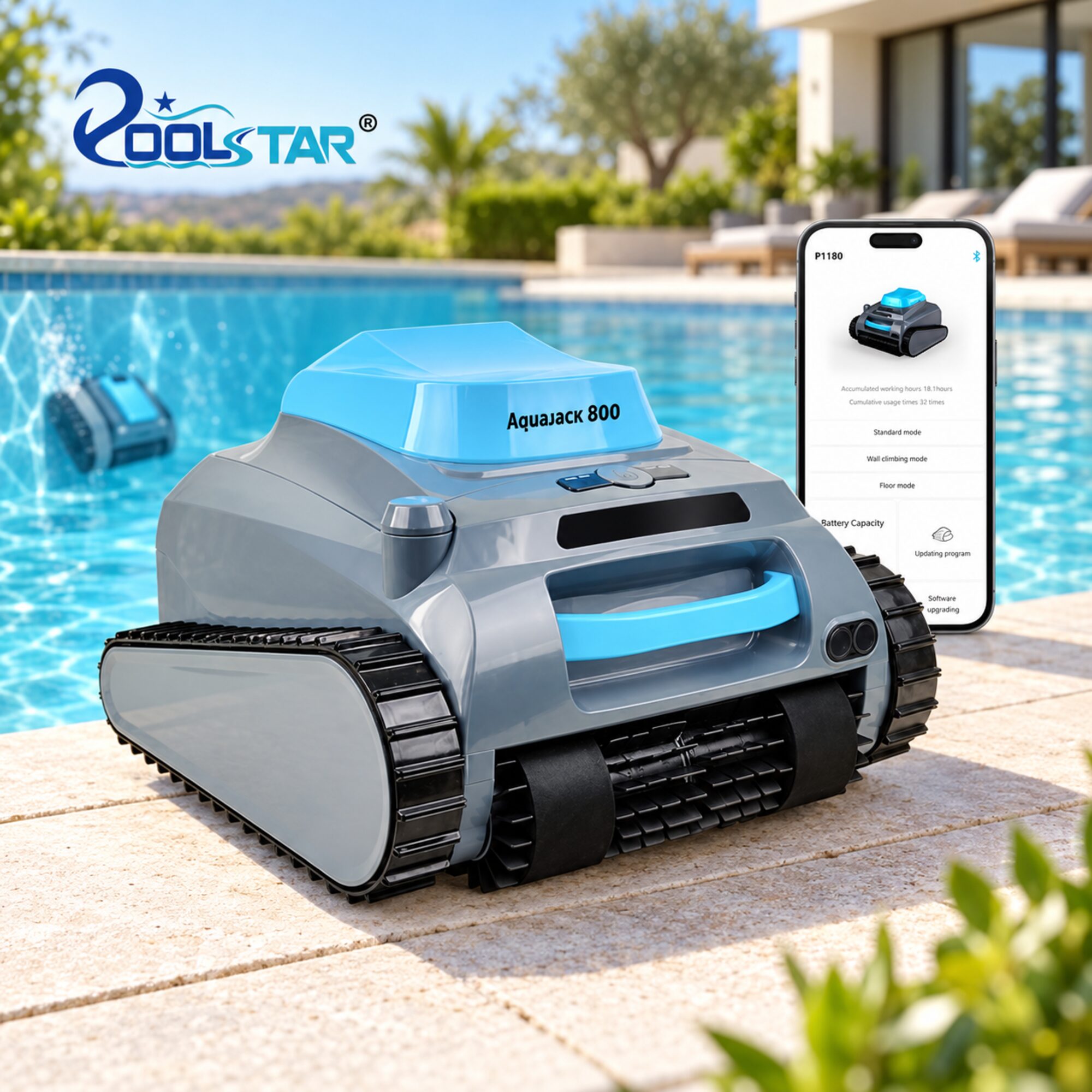
Aquajack 810 is designed as a completely cordless robotic pool cleaner with approximately 90 minutes of rated operating time and app-assisted control.
Its purpose is to provide convenient routine cleaning for residential pool owners who want to avoid hoses, floating power cables and complicated setup.
However, buyers should not choose a pool robot only by comparing 90, 120 or 180-minute runtime claims. A robot that moves efficiently and follows an effective cleaning route may achieve better coverage than a longer-running robot that repeatedly travels over the same area.
What Does a 90-Minute Runtime Actually Mean?
A rated runtime of 90 minutes normally refers to operation under defined test conditions.
It does not automatically mean that the robot will clean every pool completely in exactly 90 minutes.
Actual runtime and cleaning coverage may be affected by:
-
Water temperature
-
Pool surface resistance
-
Number of wall climbs
-
Cleaning mode
-
Debris load
-
Filter blockage
-
Battery age
-
Pool slope
-
Steps and obstacles
Floor cleaning generally requires less energy than repeated wall climbing. A full-pool cleaning cycle may therefore use the battery differently from a floor-only cycle.
The more useful question is not:
How many minutes does the battery last?
The more useful question is:
Can the robot clean the required area within one operating cycle?
Is 90 Minutes Enough for a Small Pool?
In many small residential pools, 90 minutes can provide sufficient time for routine floor cleaning.
This may include:
-
Small inground pools
-
Compact family pools
-
Courtyard pools
-
Plunge pools
-
Rigid above-ground pools
-
Pools with light daily debris
However, compatibility should still be confirmed according to the pool construction and surface.
A small pool with a simple rectangular shape is usually easier to clean than a pool of the same area containing:
-
Multiple steps
-
Benches
-
Sharp corners
-
Raised drains
-
Irregular walls
-
A steep deep end
For small and regularly maintained pools, an efficient 90-minute cordless cleaner can provide a practical balance between runtime, charging time, weight and cost.
Is 90 Minutes Enough for a Medium-Sized Pool?
It may be sufficient, depending on the required cleaning mode and route efficiency.
A medium-sized rectangular pool with moderate debris may be cleaned within one cycle if the robot:
-
Covers the floor efficiently
-
Does not repeat the same route excessively
-
Transitions effectively between cleaning areas
-
Maintains adequate water flow
-
Does not become trapped around drains or steps
If the owner wants the robot to clean the floor, walls and waterline during the same cycle, the required coverage becomes much larger.
In this case, buyers should compare the total pool surface area with the effective coverage of Aquajack 810—not only the pool length.
Is Aquajack 810 Suitable for Large Pools?
Aquajack 810 should be matched carefully to the size and complexity of a large pool.
A 90-minute cordless robotic pool cleaner may still be useful in a large pool when:
-
The user selects a specific cleaning zone or mode
-
The pool is cleaned frequently
-
Debris levels are moderate
-
The robot follows an efficient route
-
The owner does not require complete floor, wall and waterline cleaning in every cycle
For very large pools or pools with heavy debris, buyers may require:
-
A longer-runtime model
-
More frequent cleaning cycles
-
A larger filter
-
A different battery configuration
-
A model designed for greater total coverage
Poolstar distributors should explain these differences clearly so customers can select the correct Aquajack model for their pool.
Why Pool Size Should Not Be Measured by Length Alone
Robotic pool cleaner listings often describe compatibility using pool length, such as:
-
Suitable for pools up to 10 metres
-
Suitable for pools up to 12 metres
-
Suitable for pools up to 30 feet
-
Suitable for pools up to 40 feet
Pool length is easy to understand, but it does not describe the complete cleaning area.
Consider two pools with the same length:
-
Pool A is shallow, rectangular and has a flat floor.
-
Pool B has a deep end, slopes, steps and a larger wall area.
Although both pools may be described as 10-metre pools, Pool B requires the robot to travel over a much larger and more complicated surface.
A better assessment includes:
-
Pool length
-
Pool width
-
Average depth
-
Floor area
-
Wall area
-
Waterline length
-
Number of steps and ledges
-
Pool shape
-
Required cleaning modes
This approach is particularly important for wall-climbing pool robots.
Why Navigation Can Be More Important Than Runtime
Long runtime does not guarantee complete cleaning.
A robotic pool cleaner may operate for two or three hours but still leave areas untouched if its route is inefficient.
Common navigation problems include:
-
Repeating the same path
-
Spending too much time near one wall
-
Becoming trapped around a drain
-
Missing corners
-
Failing to transition between the floor and wall
-
Stopping before reaching distant areas
Efficient navigation allows the robot to use its available battery more effectively.
When evaluating Aquajack 810, buyers and distributors should examine:
-
How quickly it covers the pool floor
-
Whether it reaches different walls
-
How frequently it repeats a route
-
How it reacts to obstacles
-
Whether it becomes trapped
-
How much of the pool is cleaned before the cycle ends
The result per minute is more important than the number of minutes alone.
How Do Cleaning Modes Affect Runtime?
Different cleaning modes place different demands on the drive and suction systems.
Floor Cleaning
Floor-only cleaning is generally the least demanding mode because the robot remains on a horizontal surface.
It may be the best choice when:
-
Leaves have settled on the bottom
-
The walls were recently cleaned
-
The pool receives frequent maintenance
-
The user wants to focus the available runtime on the floor
Wall Cleaning
Wall climbing requires the robot to maintain traction against a vertical surface.
This can increase energy use because the cleaner must:
-
Transition from the floor to the wall
-
Maintain stable contact
-
Overcome gravity
-
Control movement near the upper wall
Waterline Cleaning
Waterline cleaning requires controlled movement near the top of the wall.
If the robot repeatedly climbs from the floor to the waterline, the total energy requirement may be higher than floor-only cleaning.
Combined Cleaning
A combined cycle provides broader coverage but divides the available operating time between the floor, walls and waterline.
Owners should select the mode according to the current condition of the pool rather than choosing complete cleaning automatically every time.
How Does Debris Affect a 90-Minute Cleaning Cycle?
The amount and type of debris can change the effective cleaning result.
A lightly used covered pool may contain only small amounts of dust and insects.
An uncovered pool surrounded by trees may contain:
-
Large leaves
-
Seeds
-
Twigs
-
Pollen
-
Insects
-
Fine plant material
Heavy debris can affect cleaning in several ways:
-
The filter fills more quickly.
-
Water flow may gradually decrease.
-
Large leaves may partially block the suction opening.
-
The robot may require more passes.
-
The filter may need to be cleaned before the entire pool is completed.
For pools with seasonal leaf problems, shorter and more frequent cleaning cycles may be more effective than waiting until a large amount of debris has accumulated.
Does Filter Condition Affect Battery Runtime?
Yes. A dirty filter can reduce water flow and overall cleaning efficiency.
As the filter fills, the cleaner may need to work under more demanding conditions. Reduced water flow can also affect debris pickup and surface contact.
Before starting a cleaning cycle, users should check that:
-
The filter is correctly installed
-
The filter is not already full
-
The suction opening is clear
-
Brushes and moving parts are free from hair or plant material
A clean filter helps the robot make better use of its available 90-minute operating cycle.
Does Pool Surface Affect Runtime?
Pool surfaces create different levels of traction and resistance.
Common surfaces include:
-
Concrete
-
Plaster
-
Tile
-
Mosaic
-
Fiberglass
-
Vinyl liner
-
Painted finishes
A rough surface may create more movement resistance. A very smooth surface may make wall climbing more difficult.
The robot may use additional time and energy if it repeatedly attempts to climb a surface without maintaining stable contact.
For this reason, distributors should test Aquajack 810 on locally common pool finishes.
A product that performs well in a tiled European pool may behave differently in a plaster pool in the United States or a fiberglass pool in Australia.
Is a 90-Minute Cordless Pool Robot Better Than a Corded Cleaner?
Neither type is automatically better for every pool owner.
A cordless robotic pool cleaner offers:
-
No floating power cable
-
No cable tangling
-
Faster setup
-
Easier storage
-
Easier transportation
-
No electrical connection beside the pool during cleaning
A corded robotic pool cleaner provides continuous power during its programmed cycle but requires the owner to position, manage and store the cable.
Aquajack 810 is designed for users who prioritize convenience and cable-free operation.
It may be a suitable choice when:
-
The pool is cleaned regularly
-
One cleaning cycle can cover the required area
-
The user prefers simple setup
-
Storage space is limited
-
The owner does not want to manage a floating cable
A longer-runtime or corded model may be more appropriate when the pool is very large or requires extended daily cleaning.
How Often Should Aquajack 810 Be Used?
Cleaning frequency depends on the environment.
Aquajack 810 may need to operate more often when:
-
The pool is uncovered
-
Trees surround the pool
-
The weather is windy
-
The pool receives frequent use
-
There is heavy dust or pollen
-
The area has experienced a storm
For routine maintenance, regular cleaning helps prevent debris from building up.
A 90-minute robot used several times per week may maintain a pool more effectively than a longer-running robot used only after the pool becomes heavily contaminated.
How Can Pool Owners Get Better Results from Aquajack 810?
To make better use of each cleaning cycle:
-
Remove large branches, stones and pool toys.
-
Clean the filter before operation.
-
Select the correct cleaning mode.
-
Use floor-only mode when the walls do not require cleaning.
-
Run the robot regularly instead of waiting for heavy debris.
-
Check for obstacles around steps and drains.
-
Keep brushes and moving components clean.
-
Charge the battery according to the instructions.
-
Remove and clean the robot after operation.
-
Store the cleaner in a dry and shaded location.
These steps improve cleaning efficiency without requiring a longer battery runtime.
How Should Distributors Evaluate Aquajack 810?
Importers and distributors should test effective coverage rather than relying only on the 90-minute figure.
A useful evaluation should include:
Pool Coverage Test
Record:
-
Pool dimensions
-
Surface material
-
Cleaning mode
-
Total runtime
-
Floor area covered
-
Wall climbs
-
Missed areas
-
Repeated routes
Debris Test
Use a measured quantity of:
-
Leaves
-
Sand
-
Dust
-
Insects or comparable test material
Record the amount collected and the amount left behind.
Wall-Climbing Test
Evaluate:
-
Floor-to-wall transition
-
Surface traction
-
Climbing frequency
-
Waterline movement
-
Behaviour on different surfaces
Battery Test
Measure:
-
Actual runtime
-
Charging time
-
Performance after repeated cycles
-
Low-battery behaviour
-
Runtime in different cleaning modes
Maintenance Test
Measure:
-
Filter-removal time
-
Filter-cleaning time
-
Ease of reassembly
-
Access to wear components
-
Availability of spare parts
These tests provide more useful sales information than repeating a factory runtime claim.
Frequently Asked Questions
Is 90 minutes enough for a cordless robotic pool cleaner?
It can be sufficient for many small and medium residential pools. Suitability depends on pool size, shape, surface, debris level, selected mode and navigation efficiency.
How long does Aquajack 810 run?
Aquajack 810 is presented with approximately 90 minutes of rated cordless operation. Final runtime should be confirmed against the specification of the version supplied in each market.
Can Aquajack 810 clean a large pool?
It may be suitable for selected cleaning tasks in a larger pool, but buyers should compare effective coverage with the complete floor, wall and waterline area.
Does wall climbing reduce battery runtime?
Wall climbing usually requires more energy than movement across a flat pool floor. Actual runtime can therefore vary according to the selected cleaning mode.
Does Aquajack 810 clean pool walls?
Aquajack 810 is presented as a wall-climbing robotic pool cleaner. Performance depends on pool surface, geometry, filter condition and operating environment.
Can Aquajack 810 be controlled by an app?
Aquajack 810 supports app-assisted operation. The exact available functions and underwater communication limitations should be confirmed for the supplied version.
Does Aquajack 810 require a power cable?
It requires charging outside the pool but operates without a floating power cable during the cleaning cycle.
Is Aquajack 810 suitable for inground pools?
It is designed for residential pool cleaning, but pool dimensions, surface and geometry should be checked before purchase.
Does a longer runtime always mean better cleaning?
No. Navigation, route coverage, filtration, brushes and debris collection all influence the final result.
How often should the filter be cleaned?
The filter should be inspected after every cycle and cleaned whenever debris has accumulated.
Conclusion: Choosing the Right Runtime for the Right Pool
A 90-minute cordless robotic pool cleaner can be sufficient when its runtime, navigation and cleaning modes are correctly matched to the pool.
Aquajack 810 is designed for residential pool owners who want:
-
Completely cordless operation
-
Approximately 90 minutes of cleaning
-
App-assisted settings
-
Floor and wall maintenance
-
Simple setup
-
Easier storage
-
Freedom from hoses and floating cables
The correct decision should not be based on runtime alone.
Pool owners should consider the total cleaning area, pool geometry, debris level and required cleaning mode.
Distributors should evaluate effective coverage through local testing rather than presenting 90 minutes as a universal guarantee for every pool.
The best robotic pool cleaner is not necessarily the one that operates for the longest time. It is the one that completes the required cleaning efficiently, reliably and with minimum effort from the user.
For Aquajack 810 specifications, market configurations, OEM/ODM opportunities or distributor testing support, contact Poolstar for detailed information suitable for your country.