
 +86-574-5680 8878


0102030405
Modular vs. Sealed Robotic Pool Cleaners: What Is the Difference?
2026-09-28
When choosing a cordless robotic pool cleaner, most buyers compare cleaning performance, battery runtime, navigation, pool size, and price.
But there is another factor that is often overlooked:
How is the robotic pool cleaner designed to be serviced when a key component eventually needs attention?
Two robotic pool cleaners may look similar from the outside while having very different internal architectures.
Some use a highly integrated construction, where major components are tightly integrated into the main body. Others use a more modular architecture, where selected components can be accessed, removed, serviced, or replaced separately.
Understanding this difference can help pool owners, distributors, and pool equipment brands make better long-term product decisions.
1. What Is a Modular Robotic Pool Cleaner?
A modular robotic pool cleaner is designed around separate functional modules or assemblies. These may include: Battery module, Motor or drive module, Control electronics, Filter system, Drive components, and other replaceable assemblies.
One of its most important advantages is serviceability by design.
2. What Is a Highly Integrated Robotic Pool Cleaner?
A highly integrated robotic pool cleaner combines more of its components into a compact overall assembly. While it offers compact packaging and manufacturing efficiency, accessing internal components can be more difficult when repairs are needed.
3. Modular Does Not Mean Less Waterproof
Modular design and waterproof design are not opposites. A well-designed modular robotic pool cleaner ensures proper sealing, water-resistant interfaces, and protected electrical connections.
4. Battery Architecture Is One of the Biggest Differences
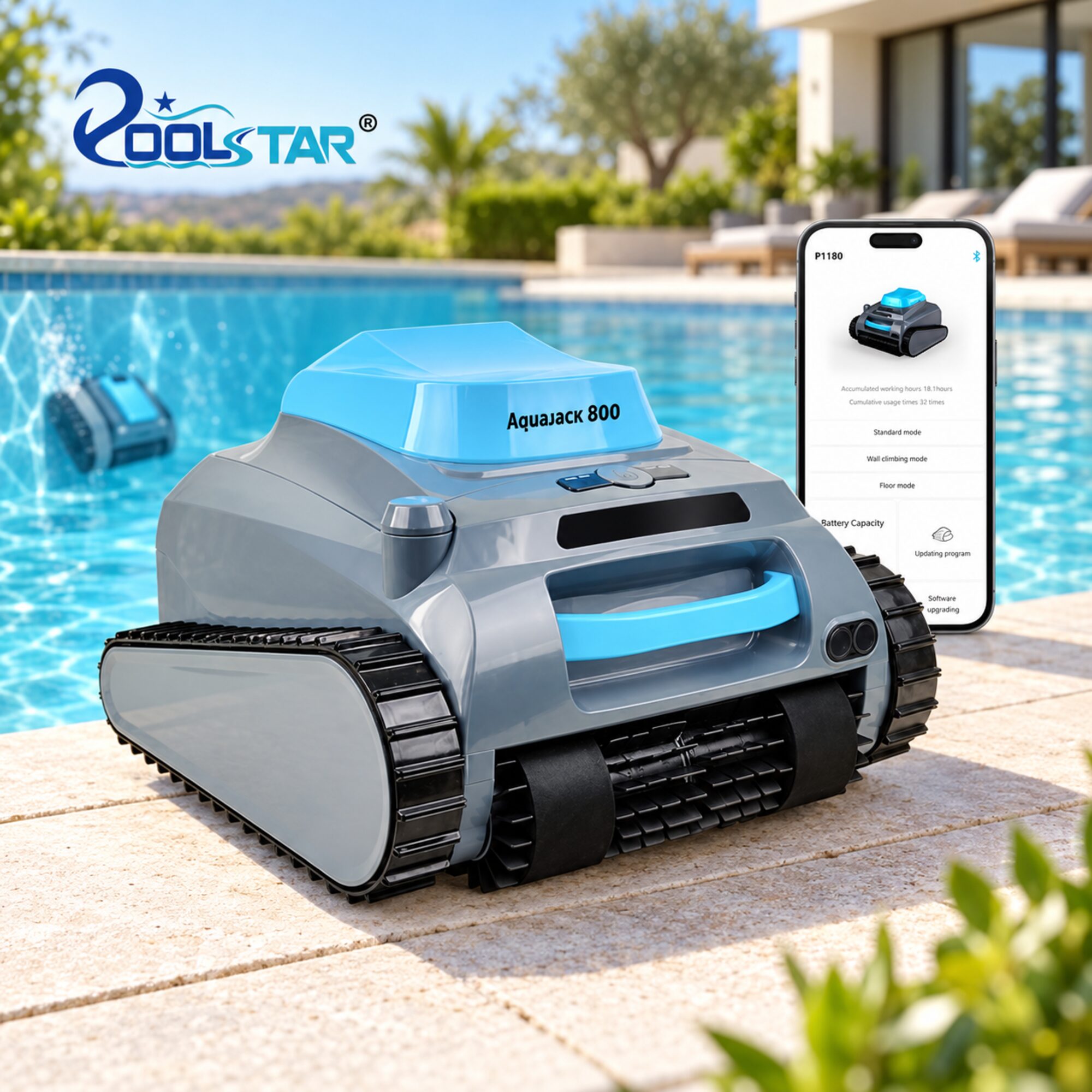
In a modular architecture, the battery can be designed as a separate serviceable module, which is the philosophy behind the AquaJack 800.
AquaJack 800: Removable Battery Module
The AquaJack 800 uses a removable battery module designed to make battery replacement and servicing easier.
5. Motor Serviceability Matters Too
A modular architecture can separate the motor or drive assembly into a serviceable module. The AquaJack 800 is designed with a serviceable motor module, embodying the core idea of Serviceability by Design.
6. Modular vs. Highly Integrated: A Practical Comparison
| Design consideration | Modular architecture | Highly integrated |
|---|---|---|
| Battery access | Module-level | Extensive disassembly |
| Motor servicing | Serviceable module | More complex |
| Spare parts | Specific modules | Larger assemblies |
| Waterproofing | Proper sealing | Proper sealing |
7. Why Serviceability Matters to Pool Owners
A serviceable design provides a pathway for dealing with individual components when required, moving away from treating the entire machine as a disposable assembly.
8. Why Serviceability Matters to Pool Distributors
When a product has a modular architecture, service situations can be handled at the component level, providing a more structured approach to after-sales management.
9. Modular Design Can Support a Longer Product Lifecycle
Modular architecture creates the possibility to replace the component that needs attention and continue using the product.
10. One Battery or Two? Serviceability Meets Runtime
The AquaJack 800 can accommodate two battery modules for up to four hours of total cleaning operation, offering both daily flexibility and long-term serviceability.
11. What About a Battery That Eventually Fails?
With a replaceable battery architecture, the battery module can be treated as a specific service component rather than requiring the replacement of the entire cleaner.
12. What Should Buyers Look for?
When comparing, ask: Is the battery removable? Is the motor serviceable? Are spare parts available? How was the product designed to live after the day of purchase?
13. Why AquaJack 800 Takes a Modular Approach
The AquaJack 800 is Built to Be Serviced with a removable battery module, serviceable motor module, and modular construction.
14. The Bigger Question: What Happens After the Warranty Period?
Product architecture determines how many options are available. Modular design makes maintenance part of the product strategy from the beginning.
15. Modular Design Is About More Than Repair
It influences product development, manufacturing, after-sales service, spare parts strategy, and overall product lifecycle.
16. A Different Way to Think About Robotic Pool Cleaners
Serviceability deserves a place on the specification sheet because a robotic pool cleaner is a long-term product that may require maintenance and support.
FAQ: Modular Robotic Pool Cleaners
What is a modular robotic pool cleaner? It uses separate functional modules for key components.
Is a modular pool robot waterproof? Yes, it still requires appropriate sealing.
Can the AquaJack 800 battery be replaced? Yes, it uses a removable battery module.
Can AquaJack 800 use two batteries? Yes, up to four hours of total cleaning operation.
Final Takeaway
The AquaJack 800 takes a clear approach: Removable Battery, Serviceable Motor, and Modular Architecture. Built to be serviced, designed for a longer life.