
 +86-574-5680 8878

0102030405
Reading Pool Robot Spec Sheets: A Buyer's Methodology for Suction, Battery, Filtration and Coverage Claims
2026-08-06
A procurement-side methodology for reading and validating pool robot product hub spec sheet claims on suction (kPa / GPM), battery runtime (minutes per charge), filtration capacity (liters), and pool coverage (m\u00b2). Includes the industry benchmark deviation table between nominal claims and bench-tested performance, and the 7-step buyer methodology for converting spec sheets into procurement decisions. For a concrete worked example, the AquaJack 800 spec sheet is annotated throughout. The smart features of modern robots article covers the navigation and obstacle avoidance spec sheet items.
TL;DR — The 4 Metrics and the 7-Step Methodology
For pool robot procurement teams, four spec sheet metrics drive 90% of the decision framework: suction (kPa or GPM), battery runtime (minutes per charge), filtration capacity (liters), and coverage area (m\u00b2). Each of these metrics deviates from nominal claim to bench-tested performance: suction is overstated by +20-40%, runtime by -15-25%, filtration by -15-30%, and coverage by -25-40% when obstacles and slopes are present. The 7-step buyer methodology converts these spec sheets into procurement decisions: identify the four target metrics, benchmark against the real operating scenario, apply deviation tolerance, screen alternates, audit the supplier, order sample for bench test, and negotiate bulk contract with explicit deviation clauses.
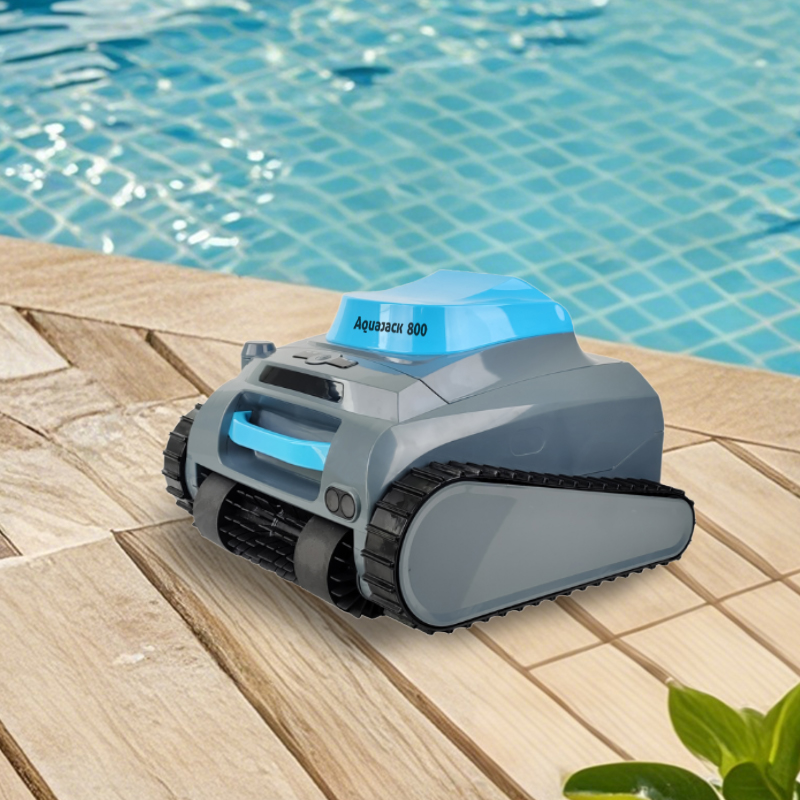
The 7 Common Spec Sheet Metrics on Cordless Pool Robot Listings
A typical cordless robotic pool cleaner spec sheet contains 7-12 metric categories, but four of them drive 90% of the procurement decision framework. The remaining metrics (motor voltage, charging current, charging time, dimensions, weight, cord length for corded models) are secondary and rarely drive the final selection. The four primary metrics are: suction (kPa static pressure or GPM / L-per-min flow rate), battery runtime (minutes per single charge), filtration capacity (liters of debris basket or filter bag), and pool coverage area (m\u00b2 or ft\u00b2). Each metric has a different physical meaning and a different deviation profile.
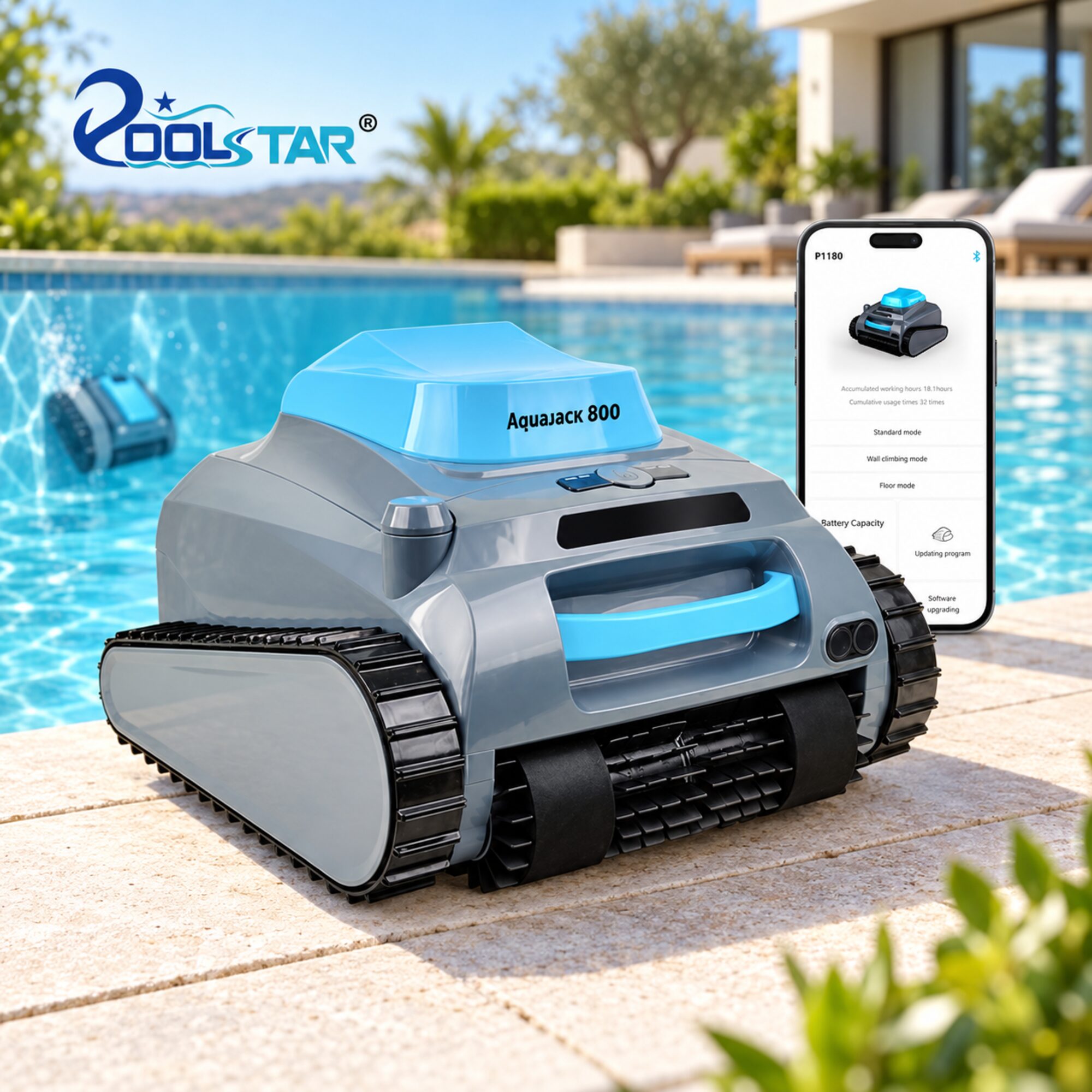
Suction is the most marketed metric and the most often overstated. kPa (kilopascal) measures the static pressure the pump can generate when the nozzle is blocked; GPM (gallons per minute) or L/min measures the flow rate when the nozzle is open. A pump with high kPa but low GPM is good for picking up heavy debris (sand, leaves) that resist flow; a pump with high GPM but low kPa is good for sweeping suspended debris (algae, fine particles). Most cordless pool robots publish one or both numbers; the AquaJack 800 spec sheet, for example, cites both 78.2 GPM (296 L/min) flow and the underlying static pressure. For BOFU comparison purposes, kPa and GPM are not directly interchangeable \u2014 they measure different physical quantities.
Battery runtime is the second-most-marketed metric. Most cordless pool robots publish "up to X minutes" of continuous runtime on a single charge, measured at the manufacturer's reference test conditions (typically 25\u00b0C water, flat-bottom pool, no debris load, default cleaning mode). The AquaJack 800 publishes 240 minutes; the AquaJack 700 publishes 120 minutes. Real-world runtime deviates from this nominal value because water temperature, pool shape, debris load, and selected cleaning mode all affect the battery drain. Industry benchmark deviation is -15-25% from nominal runtime, meaning a 120-minute nominal rating typically delivers 90-102 minutes in real conditions.
Nominal Suction vs Bench-Tested Debris Pickup Deviation
The suction metric on a spec sheet is a pump characteristic, not a debris pickup guarantee. The pump can generate a certain kPa / GPM at the nozzle, but the actual debris pickup depends on the filter mesh size, the brush design, the water flow path inside the cleaner, and the debris type. Industry benchmark deviation between nominal suction and bench-tested debris pickup is +20-40%, meaning a cleaner that publishes "100 L/min flow" typically picks up debris at a rate equivalent to 60-80 L/min in controlled bench tests with sand, leaves, hair, algae, and sediment.
The deviation is larger for certain debris types than others. Sand and sediment (heavy, dense) typically show lower pickup deviation (closer to nominal) because the pump's static pressure is the limiting factor. Leaves and hair (light, fibrous) typically show higher pickup deviation (further from nominal) because the filter mesh and brush design are the limiting factors. Algae and fine particles (very small, suspended) show the highest pickup deviation because the filter mesh cutoff determines capture rate, not the pump.
For buyers, the practical implication is that suction claims should be benchmarked against the buyer's specific debris type. A buyer with a leaf-heavy pool should prioritize brush design and filter mesh over suction kPa; a buyer with a sand-heavy pool should prioritize suction kPa over brush design. The AquaJack 800 spec sheet documents the brush type and filter mesh alongside the suction metrics, allowing side-by-side benchmark against the buyer's debris profile.
Nominal Runtime vs Real Continuous Operation Deviation
Nominal runtime is published under ideal test conditions: 25\u00b0C water temperature, flat-bottom pool with no slopes, no debris load, and default cleaning mode. In real operation, runtime deviates by -15-25% from nominal because: (a) cold water (below 20\u00b0C) reduces battery capacity by 10-20%, (b) slopes and deep ends force the motor to work harder to climb walls, reducing effective runtime by 10-15%, (c) heavy debris load forces the filter to clog faster, increasing pump back-pressure and battery drain, and (d) turbo or max-power cleaning modes consume 30-50% more battery than default mode.
For the AquaJack 700 with 120-minute nominal runtime, real-world operation in a typical in-ground pool (25\u00b0C water, mild slope, light debris, default mode) typically delivers 95-105 minutes. The AquaJack 800 with 240-minute nominal runtime typically delivers 195-220 minutes in the same scenario. Premium cordless pool robots in the same class (e.g., Aiper, Beatbot, Dreame) typically achieve similar deviation profiles, suggesting that the -15-25% deviation is an industry-wide phenomenon rather than a brand-specific issue.
For buyers, the practical implication is to multiply nominal runtime by 0.75-0.85 to estimate real-world runtime. For a buyer targeting 90 minutes of effective cleaning per cycle, the minimum nominal rating to specify is 105-120 minutes. For a buyer targeting 180 minutes of effective cleaning per cycle, the minimum nominal rating to specify is 210-240 minutes \u2014 which is why the AquaJack 800 (240-min nominal) is the preferred model for large in-ground pools (200 m\u00b2+).
Nominal Filter Capacity vs Effective Filter Capacity Deviation
Nominal filter capacity is the total volume of the filter basket or filter bag, measured in liters. Effective filter capacity is the actual debris volume the filter can hold before requiring emptying, which is typically 70-85% of nominal because the filter media (mesh, fabric, foam), structural frame, and accumulation profile reduce the usable volume. A nominally-rated 4L filter basket typically holds 2.8-3.4L of debris before requiring emptying.
The deviation is larger for filters with fine mesh (e.g., 100 micron) because the mesh takes up more of the basket volume; coarser mesh (e.g., 500 micron) has less deviation. For buyers with sand-heavy or sediment-heavy pools, fine mesh is required to capture the debris, but the filter will fill faster and require more frequent emptying. For buyers with leaf-heavy pools, coarser mesh is sufficient and the filter can hold more debris per cycle.
Spec Sheet Annotation Methodology: Reading the Footnotes
The most overlooked part of a pool robot spec sheet is the footnote section. Manufacturers disclose the test conditions, the reference debris type, the water temperature, and any deviations from standard test methods in the footnotes, but procurement teams rarely read them carefully. The AquaJack 800 spec sheet, for example, footnotes the runtime figure with the test conditions (25\u00b0C water, flat-bottom pool, default mode), which is the baseline for the nominal value. The AquaJack 700 spec sheet footnotes the coverage area with the test pool shape (rectangular, no slopes, no obstacles), which is the baseline for the nominal value.
The annotation methodology is to copy the nominal metric into the buyer's spec sheet worksheet, then add three columns: (a) test conditions (temperature, pool shape, debris type), (b) deviation band (industry benchmark +20-40% for suction, -15-25% for runtime, -15-30% for filtration, -25-40% for coverage), and (c) effective value (nominal \u00d7 adjustment factor). The effective value is the procurement-relevant number, not the nominal value.
For a buyer with a 150 m\u00b2 pool with mild slope and leaf debris, the effective coverage of the AquaJack 700 (nominal 120 m\u00b2) is approximately 90 m\u00b2 (75% of nominal), which means a single charge covers 60% of the pool. Two cycles per charge are required for full coverage, which means the buyer needs to budget for two 120-min runtime sessions (or use the AquaJack 800 with effective coverage 150 m\u00b2 in a single cycle).
The 7-Step Buyer Methodology
The seven-step methodology below converts a pool robot spec sheet into a procurement-ready decision. Each step builds on the previous step and produces a deliverable artifact (worksheet, deviation table, audit checklist) that the buyer can share with internal stakeholders and the supplier.
- Identify the four target metrics. Identify the four metrics that drive the pool robot procurement decision: suction (kPa or GPM), battery runtime (minutes per charge), filtration capacity (liters), and coverage area (m\u00b2). These four metrics cover 90% of the buyer-side decision framework.
- Benchmark against real operating scenario. Translate the spec sheet metrics into the buyer's real operating scenario: pool size, debris type (leaves, sand, hair, algae), pool shape (flat bottom vs slope), and water temperature. Spec sheets assume ideal conditions; real pools deviate.
- Apply deviation tolerance. Apply industry benchmark deviation tolerances: suction +20-40%, runtime -15-25%, filtration -15-30%, coverage -25-40% with obstacles. If the buyer's scenario involves more challenging conditions, apply the wider deviation band.
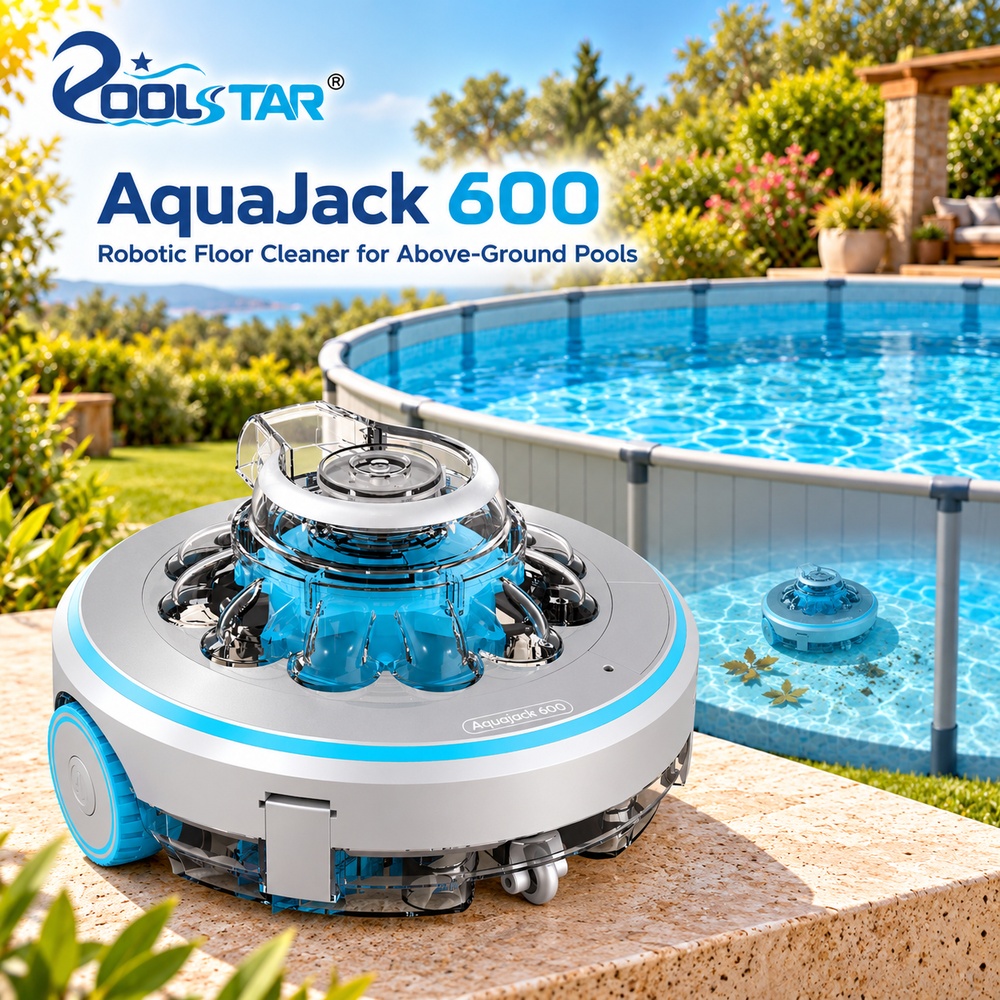
- Screen alternate models. Screen 3-5 alternate models against the deviation-adjusted spec targets. Compare price, MOQ, lead time, OEM/ODM capability, and warranty terms alongside the spec sheet metrics. Use the pool robot product hub to compare the AquaJack 800 / 700 / 650 / 600 / 410 / 900 series.
- Audit the supplier. Audit the supplier for: factory production capacity, third-party test certificates (CE / FCC / IPX8 / RoHS), export experience, and customer references in the target region. The supplier audit is the gate before bench testing.
- Order sample for bench test. Order a sample unit (typically 1-3 pieces) for in-house bench testing. Apply the buyer's own debris type and pool conditions. Verify the deviation-adjusted spec targets are met before scaling to bulk order.
- Negotiate bulk contract with deviation clauses. Negotiate the bulk contract with explicit deviation clauses: nominal specs and acceptable bench-test deviation ranges; warranty terms covering premature battery degradation (typically 12-24 months); spare parts availability; return / replacement policy.
Common Pitfalls When Reading Pool Robot Spec Sheets
Three pitfalls show up repeatedly in pool robot procurement decisions based on spec sheet reading. Each is easy to avoid in the planning stage and expensive to correct after bulk ordering.
Pitfall 1: Trusting nominal claims without deviation benchmark
A spec sheet review that accepts the nominal suction / runtime / filtration / coverage values without applying the industry benchmark deviation bands (+20-40% suction overstatement, -15-25% runtime overstatement, -15-30% filtration overstatement, -25-40% coverage overstatement with obstacles) will systematically over-estimate the cleaner's real-world performance. The fix is to multiply the nominal value by the appropriate deviation factor before comparing models. A cleaner with nominal 100 L/min flow and benchmark -30% deviation is closer to 70 L/min in real pickup rate, not 100.
Pitfall 2: Comparing across brands using different test methods
A spec sheet comparison that pools together different manufacturers' nominal claims without normalizing for test method differences (water temperature, pool shape, debris load, cleaning mode) will produce misleading rankings. The fix is to require each supplier to provide their test protocol documentation and to apply the deviation bands from a single reference methodology, ideally the 6-debris bench test SOP.
Pitfall 3: Skipping the supplier audit before sample order
A spec sheet review that jumps directly to sample ordering without the supplier audit (factory capacity, third-party certifications, export experience, customer references) risks selecting a supplier who can deliver the sample but cannot scale to bulk production. The fix is to require the supplier audit as the gate before sample ordering, with documented evidence of production capacity, certifications, and customer references.
Frequently Asked Questions
1. What spec sheet metric is most often overstated on pool robot listings?
Suction capacity (measured in kPa or GPM) is the most often overstated metric, with industry benchmark deviations of +20-40% between nominal claims and bench-tested debris pickup. Buyers should request third-party bench test data with controlled debris types and quantities before accepting suction claims. The AquaJack 800 spec sheet cites 78.2 GPM (296 L/min) flow as the headline metric; bench-tested debris pickup in a controlled test typically achieves 47-63 GPM equivalent pickup rate.
2. How much does nominal runtime typically deviate from actual continuous operation time?
Industry benchmark deviation is -15-25% from nominal runtime claims, meaning a 120-minute nominal rating typically delivers 90-102 minutes of continuous cleaning. Higher-end cordless models like the AquaJack 800 (240-min nominal) often achieve 195-220 minutes in real conditions. The deviation is driven by water temperature, pool slope, debris load, and selected cleaning mode.
3. What is the difference between nominal filter capacity and effective filter capacity?
Effective filter capacity is typically 70-85% of nominal capacity because the filter media, structural frame, and debris accumulation reduce the usable volume. A nominally-rated 4L filter basket typically holds 2.8-3.4L of debris before requiring emptying. The deviation is larger for filters with fine mesh (e.g., 100 micron) because the mesh takes up more of the basket volume; coarser mesh (e.g., 500 micron) has less deviation.
4. Should buyers trust coverage area claims (e.g., 120㎡, 200㎡)?
Coverage area claims assume flat-bottom pools with no obstacles, 25°C water temperature, and a single full-charge cycle. For pools with slopes, deep ends, or obstacles, expect 60-75% of the nominal coverage area in a single cycle. AquaJack 700 nominal 120㎡ typically achieves 72-90㎡ effective coverage in real pools with mild slope and obstacles. AquaJack 800 nominal 200㎡ typically achieves 130-160㎡ effective coverage in the same scenario.
5. Where can I source pool robots with verified spec sheet data?
Poolstar publishes spec sheets for the AquaJack 800 and AquaJack 700 cordless robotic pool cleaners with documented kPa / GPM / battery / coverage figures. The pool robot product hub indexes the full AquaJack series (800 / 900 / 700 / 650 / 600 / 410), and the news resources cover the smart features of modern robots. OEM/ODM projects are supported with custom branding, packaging, and firmware configuration.
Building a Pool Robot Procurement Specification?
Poolstar publishes the AquaJack 800 / 700 / 650 / 600 / 410 / 900 cordless robotic pool cleaner series with documented kPa / GPM / battery / coverage spec sheets. OEM/ODM support for branding, packaging, and firmware. MOQ from 100 units, lead time 30-45 days for stock configurations.
Browse the Pool Robot Product Hub