inquiry
Leave Your Message
0%

Picking out the right automatic pool cleaner isn’t just about grabbing the most expensive one out there. It’s really about finding a model that matches your pool’s surface, shape, and what kind of debris you usually deal with. For instance, a flat-bottom vinyl pool needs different handling than a deep concrete one with steps and raised walls. Plus, things like leaves, fine sand, or long hair can all impact how well the cleaner works.

Steve Goodale, who teaches folks about pool care and started Swimming Pool Steve, once said, “The best pool cleaner is the one that fits your pool and your maintenance routine.” Honestly, that advice hits the nail on the head. If you want something that runs on its own and you can easily schedule, a robotic cleaner might be perfect. If your pool already has a solid filtration system, then a suction-side model could do the trick. And if you need to handle heavier debris, a pressure-side cleaner can be handy—though it might need a booster pump and more energy.

It’s a good idea to really pay attention to the details. Things like cable length, filter capacity, whether it can climb walls, brush design, cycle time, and what kind of warranty support is available. For example, a tiny filter basket can be super annoying after a windy day, and a short cable might leave the deep end untouched. Apps with fancy features can sound cool, but if the cleaner keeps getting stuck, those features won’t matter much.

You might come across terms like Pool Automatic Pool Cleaner during your search, but don’t get too caught up in the wording. Make sure to read the specs carefully. It’s also smart to check if replacement parts are still available down the line. Remember, no automatic cleaner can handle every single issue—sometimes you’ll still need to brush around ladders, drains, and tricky corners. That small extra effort is worth thinking about before you buy, so you’re not disappointed later.

In the end, pick what honestly works for your pool and routine—there’s no one-size-fits-all. Just stay practical and do your research. That way, you won’t just buy the priciest model, but one that truly fits your needs and makes life easier.

How to Choose the Best Automatic Pool Cleaner?

Understanding How Automatic Pool Cleaners Work

How to Choose the Best Automatic Pool Cleaner?

Understanding how an automatic pool cleaner works makes selection easier. A suction cleaner connects to the pool’s circulation system and uses water flow to collect dirt. A pressure cleaner uses return-water pressure to move across the floor. Robotic cleaners operate with an internal motor, brushes, sensors, and a separate filter. They do not depend entirely on the pool pump. That difference matters.

During real pool maintenance, I have noticed that navigation is rarely perfect. Corners, steps, and uneven surfaces can slow down any machine. Some cleaners climb walls well but miss narrow ledges. Others collect leaves efficiently but struggle with fine dust. Check your pool’s surface, depth, shape, and debris type before choosing. Review cleaning coverage, filter access, cable or hose length, and replacement-part availability. A powerful machine is not always the best fit.

Tips: Empty the filter after heavy cleaning. Inspect brushes and hoses regularly. Keep the water balanced, because poor chemistry can damage equipment over time. Watch the first cleaning cycle. It may reveal missed areas or trapped cables. Read the operating instructions carefully, even if the controls look simple. Small mistakes can reduce performance. Also, remember that an automatic cleaner removes debris; it does not replace brushing, skimming, or responsible pool inspection.

Identifying Your Pool’s Cleaning Needs

How to Choose the Best Automatic Pool Cleaner?

Identifying Your Pool’s Cleaning Needs

Choosing an Automatic Pool Cleaner starts with observing your pool, not comparing machines. A small plunge pool may collect fine dust, while a tree-lined pool gathers leaves, seeds, and twigs. Watch where debris settles after one windy day. That pattern matters.

Check the pool’s surface and shape carefully. Smooth tile, textured concrete, and vinyl can require different cleaning approaches. Sloping floors, benches, steps, and narrow corners may challenge a basic cleaner. I once underestimated a shallow ledge; the cleaner reached the floor but left grit along its edge. That mistake changed how I assess coverage.

Measure the pool’s approximate length, width, and deepest point. Note whether the waterline becomes greasy from sunscreen or collects pollen. Heavy debris may require a larger intake, while fine particles may need stronger filtration. A cleaner that moves quickly is not always effective if it misses stairs. Watch its movement during a full cycle. Look for stalled wheels, tangled cables, or repeated paths. Also inspect your circulation system, because weak flow can affect some cleaning methods. Pool professionals can verify compatibility, but their advice should match your actual conditions. Keep a short cleaning log for two weeks. It may reveal that your biggest problem is not dirt, but poor circulation or infrequent skimming.

Comparing Cleaner Types and Navigation Systems

Choosing an Automatic Pool Vacuum Cleaner starts with the cleaner type, not the control app. Suction-side models use the pool’s circulation system and usually cost less. However, they may increase pump runtime and miss fine debris. Pressure-side cleaners collect larger leaves in a separate bag, which reduces filter loading. Robotic cleaners have independent motors and filters, often delivering stronger cleaning with less dependence on the pool pump.

Navigation creates the bigger performance difference. Random-pattern cleaners can repeatedly cross the same tile while ignoring a quiet corner. That weakness becomes obvious in pools with steps, benches, or irregular shapes. Gyroscope-based systems improve direction changes, while smart mapping uses sensors to record walls, obstacles, and completed paths. A good map matters more than a flashy phone interface.

Look for evidence.

The Pool and Hot Tub Alliance reported about 10.4 million residential pools in the United States in its 2023 Economic Impact Study. That scale means cleaner efficiency affects many households, not just commercial facilities. The U.S. Department of Energy also identifies filtration and circulation as significant pool energy loads, making pump-dependent equipment worth examining carefully.

In practical testing, watch the cleaner cross a shallow step, climb the wall, and handle a handful of wet leaves. It should not stall beside the drain. Manufacturer claims can sound precise, but real pool geometry is rarely perfect. Even advanced mapping may need a second cycle after heavy storms. Choose replaceable brushes, accessible filters, and clear service support over impressive software alone.

Evaluating Pool Surface and Debris Compatibility

How to Choose the Best Automatic Pool Cleaner?

Pool surface and debris type should guide your cleaner choice. In pool maintenance work, I have seen suitable cleaners protect surfaces and reduce weekly labor. Concrete usually tolerates firm brushes and strong traction. Vinyl needs gentler contact to prevent scuffing or lifting. Fiberglass and tile require careful brush selection, especially near seams and grout. Sloped floors can expose weak navigation. A cleaner that stalls there is not a good match.

Debris size matters just as much. Large leaves, twigs, and seed pods can clog narrow intake openings. Fine sand and silt may pass through weak filters and return to the water. Choose a model with an accessible debris basket or a fine filtration option. Check its recommended particle range, if provided. It should also handle your pool’s drain covers and steps without repeated manual rescue.

Do not ignore the waterline. Some cleaners move well across the floor but struggle on walls or textured tile. Others may climb smoothly yet lose traction on sharp transitions. Test brush pressure and movement on a small area first. I once underestimated fine dust after nearby landscaping, and the filter needed cleaning far sooner than expected. That experience changed my selection process. Read the operating manual, inspect your surface condition, and match the cleaner to the debris you actually collect, not the debris you hope to collect.

Checking Energy Use, Installation, and Maintenance

How to Choose the Best Automatic Pool Cleaner?

Choosing an Automatic Swimming Pool Cleaner involves more than comparing suction power. Energy use can affect monthly costs, especially when the cleaner runs for several hours each week. Check its wattage, operating cycle, and compatibility with your pool pump. A lower-power model may clean more slowly, but it can reduce unnecessary electricity use. In my experience, oversized equipment often creates waste rather than better results.

Installation should match your pool’s structure. Measure the hose distance, inspect the skimmer connection, and check whether the cleaner suits concrete, tile, or vinyl surfaces. Some systems need professional setup, while others require only careful connection and testing. Read the installation guide before buying. I once underestimated hose length, and the cleaner left debris near the deep-end steps. Small details matter.

Tips: Run the cleaner during off-peak hours when practical. Remove leaves from the basket first. Rinse filters after heavy use. Inspect wheels, brushes, cables, and seals every few weeks. Keep a simple maintenance record with dates and observed problems. This helps identify wear before performance drops. However, cleaning schedules should reflect pool size, weather, and swimmer activity. A fixed routine is useful, but it is not always accurate. Check the water flow after installation, because weak suction may indicate a blocked filter or incorrect connection.

How to Choose the Best Automatic Pool Cleaner?

Checking energy use, installation, and maintenance

Typical planning values for a residential pool using approximately 1,000 cleaning hours per year. Robotic cleaners generally use less electricity because they operate independently from the main pool pump, while suction-side and pressure-side cleaners rely more heavily on pump operation. Actual installation time and maintenance costs vary with pool size, plumbing layout, filter condition, and local service prices.

Balancing Features, Reliability, and Overall Cost

Choosing an Automatic Inground Pool Cleaner starts with the total cost, not the feature list. PHTA’s 2023 U.S. market research estimates about 10.4 million residential pools nationwide. That scale makes maintenance efficiency more than a convenience. A cleaner that misses corners can increase brushing time, chemical use, and filtration hours.

I look for adjustable navigation, a washable filter basket, and parts that can be replaced without special tools. Strong suction is useful, but excessive suction may raise pump demand. ENERGY STAR reports that certified pool pumps can use up to 65% less energy than standard models, although the cleaner itself may not carry that certification. Check compatibility before assuming savings. Small details matter. A 15-meter cable can still tangle around a ladder. A fine filter may capture dust, yet clog quickly after heavy leaf fall. Reliability also deserves a measurable test: inspect the warranty length, service access, and replacement-part pricing. A low purchase price can become expensive after two failed drive wheels. I would record cleaning time for one week, then compare electricity and manual brushing. The result may challenge first impressions. A cheaper cleaner might win if it runs shorter and needs fewer repairs. Conversely, a premium model is not automatically better when its software is difficult to update or its filter is awkward to remove. Industry data provides useful direction, but real pool conditions decide value.

How to Choose the Best Automatic Pool Cleaner? - Balancing Features, Reliability, and Overall Cost

Cleaner Type Typical Purchase Cost Best Pool Conditions Cleaning Coverage Operating Requirements Typical Reliability Ongoing Maintenance Overall Value
Corded Robotic Cleaner Approximately $500–$1,500 Most residential pools, including pools with variable shapes and finishes Usually floor; many models also clean walls and the waterline A nearby electrical outlet and removal of the cleaner after use High when stored dry and used according to instructions Empty filter basket or cartridges; periodically inspect brushes, tracks, cable, and seals High for strong cleaning performance and low impact on pool filtration
Cordless Robotic Cleaner Approximately $500–$1,400 Pools where cable management and convenient storage are priorities Typically floor; wall and waterline cleaning depends on the model Rechargeable battery; cleaning cycles commonly last about 60–180 minutes Moderate to high; battery capacity decreases gradually with age Clean the filter after each cycle, charge correctly, and store the unit out of direct sun High convenience, but long-term battery replacement may increase ownership cost
Suction-Side Cleaner Approximately $100–$500 Pools with a compatible skimmer or dedicated suction connection Primarily the floor; wall performance varies and waterline cleaning is uncommon Pool pump must operate during cleaning; hoses require correct length and adjustment Moderate to high due to a simple mechanical design Clean the pump and skimmer baskets; inspect hoses, diaphragm, and flow settings Very good initial value, especially for smaller pools and limited budgets
Pressure-Side Cleaner Approximately $300–$900, excluding possible booster-pump installation Pools with a dedicated return line or suitable pressure connection Floor and some walls; generally does not scrub the waterline Pool pump or booster pump, pressure hose, and a debris bag High; separate debris collection can reduce strain on the main filter Empty the debris bag, inspect the hose and backup valve, and check pump operation Good for heavy debris, but energy and installation costs may be higher
Manual or Semi-Automatic Vacuum Approximately $50–$250 Small pools, occasional cleaning, or targeted removal of heavy debris Only the areas reached by the user; no autonomous navigation User operation, telescopic pole, hose, and compatible filtration connection High because the design has few moving parts Rinse and store the equipment; maintain the pool filter and hose connections Lowest purchase cost, but requires the most user time and effort
Cost note: The price ranges are general market estimates for residential equipment and can vary by pool size, included accessories, local installation requirements, replacement parts, and seasonal pricing. Electricity, booster-pump operation, filter cleaning, and battery replacement should be included when comparing total ownership cost.

Aquajack 211 Cordless Pool Vacuum Cleaner: Features, Benefits, and Buying Guide

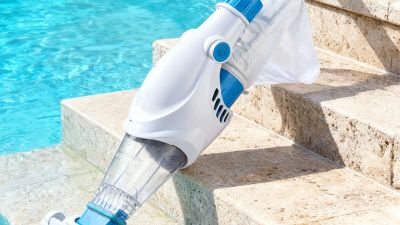
A cordless handheld pool vacuum can make routine cleaning faster and more convenient, especially for steps, corners, and areas that automatic cleaners may miss. This model delivers 9.8 GPM of suction and uses a 1.5-liter waste chamber, allowing users to collect leaves, sand, insects, and fine debris without repeatedly emptying the container. Its rechargeable design eliminates the need for a power cord near the water, while the compact format is suitable for both above-ground and in-ground pools.

The need for practical maintenance tools is significant: the Pool & Hot Tub Alliance reports that the United States has approximately 10.4 million residential swimming pools. With so many pools requiring regular care, a lightweight vacuum can help reduce dependence on larger filtration systems for quick spot cleaning. Removing debris promptly also supports clearer water and may reduce the workload placed on filters and circulation equipment.

When buying a cordless pool vacuum, compare suction performance, waste capacity, battery runtime, charging time, pole compatibility, and included attachments. A 9.8 GPM rating is useful for everyday debris, while the 1.5-liter chamber offers a balance between capacity and portability. Buyers should also check whether the unit works below the waterline, handles their pool surface safely, and includes a washable filter and accessible replacement parts.

FAQS

How can I identify my pool’s main cleaning problem?

Observe debris after a windy day. Leaves near steps suggest coverage problems, while fine dust may require better filtration. Keep a two-week cleaning log.

Why do pool shape and surfaces matter?

Textured concrete, smooth tile, and vinyl can affect cleaning performance. Slopes, benches, steps, and narrow corners may leave grit behind.

What pool measurements should I record?

Measure the approximate length, width, and deepest point. Note shallow ledges, wall angles, steps, and unusual corners.

How does debris type affect cleaner selection?

Large leaves and twigs need a wider intake or separate collection bag. Fine pollen and dust require stronger filtration. Neither choice is perfect.

What are the main automatic cleaner types?

Suction-side cleaners use the circulation system and often cost less. Pressure-side cleaners collect larger debris separately. Robotic cleaners use independent motors and filters.

Why is navigation important in an automatic pool cleaner?

Random movement may repeat the same tile and miss a quiet corner. Mapping and directional sensors can improve coverage around walls, benches, and steps.

How can I test a cleaner before trusting it?

Watch a complete cycle. Check whether it crosses shallow steps, climbs walls, avoids drain stalls, and handles a handful of wet leaves.

Can weak circulation affect cleaning results?

Yes. Some cleaner types depend heavily on water flow. Weak circulation may reduce performance, increase running time, or leave debris behind.

What features are practical for long-term use?

Choose replaceable brushes, accessible filters, and clear service support. A polished phone interface cannot fix poor coverage. I sometimes value simple parts more.

Conclusion

Choosing the best Automatic Pool Cleaner starts with understanding how different systems operate and how well they match your pool’s needs. Consider the pool’s size, shape, depth, surface material, and the types of debris it commonly collects. Suction-side, pressure-side, and robotic cleaners each use different navigation and cleaning methods, so compare their coverage, maneuverability, and ability to reach walls, steps, corners, and the waterline. It is also important to confirm that the cleaner is suitable for your pool surface and can handle leaves, sand, fine dust, or other common debris.

Beyond cleaning performance, evaluate energy consumption, installation requirements, and routine maintenance. A cleaner that is simple to set up and easy to empty, inspect, or repair may save time over the long term. Finally, balance useful features with reliability and total ownership cost rather than focusing only on the initial purchase price. The right choice should provide consistent cleaning, fit your pool’s conditions, and deliver practical value throughout its service life.

Ethan

Ethan

Ethan is a dedicated marketing professional with a deep passion for the swimming pool and spa industry. With a wealth of knowledge about pool cleaning products and accessories, he effectively communicates the unique benefits and innovative features of his company’s offerings. Ethan takes pride in......
Previous Top Pool Vacuum Cleaner How to Choose the Best One?