Picking out the right Pool Cleaning Accessories isn’t just about grabbing the biggest brush or the cheapest vacuum you find. Nope, it’s really about matching your tools to your pool’s surface, shape, filtration system, and how often you actually get around to cleaning it. For example, a rough plaster pool might need something a little more rugged, whereas vinyl or fiberglass surfaces prefer a gentler touch. And don’t forget the little things—using a pole that’s the wrong size or too flimsy can cause it to bend, slip, or leave those tricky corners untouched. Totally frustrating, right?
Industry pros agree that taking a practical, personalized approach makes all the difference. The CDC’s Model Aquatic Health Code, for instance, links regular cleaning, proper circulation, and maintaining water quality to a safer swimming experience. Plus, the Pool & Hot Tub Alliance puts out standards covering everything from equipment to maintenance, whether you have a pool in your backyard or manage a large facility. Market research from Grand View Research also points out that more people are into owning pools and want easier ways to keep them clean — so, demand is definitely on the rise. While these reports are super helpful for understanding the big picture, they can’t tell you exactly what to buy for your own backyard pool.
So, the best place to start is by inspecting your pool. Take a good look at the surface, the kind of debris you usually see, the skimmer design, and what your equipment can handle. Need to pick between a fine-mesh leaf net or a vacuum head? Think about what works best for pine needles or settled dirt. Also, your telescopic pole should reach comfortably without forcing you into awkward stretches. Be cautious — product descriptions can sound convincing but might not always be spot-on. Comparing manufacturer specs, professional standards, warranty info, and reading user reviews can save you from costly mistakes. This guide is all about helping you choose the right pool cleaning accessories using common sense, reliable info, and a willingness to reconsider options that seem easier but aren’t suitable for your specific needs.
Understand Your Pool’s Size, Surface, and Cleaning Needs
How to Choose Pool Cleaning Accessories?
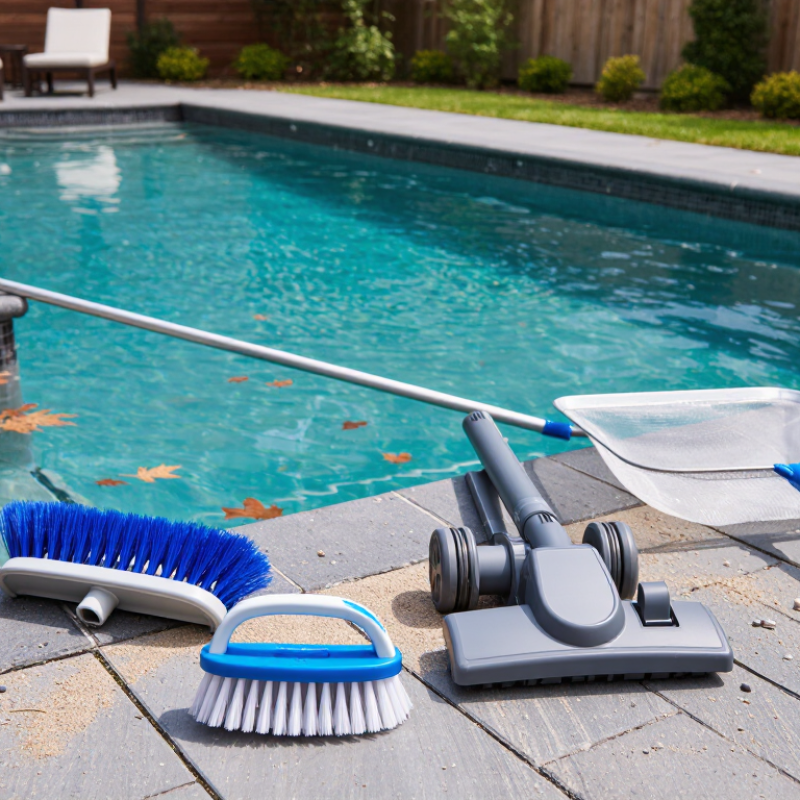
Choosing Swimming Pool Cleaning Accessories starts with measuring your pool accurately. A small plunge pool needs a short pole and compact skimmer net. A large pool benefits from a longer, stronger pole. Measure the deepest point and the widest span before buying.
Your pool’s surface matters too. Smooth plaster usually tolerates firm bristles, while vinyl requires softer brushes. Textured tile may need angled bristles for grout lines. Too much pressure can damage delicate surfaces. During weekly cleaning, I found that a brush reaching the corners saved more time than a larger vacuum head. It was not an obvious choice.
Your cleaning needs should guide the rest of the equipment. Pools near trees often need a deep-bag leaf net. Pools with frequent swimmer use may need a reliable vacuum head and wall brush. A fine skimmer net can collect dust, insects, and small debris before they sink. For waterline marks, choose a non-abrasive pad designed for your surface. Check the pole connection carefully; loose fittings make ordinary work frustrating. Pool maintenance professionals also recommend testing water regularly, because cloudy water may reflect balance problems rather than poor cleaning. I once blamed the equipment too quickly. The real issue was an overlooked filter restriction. Choose accessories that fit your pool, your surfaces, and the debris you actually see. Convenience can mislead.
Compare Manual, Automatic, and Robotic Cleaning Options
How to Choose Pool Cleaning Accessories?
Choosing Pool Cleaning Accessories starts with your pool’s shape, debris, and cleaning routine. Manual tools include a telescopic pole, brush, leaf net, and vacuum head. They cost less and provide precise control around steps and corners. I find them useful after windy days, when leaves collect near the skimmer. However, manual cleaning requires regular effort. Miss one week, and fine dust settles quickly.
Automatic cleaners connect to the pool’s circulation system and move across the floor. They reduce hands-on work, but performance depends on pump flow, hose length, and filter condition. Check these details before buying. A cleaner that moves slowly may leave dirt behind. My first comparison focused only on price, which was a mistake. Running costs matter too.
Robotic cleaners use a separate motor and filter, so they usually work independently from the pool pump. They often reach walls and collect fine particles in an internal basket. This option suits owners who value convenience and consistent cleaning. Still, the basket needs frequent emptying, especially after storms. Wet cables, awkward storage, and maintenance can become irritating. Swimming Pool Accessories should match your actual habits, not an ideal routine.
Evaluate Material Quality, Compatibility, and Ease of Use
How to Choose Pool Cleaning Accessories?
Pool Cleaning Tools should survive chlorine, sunlight, and repeated soaking. Material quality matters more than a low price. Choose corrosion-resistant metal for poles and reinforced plastic for baskets. Soft nylon brushes protect vinyl surfaces, while stiffer bristles suit concrete. Check joints carefully. A loose connector can turn a simple cleaning task into a frustrating repair.
Compatibility is equally important. Measure the pole diameter, vacuum hose, skimmer opening, and filter connection before buying. A tool may look universal, but small differences create leaks or poor suction. The CDC reported that one in eight public pools closed immediately during inspections, based on 2008–2009 data. That finding reminds me that cleaning equipment supports hygiene, but it cannot replace balanced water chemistry or proper filtration. I sometimes overestimate “all-purpose” tools. That assumption deserves more caution.
Tips: Test a brush on a hidden surface first. Rinse tools after use, then hang them in shade. Inspect metal edges and cracked plastic every month. Look for clear care instructions and replacement parts. The Pool & Hot Tub Alliance recommends following manufacturer guidance for equipment operation and maintenance. Even so, guidance is not always perfectly clear. Record which accessories fit your pool, and note where suction weakens. This simple log can expose compatibility problems before cloudy water appears.
How to Choose Pool Cleaning Accessories?
Evaluate Material Quality, Compatibility, and Ease of Use
Scores are based on common category-level characteristics using a 1–5 practical evaluation scale, where 5 is the most favorable. Aluminum telescopic poles score well for durability and compatibility, while nylon skimmers and polymer brushes are typically lightweight and easy to handle. Always verify connector size and pool-surface suitability before buying.
Set a Budget and Build a Complete Pool Cleaning Kit
How to Choose Pool Cleaning Accessories?
Set a Budget and Build a Complete Pool Cleaning Kit
A realistic budget keeps pool care manageable. Start with essential tools, not attractive extras. A telescopic pole, leaf net, pool brush, vacuum head, and water-testing kit form a practical foundation. Choose sturdy materials that resist constant moisture and sunlight. Cheap tools may save money today, but cracked handles and loose connections create replacement costs later. I have found that compatibility matters as much as price. Check that the pole fits the brush, net, and vacuum head before buying. Otherwise, a complete kit may not work smoothly.
Tips: Measure your pool first. A long pole suits deep areas, while a shorter pole offers better control near steps. Select a brush for your surface type, and never ignore water testing. Clear water can still contain unbalanced chemicals. Keep gloves, protective eyewear, and a clean storage container nearby. Small habits help prevent damaged tools and skin irritation.
Review your kit after each cleaning session. Remove debris, rinse equipment with fresh water, and let everything dry before storage. This simple routine extends tool life. I sometimes overbuy accessories, thinking they will save time. They usually do not. A useful kit should match your pool’s size, surface, and cleaning schedule. If fine particles remain after vacuuming, inspect the filter and hose connections before purchasing another tool. A careful check often reveals the real problem.
How to Choose Pool Cleaning Accessories? - Set a Budget and Build a Complete Pool Cleaning Kit
| Budget Tier |
Accessory |
Recommended Quantity |
Typical Unit Cost (USD) |
Estimated Subtotal (USD) |
Main Use |
Essential
$50–$100 |
Telescopic Pool Pole |
1 |
$20–$35 |
$20–$35 |
Extends reach across the pool. |
| Leaf Skimmer Net |
1 |
$10–$20 |
$10–$20 |
Removes leaves and floating debris. |
| Pool Wall Brush |
1 |
$12–$25 |
$12–$25 |
Loosens algae and dirt from surfaces. |
| Manual Vacuum Head |
1 |
$20–$35 |
$20–$35 |
Collects dirt from the pool floor. |
| Estimated Essential Kit Total |
$62–$115 |
Suitable for regular manual cleaning. |
Balanced
$120–$250 |
Pool Vacuum Hose |
1 |
$25–$50 |
$25–$50 |
Connects a manual vacuum to the suction system. |
| Water Test Strips or Test Kit |
1 |
$10–$35 |
$10–$35 |
Checks pH, sanitizer, and alkalinity levels. |
| Skimmer Basket Replacement |
1–2 |
$8–$20 |
$8–$40 |
Captures debris before it reaches the pump. |
| Floating Chlorine Dispenser |
1 |
$10–$25 |
$10–$25 |
Helps distribute slow-dissolving sanitizer. |
Complete
$300–$700+ |
Automatic Pool Cleaner |
1 |
$250–$600+ |
$250–$600+ |
Reduces manual vacuuming and floor-cleaning time. |
| Fine-Mesh Skimmer Net |
1 |
$15–$30 |
$15–$30 |
Removes smaller particles from the water surface. |
| Tile and Waterline Brush |
1 |
$10–$25 |
$10–$25 |
Cleans buildup along tiles and the waterline. |
| Pool Cover Pump |
1 |
$40–$120 |
$40–$120 |
Removes rainwater from a pool cover. |
Buying tip: Start with a pole, skimmer net, brush, and vacuum head. Add water-testing tools and replacement parts next, then consider an automatic cleaner if reducing weekly maintenance time is more important than minimizing the initial cost.
Conclusion
Choosing the right Pool Cleaning Accessories starts with understanding your pool’s size, surface type, and regular cleaning needs. Consider whether your pool collects leaves, fine dust, algae, or other debris, then select suitable tools such as nets, brushes, vacuum heads, hoses, skimmers, or water-testing equipment. The best accessories should match the pool’s material and avoid causing scratches or damage while effectively removing specific types of contamination.
You should also compare manual, automatic, and robotic cleaning options according to your available time, cleaning frequency, and budget. When evaluating products, pay attention to material quality, connection compatibility, handle length, storage requirements, and ease of use. A practical cleaning kit should include essential tools for surface cleaning, floor maintenance, water circulation, and routine inspection. By planning carefully, you can build a complete, durable, and efficient set of accessories that keeps pool maintenance manageable and supports cleaner, healthier water.
 +86-574-5680 8878

 Contact Email


