Picking out a Pool Vacuum Robot in 2026 isn’t just about chasing the latest logo or grabbing the most expensive one out there. It’s really about matching the tech to what your pool actually needs. A small backyard pool isn’t gonna require the same cleaning power as a big one with steps, deep corners, and uneven surfaces. Plus, things like leaves, fine dust, algae buildup, and how much traffic your pool gets all play a role in the decision.
Rudy Stankowitz, who’s a pool-care expert and educator, keeps it straightforward: “A cleaner should fit the pool, not just the brochure.” And honestly, that advice still rings true. Before you dive into comparing models from brands like Maytronics, Polaris, Aiper, or Beatbot, take a good look at your pool—its surface, shape, waterline, and what kind of debris it Usually collects. Pay attention to the brush design, whether it can climb the walls, its filtration capacity, how long it takes to charge, app controls, and if replacement parts are easy to find. A fancy app alone won't fix a robot that can't grip the surfaces properly.
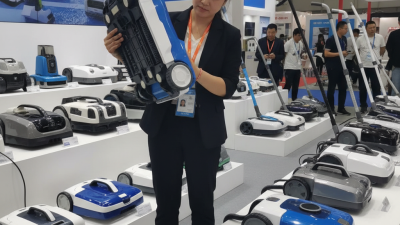
Real-world testing is where it’s at. Watch how it handles tricky corners, see if its filter basket fills up after one cleaning, and try to listen to the motor when you’re near a quiet spot in your yard. Those small details tell you more than what fancy ads might lead you to believe. That said, no robot is perfect—some struggle with drains, slope floors, or heavy, leafy debris. And don’t forget—battery life can sometimes take a nosedive after a while.
That’s exactly why it’s worth doing some careful comparisons. We’re looking at how well they clean, how smart their navigation is, how much effort they need for maintenance, what operating costs look like, warranty support, and whether they’ll last in the long run. The goal isn’t just to find the priciest or most high-tech model. Instead, it’s about choosing one that cleans reliably, saves you time, and fits your pool without promising the moon and the stars.
Take a moment before making your decision. Sometimes, a cool feature can turn out to be more hassle than it’s worth in the end.
Define Pool Vacuum Robot Categories and Their 2026 Cleaning Functions
How to Choose a Pool Vacuum Robot in 2026?
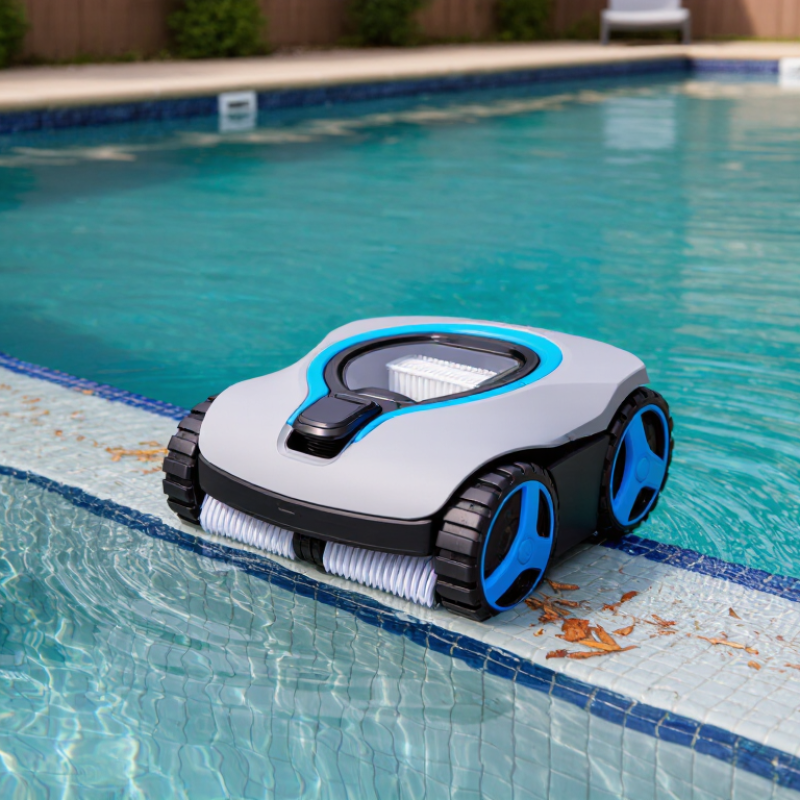
Pool vacuum robots in 2026 fall into several practical categories. Floor-only models target flat surfaces and suit simple pools with limited debris. Floor-and-wall robots climb sloped walls and scrub common tile or liner areas. Waterline-capable models focus on the dirt ring near the pool’s surface. Hybrid robots may clean floors, walls, and waterlines, but their performance depends on pool shape and surface condition.
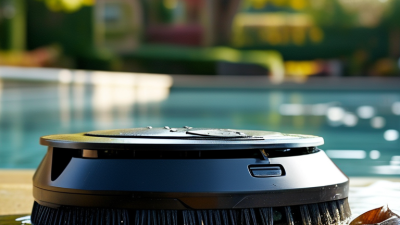
The cleaning functions also vary widely. Better models use gyroscopes, sensors, or mapping software to reduce missed areas. Rotating brushes loosen sand, pollen, and stuck-on particles before filtration. Some systems adjust movement when they meet steps, drains, or sharp corners. Fine filters can capture small dust, while larger baskets handle leaves. Check filter access carefully. A difficult basket can make weekly maintenance annoying.
Match the machine to the pool.
My practical test is simple: observe one complete cycle after adding the robot. Does it reach the deep end? Does it climb consistently? Does the filter remain usable after collecting real debris? App controls and scheduled cleaning are convenient, but they cannot repair weak traction or a clogged filter. No category is perfect. Even advanced navigation may miss narrow steps or uneven surfaces. Water temperature, worn brushes, and poor storage can also change results. Choose measurable coverage over impressive feature lists.
Match Pool Size with Models Rated for 50, 100, or 150 m² Coverage
Choosing a pool vacuum robot in 2026 starts with surface area, not advertising claims.
A model rated for 50 m² suits compact pools, plunge pools, and simple rectangular layouts. For medium pools, choose a 100 m² rating to provide working margin. Large pools need a 150 m² model, especially when steps, ledges, or irregular corners reduce cleaning efficiency.
The rating is not a promise of perfect coverage. Real performance changes with waterline shape, floor slope, debris volume, and filter loading. A 100 m² robot may struggle in a crowded 90 m² pool. The U.S. Department of Energy reports that pool pumps can represent a major share of residential pool energy use, so efficient, timed cleaning can reduce unnecessary filtration hours. A 2024 Fortune Business Insights market report also identifies cordless robotic cleaners as a growing segment, supported by easier installation and lower handling effort. A Cordless Pool Robot Vacuum removes cable management, but battery capacity still matters.
Tips: Measure the actual floor area, then add about 20% capacity. Check the rated runtime against your pool’s longest cleaning cycle. Look for a washable filter, waterline cleaning, and clear battery indicators. Test the robot after windy weather; one pass may not remove every leaf. I would not trust coverage numbers alone. Pool geometry often exposes the gap between laboratory ratings and daily use. Choose a model with accessible filters and a return policy that allows practical testing.
Compare Suction Power, Filtration Rates, and Debris Capacity
Choosing a pool vacuum robot in 2026 requires more than chasing the highest suction number. Strong suction helps lift sand, leaves, and fine grit from the pool floor. However, excessive suction can increase energy use and may struggle with uneven surfaces. Check the robot’s water flow rate, brush design, and movement pattern together.
Filtration rates deserve close attention. A fine filter can capture cloudy dust and pollen, while a larger-mesh basket handles leaves more efficiently. Look for replaceable filters with clearly stated micron ratings. Some models claim excellent filtration but lose performance as the basket fills. I learned this after cleaning a pool with heavy pollen. The robot slowed noticeably.
Debris capacity affects convenience, especially after storms or long gaps between cleanings. A small basket may require several interruptions. For an
Above Ground Pool Robot Vacuum,
confirm that its intake suits the pool’s wall shape and water depth. Test access to corners, steps, and curved edges. My first choice had impressive suction, but its narrow intake clogged on wet leaves. That mistake changed how I compare specifications. Capacity, filtration, and practical flow matter more than one impressive figure.
Evaluate Navigation Accuracy for Floors, Walls, Waterlines, and Steps
How to Choose a Pool Vacuum Robot in 2026?
Navigation accuracy matters more than a glossy feature list when choosing a pool vacuum robot in 2026. A reliable unit should map the floor without repeatedly circling the same drain. Watch one cleaning cycle from the deck. Does it reach shallow corners, or stop after small bumps? For an above-ground pool, a Robot Vacuum Above Ground Pool model also needs stable traction on curved walls and flexible liners.
Wall climbing should remain consistent as the battery weakens. Check whether the robot crosses the floor-to-wall angle smoothly. Some machines climb halfway, slide down, then repeat the mistake. Waterline cleaning needs a different test. The scrubber should hold contact while waves move across the surface. Look for a clean band near the tile or liner, not scattered strokes.
Steps expose weak navigation quickly.
A capable robot may climb broad steps, but narrow ledges can confuse its sensors. Measure your step height and compare it with the operating limits. In practical testing, mark missed areas with removable tape and inspect them after two cycles. That method is simple, though not perfect. Debris can shift, and sunlight may affect optical sensors. Read technical specifications, then verify performance in your pool. A return policy matters when the machine performs well in a display tank but hesitates at home.
Check Battery Runtime of 90–180 Minutes and Charging Requirements
When choosing a Pool Cleaner Robot in 2026, treat the advertised 90–180 minutes as a laboratory range, not a promise. The U.S. Department of Energy explains that battery performance changes with temperature, load, and charging habits. A cold deck or heavy debris can reduce cleaning time. Measure your pool first. A compact pool may finish in 90 minutes, while a large pool with steps may need 150 minutes or more.
Charging requirements matter just as much. The International Energy Agency’s Global EV Outlook 2024 reports that lithium-ion battery prices fell 14% in 2023, yet battery quality still varies widely. Check the manual for charging duration, indoor storage, and temperature limits. A robot needing six hours to recharge may miss an evening cleaning cycle. Look for clear indicators showing full charge, low battery, and charging faults. Useful details matter.
I would also question claims of “all-day” operation. They sound impressive, but they may ignore climbing, water resistance, or filter blockage. After each cycle, rinse the filter and record actual runtime for one week. That simple test reveals more than a sales chart. Leave ventilation around the charger. Never place it beside standing water. A 90-minute model with reliable charging may serve you better than a 180-minute model with vague specifications.
How to Choose a Pool Vacuum Robot in 2026?
Compare expected battery runtime with the approximate time needed for a full recharge. A 90–180 minute runtime is generally suitable for different pool sizes and cleaning schedules, but charging time can vary with battery capacity, charger output, temperature, and battery condition.
How to use this chart: Choose a robot whose runtime covers the intended cleaning cycle with some reserve. Check whether the charging duration fits your schedule, and confirm whether the model requires a dedicated indoor charging area, a waterproof charging dock, or manual charging after each cycle.
Verify IP68 Waterproofing, App Controls, Sensors, and Safety Standards
Choosing a pool vacuum robot in 2026 requires more than comparing cleaning speed. Grand View Research estimates the global pool-cleaning robot market could grow at roughly 12.8% annually through 2030. That growth brings more models, but not necessarily better engineering. Check the IP rating carefully. Under IEC 60529, IP68 means dust-tight protection and continuous water immersion under stated test conditions. It does not guarantee unlimited depth, pressure, or long-term chemical resistance. Ask for the tested depth and duration.
App controls should show battery status, cleaning history, error alerts, and manual steering. Useful software still fails when Wi-Fi drops. Choose a robot with basic physical controls and clear data policies. Sensors matter more than flashy menus. Gyroscopes, wheel encoders, obstacle detection, and edge sensors can reduce missed corners and repeated routes. In practice, cloudy water, leaves, and slippery walls can confuse navigation. I have seen “smart” routes become wasteful after one blocked drain.
Safety deserves equal attention. Look for documented compliance with applicable electrical and pool-equipment standards, such as IEC 60335-2-41 where relevant, plus clear charging instructions. Never charge a wet unit near the pool. The U.S. Consumer Product Safety Commission continues to emphasize electrical protection around swimming areas, while field conditions are rarely as controlled as laboratory tests. A certificate helps, but maintenance records, cable inspection, and honest replacement-part availability matter more than polished advertising.
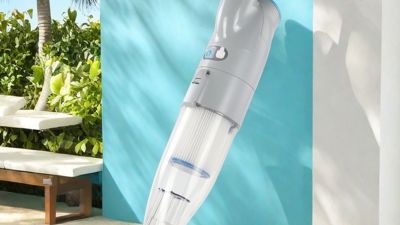
Aquajack 500 Cordless Pool Vacuum Cleaner: Features, Performance, and Buying Guide
A cordless handheld pool vacuum can make routine pool maintenance faster and more convenient, especially when leaves, sand, and fine debris collect on the floor or around steps. This rechargeable model delivers up to 31.7 GPM (120 L/min) of suction, providing strong cleaning performance for both above-ground and in-ground pools. Its cordless design removes the need to manage a power cable near the water, while the handheld shape allows more precise control in corners, along walls, and around ladders.
The built-in 3-liter (0.8-gallon) waste container reduces the need for frequent emptying during larger cleaning sessions. Before buying, consider your pool size, the types of debris you usually encounter, and how often you plan to clean. The vacuum is especially practical for spot cleaning and regular upkeep, while its rechargeable battery supports flexible use without relying on a fixed outlet. A comfortable grip, manageable weight, and easy-to-remove debris container can also make a noticeable difference when cleaning takes longer. For households seeking a portable solution that works across different pool types, its combination of strong suction, generous storage capacity, and cordless operation offers useful everyday versatility.
FAQS
Measure the actual floor area, then add about 20% capacity. A 50 m² model suits compact pools. Choose 100 m² for medium pools. Large or irregular pools may need 150 m² coverage. Ratings are estimates, not promises.
Steps, slopes, ledges, and curved corners reduce cleaning efficiency. Heavy leaves can also slow movement. The stated area assumes favorable conditions. Real pools are messier.
Compare suction, water flow, brushes, and movement together. Strong suction lifts sand and grit, but may use more energy. Fine filters catch pollen and cloudy dust. Larger baskets handle leaves better.
Choose a larger basket if storms or long cleaning gaps are common. Small baskets may require repeated emptying. Wet leaves can clog narrow intakes. I once trusted suction numbers too much. That was a poor choice.
Confirm compatibility with the wall shape, water depth, corners, and curved edges. Check whether the intake reaches the floor properly. A model can work well on flat floors but miss wall transitions.
IP68 indicates dust-tight protection and immersion under stated test conditions. It does not promise unlimited depth or chemical resistance. Ask about tested depth and immersion duration. Details matter.
Useful apps show battery status, cleaning history, errors, and manual steering. Basic physical controls remain valuable when Wi-Fi fails. Clear data policies are also important. Smart software is not always smart navigation.
Gyroscopes, wheel encoders, obstacle detection, and edge sensors can reduce missed areas. Leaves, cloudy water, and slippery walls may still confuse navigation. A robot can repeat one route after meeting a blocked drain. That happens.
Look for documented compliance with relevant electrical and pool-equipment standards. Follow the stated charging instructions carefully. Never charge a wet unit near the pool. Inspect cables, filters, and replacement parts regularly. A certificate helps, but maintenance access matters more.
Conclusion
Choosing a Pool Vacuum Robot in 2026 starts with understanding the main categories and matching each model to your pool’s size and cleaning demands. Select a unit rated for approximately 50, 100, or 150 square meters, depending on the pool area. Compare suction power, filtration efficiency, and debris capacity to ensure the robot can handle everyday dirt, leaves, and fine particles without frequent maintenance.
Navigation performance is equally important. A reliable model should clean floors, climb walls, reach the waterline, and manage steps with accurate sensors and efficient movement. Check whether its battery provides 90–180 minutes of runtime and review charging time, storage, and operating requirements. Finally, look for IP68 waterproofing, practical app controls, obstacle detection, and recognized safety features. The best choice balances coverage, cleaning strength, navigation, runtime, convenience, and long-term durability rather than focusing on a single specification.
 +86-574-5680 8878

 Contact Email