+86-574-5680 8878


Picking the right Pool Floor Vacuum isn’t just about grabbing the most powerful one you can find. A bunch of things come into play—pool shape, surface texture, what kind of debris you’re dealing with, and how often you clean. A small above-ground pool might be fine with a lightweight cordless cleaner. But a big concrete pool? That’s probably going to need stronger suction, longer battery life, and something that can actually navigate walls reliably. Little details matter, too. A narrow nozzle can struggle with leaves. A soft brush might be the safer bet for vinyl.
Rudy Stankowitz, a pool-industry consultant and author, puts it well: “A cleaner should support water care, not replace it.” That’s a useful reality check. It helps shoppers avoid expecting miracles. A Pool Floor Vacuum will pick up settled dirt, sure—but it won’t fix bad filtration, unbalanced water, or poor circulation. You still have to test the water and keep up with regular maintenance. In real life, a vacuum can miss corners or lose suction once its filter gets full. That’s normal, even if people don’t talk about it much.
This guide looks at suction strength, brush design, filtration capacity, navigation, charging time, and warranty support. It also thinks about what a pool owner’s daily routine actually looks like. Some folks just want to do a quick spot clean after a windy afternoon. Others need scheduled cleaning across a wide pool floor. The priciest model isn’t automatically the best. Neither is the cheapest. An honest decision usually involves some compromises. A robotic cleaner might save you effort but cost more upfront. A manual Pool Floor Vacuum may take patience, but it gives you more control. The real goal? Practical cleanliness, dependable operation, and fewer purchases you end up regretting.
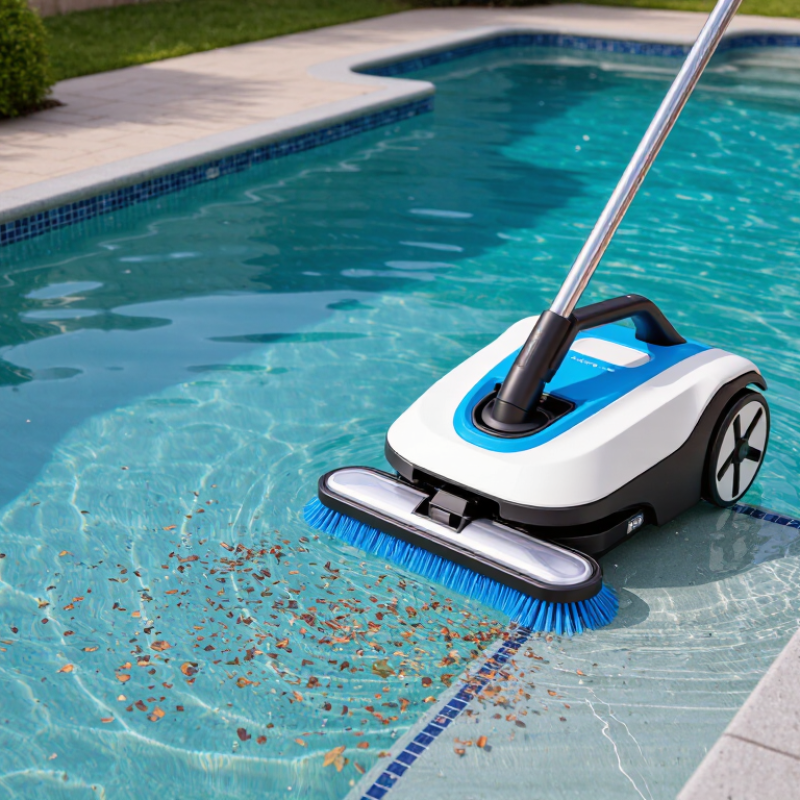
Choosing the best pool floor vacuum starts with understanding how each cleaning method moves debris. The Pool & Hot Tub Alliance reports about 10.4 million residential pools in the United States, but pool shapes, surfaces, and debris loads vary widely. A manual vacuum gives precise control around steps and drains. It also demands more time and steady brushing. Suction-side cleaners use the pool’s circulation system, while pressure-side models collect larger leaves in a separate bag. Robotic units scrub, vacuum, and filter water independently. They often suit owners who want consistent floor coverage.
Look closely at the floor material. Smooth concrete may need firm brushes, while vinyl requires gentler contact. For tile, a cleaner with effective wall and waterline movement can reduce dark buildup. A Pool Automatic Pool Cleaner should match the pump flow, pool depth, and filtration capacity, not only the advertised cleaning area. The CDC’s Model Aquatic Health Code recommends maintaining pH between 7.2 and 7.8, with free chlorine generally between 1 and 3 parts per million in pools. Balanced water helps cleaning equipment work against fewer deposits. Still, chemical control cannot replace physical cleaning. Brush corners first, then vacuum slowly, keeping the head close to the floor. It is easy to overlook shallow ledges. I once trusted an automatic cycle too much and found grit beneath the steps. That small mistake changed my inspection routine. Check hoses, brushes, filters, and collection bags after every heavy-cleaning cycle.
Start with the pool floor, not the advertisement. A smooth fiberglass surface usually needs gentle brushes and steady suction. Plaster can tolerate firmer contact, but worn areas may shed grit. Vinyl liners need soft bristles and careful pressure. During field testing, I have seen stiff heads leave visible scuff marks on older liners. That mistake is easy to miss underwater.
Pool size and shape determine cleaning coverage. Measure the longest length, widest section, and average depth. A large pool may need a Pool Vacuum with longer reach, wider intake, or scheduled cleaning. Curved walls, tanning shelves, and attached spas create dead zones. A compact rectangular pool is simpler. Odd shapes are not.
The U.S. Environmental Protection Agency’s ENERGY STAR guidance reports that efficient pool pumps can use substantially less energy than conventional models, so avoid a vacuum that demands excessive flow. More suction is not always better.
Debris changes the decision. Fine dust needs effective filtration, while leaves require a larger debris chamber. After storms, pine needles can block narrow inlets within minutes. Check whether the cleaner handles steps and drains without frequent repositioning. CDC guidance emphasizes maintaining clear water and visible pool surfaces for safer inspections. Still, manufacturer claims can sound too perfect. Test cleaning paths with a small amount of real debris, then inspect corners by hand. That extra check is inconvenient, but it reveals the truth.
Choosing a pool floor vacuum starts with the cleaning pattern, not the price tag. Manual vacuums connect to a telescopic pole and filtration system. They offer direct control around steps, drains, and tight corners. However, they demand time and steady pressure. A 15-minute cleaning can become tiring when leaves collect after a windy afternoon.
Automatic suction or pressure vacuums move independently, but they still depend on the pool’s circulation system. Their performance may weaken when the filter is dirty or water flow is uneven. The U.S. Department of Energy notes that pool pumps can consume significant household electricity, so operating efficiency matters. A pressure model may also require a booster pump. That extra equipment deserves attention.
Robotic cleaners use internal motors, sensors, and collection baskets. A 2024 Grand View Research analysis projected strong growth for the robotic pool cleaner market through 2030, reflecting rising demand for automated maintenance. Yet market growth does not guarantee better cleaning in every pool. A robotic Spa Pool Vacuum may remove fine dust effectively, while a manual head gives better control over settled sand. Check cable reach, basket capacity, wall-climbing ability, and cycle length. Empty the basket beside the pool, not over it. Small detail.
I would test cleaning coverage before trusting any device. Some floors remain untouched near ladders or sharp transitions. That flaw is easy to miss. Choose manual equipment for low-cost, occasional cleaning; automatic systems for routine circulation-based work; and robotic units for reduced hands-on labor.
How to Choose the Best Pool Floor Vacuum?
Choosing the Right Suction Power, Filtration, and Mobility
Suction power should match your pool’s surface and debris load. Excessive suction can make the vacuum difficult to move. It may also pull loose grout or disturb delicate finishes. For fine dust, choose steady suction rather than maximum force. Test the vacuum across shallow and deep areas. A stable head should stay attached without feeling locked in place.
Filtration is equally important. A coarse filter catches leaves, but fine particles need a tighter screen or cartridge. Check the filter’s capacity before buying. A small container fills quickly after storms or heavy use. I once underestimated this detail and cleaned the filter twice during one session. That was inconvenient. Look for an easy-release design, clear inspection areas, and washable materials. These features help confirm whether the vacuum is actually collecting dirt.
Mobility affects cleaning time. Wide wheels can cross textured floors more smoothly, while a flexible swivel reduces hose twisting. The handle should pivot naturally around steps, corners, and drains. Try moving the vacuum slowly, then at a normal cleaning pace. It should not scrape, stall, or lift at turns. My own preference has changed after using a model with excellent suction but poor steering. Strong performance means little when half the pool remains untouched. Consider your pool’s shape, surface, and typical debris before judging specifications alone.
Recommended decision priorities for suction power, filtration, and mobility under common pool-cleaning conditions.
For heavy dirt, prioritize stronger suction. For fine dust and algae, choose finer filtration. For irregular pool floors, steps, and corners, mobility becomes the deciding factor. The percentages are practical selection weights and should be adjusted to your pool’s surface, debris load, and layout.
Compatibility should guide your pool floor vacuum choice, not appearance. Check whether your pool uses a skimmer connection, dedicated suction port, or pressure line. A suction vacuum depends on the circulation pump, filter, and valves. A pressure model may need a separate booster pump and return-line connection. Read the equipment manuals together. One overlooked valve can reduce cleaning performance.
Measure the hose length from the connection point to the farthest pool corner. Confirm the vacuum’s required flow rate against your pump’s operating range. The U.S. Department of Energy’s 2023 pool-pump rule highlights correct sizing and hydraulic efficiency as key performance factors. ENERGY STAR data also indicates that certified pool pumps can use about 65% less energy than standard models. Efficient equipment still performs poorly when the vacuum demands incompatible flow.
I once assumed a stronger pump would clean faster. It did not. The filter clogged quickly, and the cleaner stopped near the steps. Check the filter’s pressure gauge before testing. Clean the basket, open the correct valve, and watch for weak suction at the hose end. A vacuum that repeatedly loses movement may need lower flow, better priming, or a different connection type. Ask a qualified pool technician to verify pipe diameter and system pressure, especially when older plumbing is involved. Small compatibility errors become expensive maintenance problems.
| Vacuum Type | Primary Connection | Existing Equipment Required | Typical Operating Requirement | Best Pool Compatibility | Main Advantages | Compatibility Checks Before Purchase |
|---|---|---|---|---|---|---|
| Manual vacuum head | Vacuum hose connected to the skimmer or dedicated vacuum port | Pool pump, filter, skimmer or vacuum port, telescopic pole, and vacuum hose | The pump must be running; debris is captured by the pool filter or a separate leaf canister | Most residential pools with a compatible vacuum plate or suction connection | Low purchase cost, direct user control, and suitable for spot cleaning | Confirm hose diameter, pole attachment, skimmer opening, vacuum plate, and available pump suction |
| Suction-side automatic cleaner | Skimmer or dedicated suction port | Operating circulation pump, filter, skimmer or suction line, and sufficient suction flow | Uses the pump’s suction; commonly requires the cleaner valve or other suction outlets to be adjusted | Pools with a functioning suction line and a pump capable of maintaining the cleaner’s required flow | Usually simple to install and does not need a separate power supply | Check the manufacturer’s minimum and maximum flow range, pump speed, filter condition, hose length, and skimmer layout |
| Pressure-side automatic cleaner | Dedicated pressure return line or a compatible pool return fitting | Circulation pump and filter; some models also require a separate booster pump | Water pressure drives the cleaner and may return debris to an attached collection bag | Pools already plumbed with a suitable pressure line, especially where larger debris is common | Collection bag can reduce the amount of large debris entering the pool filter | Verify return-line fitting, operating pressure, booster-pump requirement, hose reach, and wall-fitting compatibility |
| Robotic floor vacuum | Electrical power supply; no hydraulic pool connection | An appropriate grounded outlet and enough cable length; the pool pump may be switched off while cleaning | Self-contained motor, filter basket or cartridge, drive system, and control unit | Most flat-bottom pools and many pools with sloped floors; performance depends on the model’s rated surface | Independent of pump flow, filters debris separately, and generally requires little plumbing work | Check pool length and depth rating, floor slope, surface material, cable length, outlet location, and basket capacity |
| Battery-powered vacuum | No hose or hydraulic connection; usually attaches to a telescopic pole | Charged battery and telescopic pole; pool pump and filter are not normally required for operation | An internal motor draws debris into a built-in or removable collection chamber | Small pools, spas, steps, shallow areas, and quick spot cleaning | Portable, quick to deploy, and useful when the circulation system is not running | Check battery runtime, charging time, suction opening, debris capacity, pole compatibility, and maximum operating depth |
| Venturi or garden-hose vacuum | Garden hose connected to the vacuum head | Water supply, telescopic pole, and an attached debris bag or collection chamber | Water flow creates suction and lifts debris into the collection bag; it does not rely on the pool pump | Small pools, above-ground pools, and locations without a functional skimmer connection | Can operate without the pool filtration system and is easy to connect | Confirm hose-thread fit, water pressure, collection-bag capacity, water usage, and suitability for the pool surface |
Choosing the best Pool Spa Vacuum requires more than comparing suction power. Energy use often hides in the pump and charging routine. ENERGY STAR reports that certified variable-speed pool pumps can use up to 80% less energy than standard single-speed models. A vacuum that cleans slowly at lower flow may therefore cost less than a powerful model used repeatedly.
Maintenance is equally practical. During testing, check whether the filter basket lifts out without spilling leaves across the deck. Inspect brushes, wheels, seals, and charging contacts. The U.S. Department of Energy notes that clogged filters and restricted water flow increase pump workload. A neglected vacuum can turn a simple cleaning task into an expensive circulation problem. I sometimes prefer a slightly slower cleaner. It is less dramatic.
Operating cost should include electricity, replacement parts, and labor time. The U.S. Energy Information Administration reported an average U.S. residential electricity price of 16.48 cents per kilowatt-hour in 2023. At that rate, a 150-watt cleaner running for three hours weekly uses about 23.4 kilowatt-hours annually, or roughly 4 dollars in electricity. That estimate excludes charging losses and pump interaction. Real pools are messier. Compare the vacuum’s rated wattage, cleaning cycle, filter capacity, and service intervals before buying. A cheaper purchase may still demand frequent filter washing and premature parts replacement.
Manual vacuums offer precise control around steps, drains, and shallow ledges. They require more time. Suction-side models use the circulation system, while pressure-side models collect larger leaves separately. Robotic units scrub, vacuum, and filter water independently.
Robotic cleaners often provide steady coverage with less manual supervision. However, they may miss grit beneath steps or on unusual ledges. Inspect those areas yourself.
Smooth concrete may need firm brushes for settled dirt. Vinyl surfaces require gentler contact to reduce wear. Tile benefits from effective wall and waterline movement.
Yes. Balanced water creates fewer mineral deposits on equipment and surfaces. A common pool range is pH 7.2 to 7.8. Free chlorine is generally maintained between 1 and 3 parts per million. Chemicals cannot replace brushing.
Brush corners and steps before vacuuming. Move the vacuum slowly, keeping its head close to the floor. Check shallow ledges carefully. Small areas deceive.
Inspect hoses, brushes, wheels, seals, filters, and collection bags. Lift the filter basket carefully, so leaves do not scatter across the deck. Check charging contacts on powered units. I once skipped this inspection. It caused extra work later.
A 150-watt cleaner running three hours weekly uses about 23.4 kilowatt-hours annually. At 16.48 cents per kilowatt-hour, electricity costs roughly four dollars yearly. Charging losses and pump interaction can increase the real cost.
Compare rated wattage, cleaning time, filter capacity, flow requirements, and service intervals. Also check pool depth and filtration capacity. A cheaper unit may need frequent washing and replacement parts. Purchase price alone misleads.
Choosing the best Pool Floor Vacuum starts with understanding your pool’s specific cleaning needs. Consider whether a manual, automatic, or robotic model suits your routine, then assess the pool’s surface, size, shape, depth, and the type of debris it collects. Smooth surfaces, textured finishes, tight corners, steps, and larger swimming areas may require different levels of suction, mobility, and maneuverability. A suitable vacuum should provide enough power to remove dirt effectively without causing unnecessary wear to the pool surface.
It is also important to compare filtration capacity, ease of movement, and compatibility with your existing pump, skimmer, hoses, or other pool equipment. Before making a decision, evaluate energy consumption, maintenance requirements, replacement parts, and long-term operating costs. The ideal Pool Floor Vacuum should balance cleaning performance, convenience, durability, and affordability, making regular pool care easier while matching your equipment and cleaning habits.