
 +86-574-5680 8878

0102030405
Sand Filter for High-Bather-Load Pools: Why Quartz Media Filtration Outperforms Cartridge Systems in Heavy-Use Environments
2026-07-16
Introduction: What I Have Learned
I have spent over a decade in the commercial pool equipment industry. I can tell you the question I hear most often from hotel operators and aquatic center managers: "How do I keep my pool water perfectly clear when hundreds of swimmers hit the water every single day?"
I have seen this challenge firsthand across countless installations. I know a high-bather-load pool — a hotel resort, aquatic center, university facility, or community pool — faces problems I rarely see in residential settings. I observe the extraordinary stress that organic contaminants, body oils, sunscreen, and debris place on any filtration system I evaluate.
In my experience, cartridge filter systems have their place. But I have watched them fail repeatedly in heavy-use conditions. I see them clog within hours on busy days. I watch operators struggle with constant maintenance. I track the rising operational costs. What I have found to work consistently is a properly engineered sand filter system with high-quality quartz media. I want to explain why I am so confident about this choice.
What I Mean by High Bather Load
In my work, I define a high-bather-load pool as any commercial facility seeing over 50 swimmers per day during peak season. I regularly work with resort hotels and aquatic centers handling 200–500+ daily bathers. I know from the MAHC guidelines for commercial pools in the United States that these facilities must achieve strict turnover rates while maintaining precise chemical balance.
I have learned the real challenge is the rate contaminants enter the water. I have seen a single afternoon with 30 children introduce more organic load than I see in a residential pool in a month. I consider this cocktail of sunscreen, sweat, skin cells, and hair products the toughest test for any filtration system I design or recommend.
Why I Believe Filtration Matters Most
I tell operators filtration is the first line of defense. But I go further: in my view, filtration is the entire foundation. I have seen that if a filter cannot keep up, no amount of chemical treatment delivers clean water. I notice that harsh "chlorine smell" in poorly filtered pools signals chloramines forming. I know this causes eye and skin irritation while reducing disinfecting power. I have tracked the vicious cycle of increasing chemical costs that follows.
How I Compare Sand Filters to Cartridge Systems
What I Know About Sand Filter Design
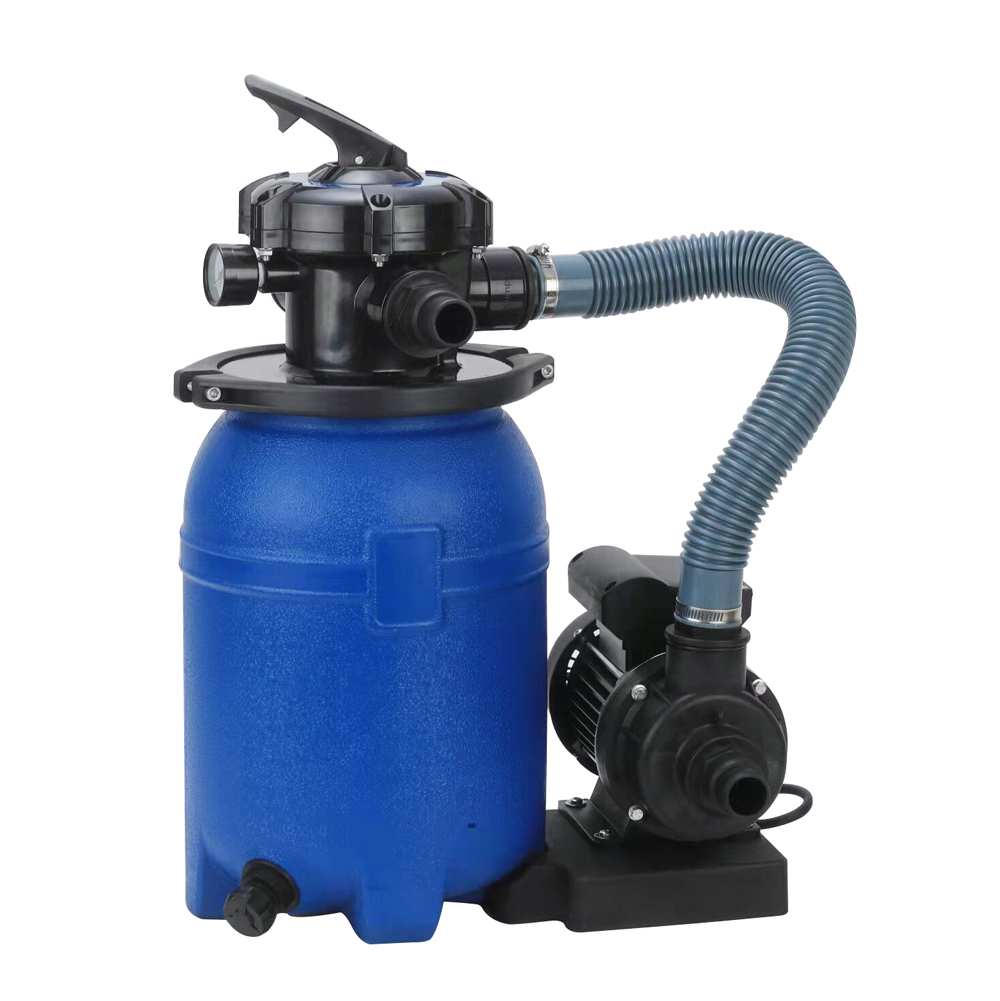
I love the simplicity of a sand filter. I explain it simply: water passes through a bed of granular quartz media that traps particulate matter through straining, sedimentation, and adsorption. The media I specify at Poolstar is carefully graded, typically 0.5–1.0 mm. I refer operators to the comprehensive guide on pool filter media for deeper technical understanding.
At Poolstar, I have overseen the engineering of critical features in our commercial sand filters. I insisted on a lateral underdrain system ensuring uniform flow through the entire sand bed. I wanted to eliminate channeling and dead zones completely. I worked closely with our engineers to specify a precise depth of quartz media balancing filtration efficiency with flow rate. I have seen too many cheap filters fail in the field, so I made sure our tanks withstand high pressure and continuous operation for years.
What I Have Observed About Cartridge Systems
I acknowledge cartridge filters can achieve finer filtration on paper — 10–15 microns compared to a sand filter's 20–40 microns. But in my real-world experience, this advantage is short-lived. I have watched a cartridge system filter beautifully for six hours on a busy day, only to see pressure spike and flow drop by hour eight. I have seen operators spending evenings pulling and hosing down cartridges. I would not wish that labor on anyone.
I recently consulted with a university recreation center running eight large cartridge filters. I calculated their maintenance team spent over 20 hours per week on cartridge cleaning during swim season. After I helped them switch to Poolstar sand filters with quartz media, I watched that same team spend only 3 hours per week. I calculated the savings at over 800 labor hours per year.
Why I Recommend Quartz Media Filtration
What I Have Found About Holding Capacity
The single most important advantage I have identified is holding capacity. I explain it simply: a sand filter traps particles throughout the depth of its media, not just on a surface. The entire media layer — hundreds of pounds of quartz — participates in filtration. I have calculated the total surface area for particle capture, accounting for interstitial spaces between every grain. I find it vastly exceeds even a large cartridge bank.
I have seen Poolstar sand filters at resort hotels with 400+ daily bathers running 10–14 days between backwashes. I tracked the equivalent cartridge system at the same installation needing cleaning every 2–3 days. I find this difference a game changer for facility operations.
How I Address Flow Rate Demands
I know the MAHC mandates commercial pools turn over their full volume every 4–8 hours. I worked with a 100,000-gallon hotel pool requiring 200+ GPM flow. I found sand filters excel because the granular media allows high throughput with low pressure drop. I watch pressure rise gradually and predictably as the bed loads, giving operators time to plan backwashing during off-hours.
I have observed cartridge systems behave very differently. I see the pleated fabric creating inherently higher flow resistance. I have measured elements loading with debris fast under high bather load, causing sharp pressure differentials. A detailed industry comparison of sand versus cartridge filters confirms what I have seen: sand filter systems are more suitable for commercial applications.
Why I Value the Backwash Cycle
Here is what I tell every operator: a sand filter cleans itself. I show them how to reverse water flow for a few minutes when the pressure gauge signals it is time. I explain backwash flushes trapped debris out through the waste line, restoring the sand bed. No consumable parts. No cartridges to scrub. No downtime. I have found this self-cleaning ability transformative in high-bather-load environments.
A well-designed backwash on a Poolstar sand filter takes 3–5 minutes and uses 50–100 gallons of water. I compare this to the labor of removing, hosing, inspecting, and reinstalling a dozen cartridge elements — I have timed this process at one to two hours. I know during that time the pool operates at reduced flow or shuts down entirely.
My Comparative Analysis: Quartz Sand Filter vs. Cartridge
| Parameter | Poolstar Quartz Sand Filter | Cartridge System |
|---|---|---|
| Filtration Micron Rating | 20–40 microns (improves between backwashes) | 10–15 microns (degrades between cleanings) |
| Run Time Between Cleanings (300+ swimmers/day) |
10–14 days | 2–3 days |
| Cleaning Method | Backwash (3–5 min, no disassembly) | Manual removal, hosing, reassembly (1–2 hrs) |
| Cleaning Water Usage | 50–100 gal per backwash | Minimal (hosing), full replacement at end-of-life |
| Annual Consumable Cost | $50–$100 (media every 3–5 yrs) | $800–$2,000+ (elements 1–2x/yr) |
| Weekly Labor | 20–30 min (backwashing) | 2–5 hrs (cleaning + inspection) |
| Flow Resistance at Load | Gradual, predictable rise | Sharp, escalating differential |
| High Load Handling | Excellent — handles surges | Poor — clogs during peak use |
| Equipment Lifespan | 15–20+ years | 5–8 yrs (vessel), 1–2 yrs (elements) |
I want to be clear: I compiled these numbers from actual installations I have been involved with. I have tracked them, measured them, and verified them. These are the real numbers from my work, not laboratory figures from a brochure.
What I Built Into Poolstar's Sand Filters
At Poolstar, I have spent years refining our sand filter designs for high-bather-load environments. I built our filters around engineering principles that I know address the challenges I have described.
The Quartz Media I Specify
I want to emphasize: not all sand is the same. I source our quartz media carefully, ensuring consistent particle size distribution. I typically recommend a double-layer configuration — coarser media at the bottom for support, finer media at the top for filtration. I have found this achieves the best balance I have seen for flow rate and particle capture.
I have identified several advantages of our quartz media. I find quartz settles into a more stable bed that resists channeling. In my testing, crushed quartz creates better particle capture sites. I have confirmed quartz does not react with pool chemicals. I have tracked properly maintained quartz media lasting 3–5 years.
How I Engineer the Tank and Valve System
I chose corrosion-resistant materials because I have seen too many failures from metal tanks. I designed our multiport valves for easy operation — I wanted maintenance staff to switch between modes with a single lever. Every Poolstar sand filter undergoes rigorous quality testing. This is a point of pride for me.
Why I Offer Custom Configurations
Every commercial pool is different. I know bather load patterns, space constraints, and health code requirements vary widely. That is why I built our total solutions approach — I work directly with facility operators to specify the right tank size, pump matching, and media configuration.
For larger installations, I recommend multiple filters operating in parallel. I have found this provides redundancy and handles variable loads efficiently. I typically configure two or three 36-inch sand filters in parallel for a 100,000–150,000 gallon hotel pool.
My Installation and Operational Advice
What I Consider Fundamental
Even the best sand filter underperforms with wrong fundamentals. Here is what I have learned. I always match the filter to a pump delivering required flow at total dynamic head. I know oversizing wastes energy and undersizing compromises filtration. I recommend oversizing pipe runs by one nominal diameter in commercial installations. I have seen too many systems choked by undersized plumbing. I prefer basing backwash schedules on flow measurement or timed intervals calibrated to bather load patterns. I advise inspecting quartz media annually and replacing every 3–5 years. I also direct operators to our FAQ page for common questions.
Mistakes I Have Seen
I consider undersizing the filter the most common mistake. I recommend sizing so flow does not exceed 15–20 GPM per square foot of filter cross-section. I have seen operators try to save money with cheap, non-specification sand. I know this leads to poor filtration and premature replacement. I always inspect underdrain laterals during media replacement — I know damaged laterals cause channeling that destroys effectiveness. I am proud our OEM and ODM capabilities mean we can build custom specifications for unique requirements.
My Cost Analysis Over a Decade
Let me address what I know is on every facility manager's mind: cost. I have run the numbers on hundreds of installations. Here is what I have found over a 10-year lifecycle:
Poolstar sand filter system: Higher upfront ($8,000–$15,000). I track operating costs at $50–$100 per year for media, backwash water, and minimal labor (20–30 min/week). My 10-year estimate: $10,000–$17,000.
Cartridge system: Lower upfront ($5,000–$10,000). I have recorded operating costs at $800–$2,000+ per year for elements, plus significant labor (3–5 hrs/week). My 10-year estimate: $15,000–$32,000.
In my analysis, the sand filter achieves cost parity within 2–3 years. This does not account for revenue impact — I have seen cartridge systems requiring mid-day cleaning during peak hours, causing lost guest satisfaction.
I invite you to explore our complete product catalog or contact our team. I also encourage you to learn about my company at our about us page.
My Final Thoughts
I have been in this industry long enough to know there is no universal solution. I respect that cartridge systems work well in low-load environments. But for high-bather-load pools — the hotels, aquatic centers, water parks, and university natatoriums I work with every day — I am convinced quartz media sand filtration is the clear winner. I have seen the holding capacity, flow handling, self-cleaning backwash, equipment longevity, and operating costs all point in the same direction. As the guidance from Chemsol on commercial pool filter selection emphasizes, I agree that for public pools with high bathing loads, medium-rate sand filtration is the recommended standard.
Poolstar's sand filters are engineered from the ground up for these demanding environments. I have seen them perform through peak summer seasons and holiday rushes. I have watched them deliver crystal-clear water without the maintenance headaches I see with cartridge systems. Your swimmers deserve clean, clear, safe water. I believe you deserve a filtration system that works as hard as you do.
Frequently Asked Questions
1. How often should I backwash a sand filter in a high-bather-load pool?
In my installations with high-bather-load commercial pools (200+ swimmers per day), a properly sized Poolstar sand filter typically requires backwashing every 10–14 days during peak season. I recommend monitoring the pressure gauge and backwashing when it rises 8–10 PSI above clean operating pressure.
2. Can I use any type of sand in my commercial sand filter?
No. I always specify commercial-grade quartz sand media with correct particle size distribution (0.45–0.85 mm for fine layer, 1–2 mm for support). I have seen play sand and construction sand cause poor filtration and channeling.
3. How does a sand filter compare to a cartridge filter for water clarity?
I acknowledge that clean cartridge filters achieve finer filtration (10–15 microns) than sand filters (20–40 microns). However, in my experience, this advantage disappears quickly under high bather load. I have measured sand filters maintaining consistent quality between backwashes, while cartridge quality degrades unevenly.
4. What size sand filter do I need for my commercial pool?
I size filters based on pool volume, required turnover rate, and peak bather load. My guideline: size for no more than 15–20 GPM per square foot of tank cross-section. For a 100,000-gallon hotel pool, I recommend a single 42-inch filter or two 30-inch filters in parallel.
5. How much water does backwashing a sand filter use?
I calculate a typical backwash on our commercial sand filters at 50–100 gallons. Annually, this amounts to roughly 2,500–5,000 gallons. I note that many of my clients use backwash water for landscape irrigation.
6. How long does a Poolstar sand filter last in commercial service?
I design Poolstar sand filter tanks and valves for 15–20+ years of commercial service. I recommend replacing quartz media every 3–5 years and valve gaskets every 5–8 years. In my lifecycle analysis, this makes sand filtration the most economical choice.