
 +86-574-5680 8878


TL;DR:
The first time a temperate-climate pool operator pulled me aside to walk through a shoulder-season operating problem, it was not a pool-heating problem and it was not an operating-hours problem. The outdoor rinse-off shower was running cold-water at the start of every spring and autumn day, and the swimmers were cutting the rinse-off short or skipping it entirely. Our marketing team at Poolstar was called in because the operator wanted a single supplier that could talk through both the shower spec and the seasonal operating window. From that point onward, the conversation on our review bench has consistently come back to the same place: a hybrid solar-electric shower with a 12V electric backup, sized to the operating window the operator wants to extend into the shoulder season. I have personally walked through this review with pool operators across three continents in the past twelve months, and as a rule the shoulder-month sun-hour analysis is the document that decides the spec faster than any other single input.
Outdoor pool facilities in temperate climates have been adding hybrid solar-electric shower systems over the past several years, and the facilities aiming to extend the shoulder-season swimming window are the ones where the shower spec is the highest-priority engineering decision in their outdoor amenity spend. The single most common decision behind a successful shoulder-season extension is the engineering spec of the hybrid solar-electric shower relative to the operating temperature target. I have personally walked through this spec conversation with temperate-climate pool operators on more than a dozen engagements, and as a result I can say with confidence that the spec conversation sets the shoulder-season extension depth. This is the conversation our team at Poolstar has been running with pool operators across Europe, North America, and Australia, where the solar shower center platform converts the shoulder-month solar window into a measurable swimming-season extension.
How much heat a solar shower collects in temperate climate
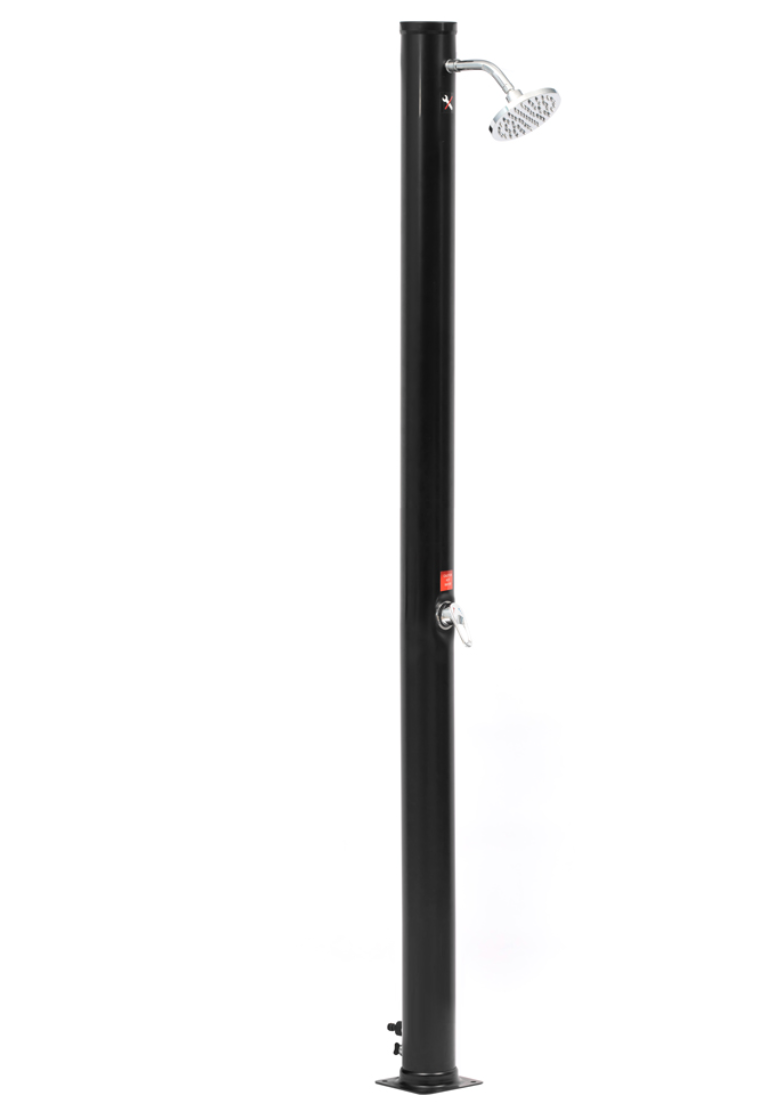
A 23-liter poolside solar shower sitting in direct sun on a 20°C ambient day will collect roughly 4-6 kWh of usable thermal energy through a typical 6-hour sun window. That's enough hot water for 8-12 rinse-off sessions at a comfortable 32-38°C delivery temperature. As the ambient temperature drops into the shoulder-season range (10-15°C), the same sun window delivers 3-4 kWh of usable thermal energy, which in turn supports 5-8 rinse-off sessions at the same delivery temperature. This is the engineering envelope that a hybrid solar-electric shower is sized against for the shoulder-season extension.
The shoulder-month solar math is what our review bench at Poolstar walks pool operators through on the front end of every hybrid shower engagement. A pool that closes for the season when the ambient air temperature drops below 12°C can typically extend the season by 4-6 weeks with a hybrid system that covers the solar-collection gap. Where the operator wants to extend further into the early-spring or late-autumn window, the 12V electric backup has to be sized for the lower solar yield, so consequently the engineering conversation shifts from a solar-only spec to a hybrid solar-electric spec.
In my observation of the past several years of temperate-climate pool-operator reviews, the deciding factor on whether a solar shower extends the swimming season by 6 weeks versus 10 weeks is whether the solar-thermal collector is sized to the spring shoulder-month sun-hours rather than to the summer peak.
Why a hybrid solar-electric design is the spec for temperate climates
The hybrid solar-electric shower line is engineered specifically for temperate-climate applications where a pure solar shower would fall short of the shoulder-season operating window. The engineering logic is straightforward:
- Solar-only showers fail the shoulder-season extension. A pure solar shower delivers 32-38°C water in summer sun but drops to 18-22°C in shoulder-month conditions. The 18-22°C rinse-off is below the comfort threshold, so consequently swimmers cut the rinse short.
- The 12V electric backup closes the solar-thermal gap. A solar-thermal collector combined with a small electric heating element (typically 12V battery or PV-coupled) tops up the delivery temperature during low-sun windows. The hybrid system delivers 32-40°C water across a wider solar-availability range than a pure solar shower can.
- Off-grid operation supported by solar PV. For sites that want to avoid grid-tied electric service, the hybrid design can run entirely from a small PV-coupled battery bank. This is the spec for remote pool facilities and eco-resort operators.

Three zones where the shoulder-season extension is won or lost
From the conversations our team runs with temperate-climate pool operators, three engineering decisions decide whether a hybrid solar shower extends the swimming season by 4 weeks or by 10 weeks:
Zone 1 — Solar-collector sizing for the shoulder-month sun window
The first zone is the solar-collector sizing. The collector area is sized to the spring shoulder-month sun-hours (April and October in the northern hemisphere), not to the summer peak. In my experience on the Poolstar review bench, the engineering teams that fail this zone are the ones that size the collector area to the summer-peak sun-hours and ignore the shoulder-month yield drop.
Zone 2 — Electric backup control logic
The second zone is the electric backup control. The backup element has to activate when the solar-thermal yield drops below the operator's target delivery temperature, and the control has to maintain a consistent shower temperature regardless of the sun cloud cover. For temperate-climate operators, the electric backup typically runs only during the shoulder-season months, so consequently the annual electric draw is much smaller than the peak-summer solar yield.
Zone 3 — Tank volume vs shower throughput
The third zone is the tank volume versus shower throughput. A 23L tank supports about 4-5 minutes of continuous shower flow, which covers the typical rinse-off session. For facilities expecting longer shower durations (multi-user rinse-off or hand-wash stations), the tank volume scales up to 35L or 45L. Our team at Poolstar supplies the 35L hybrid solar-electric model as the standard offer for the temperate-climate market.
Sizing spec step 1 — Match tank volume to the shoulder-season temperature target
The mistake that comes back wrong in our review bench most often is sizing the solar shower to a generic 23L tank and back-calculating the shoulder-season temperature from a fixed-output assumption. On a temperate-climate pool facility, this almost always produces a shower that delivers the summer target temperature but falls short in the shoulder months.
The correct order is:
- Define the shoulder-season delivery temperature target. The operator's target delivery temperature for the shoulder months (typically 32-38°C) is the spec that drives the hybrid system design.
- Allocate the heat supply between solar and electric. The solar-thermal collector covers the sunny-day yield, and the electric backup covers the sun-cloud transition and the early-morning / late-evening windows. The hybrid mix is sized to keep the delivery temperature within the comfort band.
- Translate the delivery temperature into a tank volume target. The tank volume is sized to support the typical rinse-off session duration. A 4-5 minute session calls for a 23L tank; longer sessions call for 35L or 45L.
- Select the solar shower model after the hybrid spec is locked. The Poolstar model selection is what remains after the solar-collector sizing and the electric backup spec have constrained the candidate list. This is the only order that holds up against a shoulder-month commissioning review.
This is the order of decisions our team at Poolstar walks through with every temperate-climate pool operator engagement where the shoulder-season extension is the gating constraint. The conclusion is consistently the same: a hybrid solar-electric model selected against the temperature target, with the tank volume sized to the rinse-off session duration.
Sizing spec step 2 — Mounting and orientation
The single biggest engineering decision behind a successful shoulder-season extension is the solar-collector mounting and orientation. A solar shower installed in a shaded corner of the pool deck delivers 30-40% less thermal yield than the same shower installed in a south-facing open-sky position. Our team at Poolstar treats the mounting position as part of the spec, not as an optional on-site consideration.
The mounting and orientation spec typically includes:
| Mounting Spec | Standard Configuration | Why it Matters |
|---|---|---|
| Orientation | Solar collector facing true south (northern hemisphere) or true north (southern hemisphere) | Maximizes shoulder-month sun-hours capture |
| Tilt angle | Latitude angle minus 10° for shoulder-month optimization | Trade-off between summer peak and shoulder yield |
| Shading clearance | No shading from buildings or trees between 9 a.m. and 4 p.m. | Each hour of shoulder-month sun adds roughly 7-10% to annual thermal yield |
| Anchor base | Concrete pad or ground anchor for high-wind sites | Stability against coastal or storm events |
The Poolstar product line covers both ground-mount and wall-mount configurations for the solar showers center line, with engineering guidance on the optimal mounting position for the temperate-climate shoulder-month operating window.
Sizing spec step 3 — Electric backup integration and off-grid option
For facilities expecting to run the shower across the spring and autumn shoulder months, the electric backup has to be integrated into the operating envelope. Pure solar showers cannot deliver 32°C water at 8 a.m. on a cloudy shoulder-month morning, so consequently the electric backup is what holds the operator's shoulder-season extension.
The electric backup spec typically includes:
- 12V low-voltage heating element. A small 12V element (typically 100-200W) tops up the solar-thermal yield. Low-voltage operation supports battery-coupling for off-grid sites.
- PV-coupled battery option. For off-grid facilities, a small PV panel (50-100W) and a 12V battery (50-100Ah) power the backup element. The battery is sized for one or two consecutive cloudy days.
- Smart thermostatic control. The thermostatic control gates the electric backup element to the operator's delivery temperature setpoint, so consequently the backup only fires when the solar-thermal yield drops below the target.
For temperate-climate facilities running solar showers across a six-month operating window, our team at Poolstar recommends the 12V hybrid configuration with PV-coupling as the standard spec, so consequently the shower delivers the operator's shoulder-season target regardless of the sun-cloud transition.
What goes wrong when the spec is wrong
Across the temperate-climate pool-operator engagements our team has reviewed, three failure modes recur when the hybrid solar-electric shower is not sized to the shoulder-season delivery target:
- Shower delivers cold water in the shoulder months. The solar-collector sizing assumed summer peak sun-hours, so consequently the shoulder-month yield drops below the operator's delivery temperature, and the shower runs cold at 8 a.m.
- Backup element over-fires on sunny days. The thermostatic control was not configured for the operator's temperature setpoint. The backup element fires continuously even on sunny days, so consequently the battery runs flat and the off-grid spec fails.
- Tank volume undersized for the rinse-off session duration. The shower ran out of hot water mid-session, so consequently the operator had to default back to the municipal cold-water supply for the late-season swimmers.
Each of these is fixable with a spec change. None of them is fixed by replacing the shower with a same-spec unit from a different supplier. Consequently, when our team is called in on a field review of this type, the spec conversation is always the first conversation. In my experience on the Poolstar review bench, the failure pattern almost always traces back to a sizing decision made before the engagement, so consequently the post-failure fix is a mounting or control-spec change rather than a unit swap.
ISO and energy frameworks for solar shower applications
Solar shower engineering in 2026 is increasingly aligned with the ISO 52081 thermal performance standards and the related IEA renewable-energy frameworks. The framework requires:
- Thermal-yield documentation. The shower's annual thermal yield is documented at the temperate-climate sun-hour reference, so the operator can verify the shoulder-season performance against a published benchmark.
- Energy-review cadence. The shower's measured yield is reviewed at the pool operator's energy-management cadence, and the review produces a documented KPI for the shoulder-season extension.
- Continuous-improvement integration. The shower's operating data feeds into the facility's continuous-improvement loop, with the thermostatic control data exported into the operator's energy-management system.
The review bench at Poolstar supports the ISO 52081 alignment by exporting the solar shower telemetry in a format that integrates with the facility's energy-management system. The IEA Renewables 2024 report and the U.S. Department of Energy's solar water heater guidance cover the engineering reference for solar-thermal pool-side applications.
Second-source evaluation for pool equipment distributors
Most Tier-1 pool equipment distributors maintain second-source qualification on the solar shower category, because the shoulder-season extension delivers a measurable revenue uplift. The qualification typically covers:
- Thermal-yield demonstration against the temperate-climate shoulder months. The candidate shower must demonstrate thermal yield at the temperate-climate sun-hour reference across a representative shoulder-month window.
- Hybrid solar-electric control documentation. The candidate control panel must support the operator's temperature setpoint and the thermostatic gating logic.
- Mounting and orientation documentation. The candidate shower's solar-collector mounting must be documented against the temperate-climate shoulder-month sun path.
- Off-grid PV-coupling option. For eco-resort and remote-pool operators, the candidate shower must support PV-coupled off-grid operation across consecutive cloudy days.
The Poolstar solar shower center line covers the hybrid solar-electric platform, with engineering support for second-source qualification on temperate-climate pool-operator engagements.
From the pool deck — a temperate-climate shoulder-season case
The most useful framing we can give a temperate-climate pool operator is one anchored in an actual pool-deck case rather than in a vendor catalog. The case I want to share goes back to a community pool facility in 2025 that came to our review bench with a shoulder-season operating window the operator wanted to extend. Our team at Poolstar traced the issue in three steps:
- Shoulder-season operating baseline measurement. We logged the operating temperature from the existing cold-water rinse-off station across a four-week shoulder-month window (April). The rinse-off temperature was running 16-19°C throughout the morning window, which was below the operator's 32°C comfort threshold and was producing a measurable decline in swimmer participation.
- Hybrid solar-electric feasibility review. The facility's deck orientation supported a south-facing solar-collector mounting, and the facility had a grid-tied 12V power supply available. A 35L hybrid solar-electric shower with PV-coupling was sized for the operator's 32°C target delivery temperature. The 12V backup element was sized to fire only during the shoulder months' sun-cloud transition windows.
- Hybrid solar-electric shower commissioning. The Poolstar 35L hybrid solar-electric model was installed at the south-facing deck position. The thermostatic control was configured for the operator's 32°C delivery setpoint. The 12V backup element engaged at 7:30 a.m. on a cloudy April morning. The shower delivered a consistent 33-35°C rinse-off across the entire morning operating window, so consequently the swim participation in the shoulder months recovered to the level the operator had targeted.
The result was that the facility extended the swimming season by six weeks into the early-spring shoulder-month window. Our team at Poolstar has replicated this kind of hybrid-solar-electric-first review across multiple temperate-climate accounts in the past twelve months, and as a rule the shoulder-season operating spec resolves what the operating-hours extension could not.
Frequently asked questions from temperate-climate pool operators
Q1. Does the solar shower extend the swimming season in temperate climates?
Yes. A hybrid solar-electric shower extends the swimming season by 4-10 weeks in temperate climates, depending on the shoulder-month sun-hours and the operator's delivery-temperature target. Our team at Poolstar sizes the system to the spring and autumn shoulder months rather than to the summer peak.
Q2. What is the typical tank volume for a temperate-climate hybrid shower?
A 23L tank supports a 4-5 minute rinse-off session. For facilities expecting longer sessions, the 35L or 45L configuration is the standard offer.
Q3. Does the hybrid design work off-grid?
Yes. The hybrid solar-electric design supports a 12V PV-coupled battery configuration for off-grid operation. The battery is sized for one or two consecutive cloudy days.
Q4. What is the typical delivery temperature from a hybrid solar-electric shower?
The hybrid system delivers 32-40°C water across a wider solar-availability range than a pure solar shower. The delivery temperature is held by the thermostatic control regardless of the sun-cloud transition.
Q5. Does the solar shower line qualify for ISO 52081 alignment?
Yes. Poolstar publishes thermal-yield data aligned with the ISO 52081 reference. The thermostatic control exports data in a format that integrates with the operator's energy-management system.
Q6. How does Poolstar support pool-equipment distributor second-source qualification?
Poolstar publishes thermal-yield demonstration data, supports hybrid control documentation review, and provides engineering support for mounting and orientation documentation. Reach through the Poolstar Facebook page or the Poolstar YouTube channel for coordination.
Q7. What is the typical solar-collector orientation for shoulder-month optimization?
South-facing (northern hemisphere) or north-facing (southern hemisphere), with the tilt angle set to the local latitude minus 10°. Our team at Poolstar reviews the mounting position as part of the spec, not as an optional on-site consideration.
Spec a hybrid solar-electric shower for a temperate-climate outdoor pool facility?
Poolstar supports second-source qualification, thermal-yield review, and ISO 52081 alignment for the shoulder-month performance data.
Request a thermal-yield demonstration →