
 +86-574-5680 8878

0102030405
Solar Skimmer vs Robot Cleaner: Which Debris Split Wins?
2026-09-29
A pool marketing director's five-debris-class verdict on the solar skimmer vs robot cleaner comparison — and the deployment split that wins each side of the pool.

TL;DR
The "which wins?" frame is the wrong frame. A solar pool skimmer and a robotic pool cleaner are not substitutes — they are two tools for two different jobs in the same pool. The right question is "which debris split wins," and the answer has five classes.
Five debris classes, five verdicts. Floating leaves and insects → solar skimmer wins. Pollen and surface film → solar skimmer wins. Sinking sand and silt → robot cleaner wins. Wall and waterline biofilm → robot cleaner wins exclusively. Large or bulky debris → neither; manual scoop or pre-filter mesh basket is the answer.
The deployment that wins. AquaJack 900 runs passively on the surface for classes 1–2 (solar-powered, 24/7 once deployed). A Poolstar robotic pool cleaner handles classes 3–4 on a scheduled cycle (typically two to three times a week for a residential pool). Manual scoop handles class 5. The split keeps the pool clean without either tool being asked to do the other's job.
The trap to avoid. Buying a robot cleaner expecting it to keep the surface free of leaves, or buying a solar skimmer expecting it to scrub the wall — both products fail at the wrong job and the buyer concludes the whole category is over-rated. The split is the answer.
Why “Which Wins?” Is the Wrong Question
The question most homeowners ask when they first see the AquaJack 900 on the Poolstar catalogue is also the question that misses the actual decision. "Which wins, solar skimmer or robot cleaner?" is a frame that pretends the two products are substitutes. They are not. They are two tools for two different jobs in the same pool, and the only honest answer to "which wins" is "neither, because they are not competing for the same debris."
The right frame is "which debris split wins," and the answer to that is genuinely useful. Surface debris wins to the solar skimmer. Sinking debris wins to the robotic cleaner. Large or bulky debris wins to a mesh pre-filter basket that both products let the previous tools bypass. Five debris classes, five verdicts, one deployment.
That is what the rest of this article works through. The AquaJack 900 solar skimmer, the robotic pool cleaner range at Poolstar, and the manual mesh basket that no manufacturer can replace handle the work together — and the work each does best is the work the other cannot do at all. Anyone comparing solar skimmer vs robot cleaner on the basis of which one to buy is asking the question one step before the question that actually matters.
Debris Class #1 — Floating Leaves, Petals, and Insects
Verdict: solar skimmer wins decisively
A floating leaf, a fresh-cut petal, a dragonfly that did not read the no-swimming sign, a strand of seed-pod: these are the buoyancy-positive or buoyant particles every pool collects between swims. They land on the surface and they stay on the surface until wind, rain, or a swimmer pushes them down to where a robot cleaner can find them.
A solar skimmer is purpose-built for this class. The AquaJack 900 is a small, solar-charged unit that drifts across the pool on its own power, scooping floating debris into an onboard mesh basket as it goes. The deployment is “put it in the pool and leave it there.” No cycle scheduling, no power cable, no manual retrieval between cycles. Once the sun is on the panel, the unit is running.
A robot cleaner cannot do this job. Robot cleaners run below the waterline; the debris sits on the surface. Even the most aggressive robot cleaner that occasionally crosses the waterline catches only a fraction of the floating load before the debris re-floats or is pushed into the corners by the cleaning flow. The two product classes are physically separated by where they work: skimmer on the surface, robot in the water column and on the floor.
The verdict for class 1 is unambiguous: solar skimmer wins decisively. The operating model of a solar skimmer (passive, continuous, surface-only) is the operating model that this debris class requires. A robot cleaner would be the wrong tool by design, and the buyer's checklist for class 1 starts and ends with the solar skimmer.
Debris Class #2 — Pollen, Dust, and the Floating Film
Verdict: solar skimmer wins decisively
Pollen season turns the surface of every outdoor pool into a yellow-tinted film within hours. Road dust from a nearby yard does the same. So does the thin organic sheen that forms on still water after a day of use. None of this debris sinks fast enough for a robot cleaner to catch before it disperses; none of it is large enough for the typical skimmer basket to ignore. The EPA's WaterSense program frames the surrounding pool-water context (filtration efficiency, water-use efficiency, and operating cost), and the same context applies to the choice between a passive skimmer and a scheduled cleaner: the tool that runs more of the time wins more of the surface.
A solar skimmer handles this class by virtue of running continuously on the surface. The AquaJack 900 and its class competitors use a fine-mesh basket that catches pollen and dust as the unit travels, and a standard mesh density catches the visible film before the surface layer becomes an irritant to skin and lip. The passive and constant operating model is again the right one: pollen in spring is a daily accumulation, and a daily accumulation is what a continuously-running surface skimmer is designed to remove.
A robot cleaner is the wrong tool for this class for two reasons. First, the robot runs below the surface; the debris floats above. Second, the robot runs in cycles, not continuously; the pollen arrives in hours, not days, and the gap between robot cycles is a long time to wait when the surface is fouling. The robot cleaner's strength is depth, frequency per scrubbing, and wall coverage; it is not built to keep a surface film from accumulating across the day.
The verdict for class 2 is also solar skimmer wins decisively. The strength of a solar skimmer in class 1 (passive surface collection) extends naturally to class 2 (passive surface film maintenance). For buyers who care about the surface experience between robot cycles, a solar skimmer is the only category that addresses it.
Debris Class #3 — Sinking Sand, Silt, and Fine Sediment
Verdict: robot cleaner wins decisively
Sand tracked in from a beach trip. Silt from a rainstorm runoff. Fine sediment that washes off a swimmer and settles to the floor. These particles sink within minutes of arriving in the water, and once they are on the floor they are out of reach of any tool that operates at the waterline.
A solar skimmer physically cannot do this job. The skimmer runs on the surface; the debris is at the bottom. Even a high-end mesh basket that captures fine particles at the surface does not retrieve the particles that have already settled. The solar skimmer's strength is in classes 1 and 2; class 3 is on the other side of the waterline from where the skimmer operates.
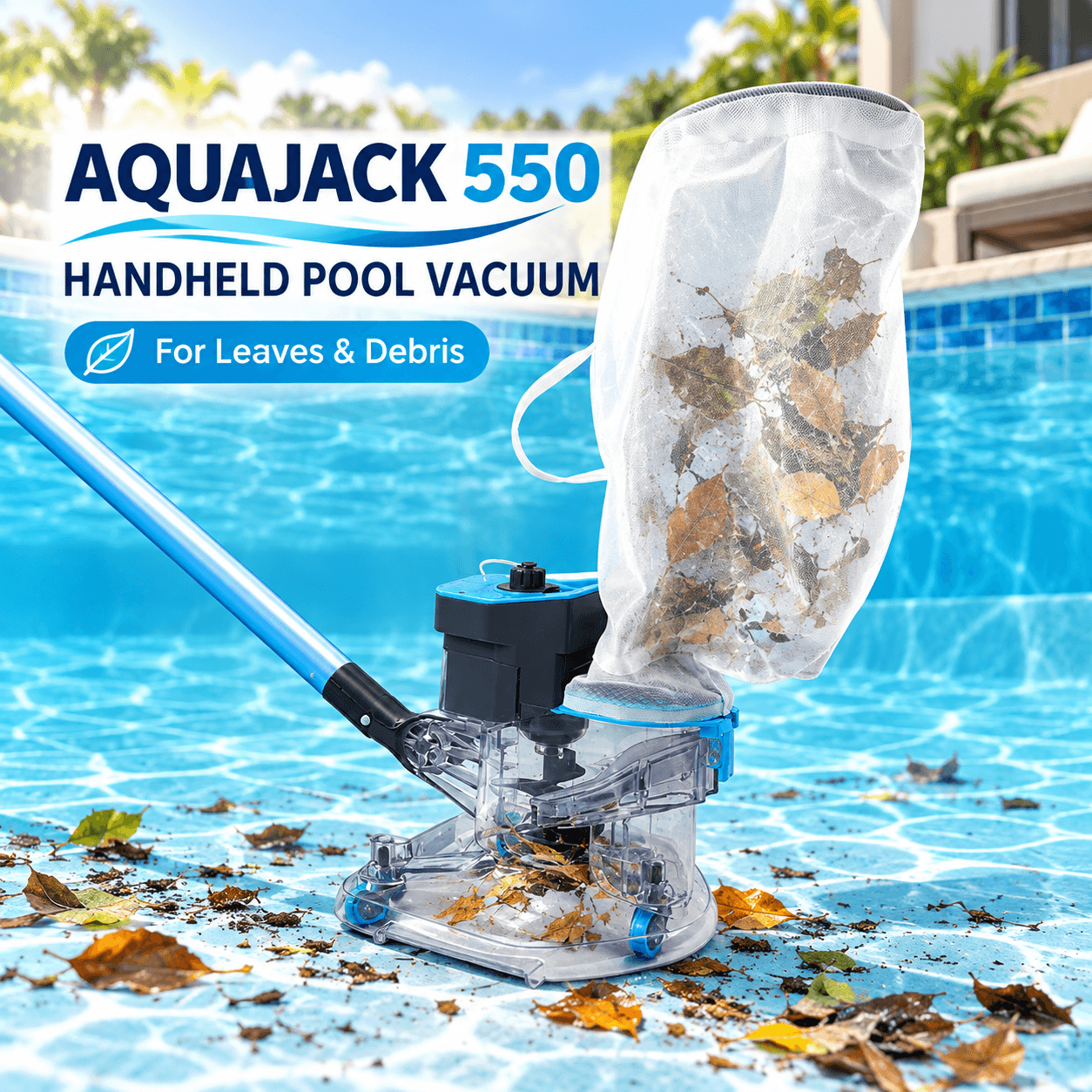
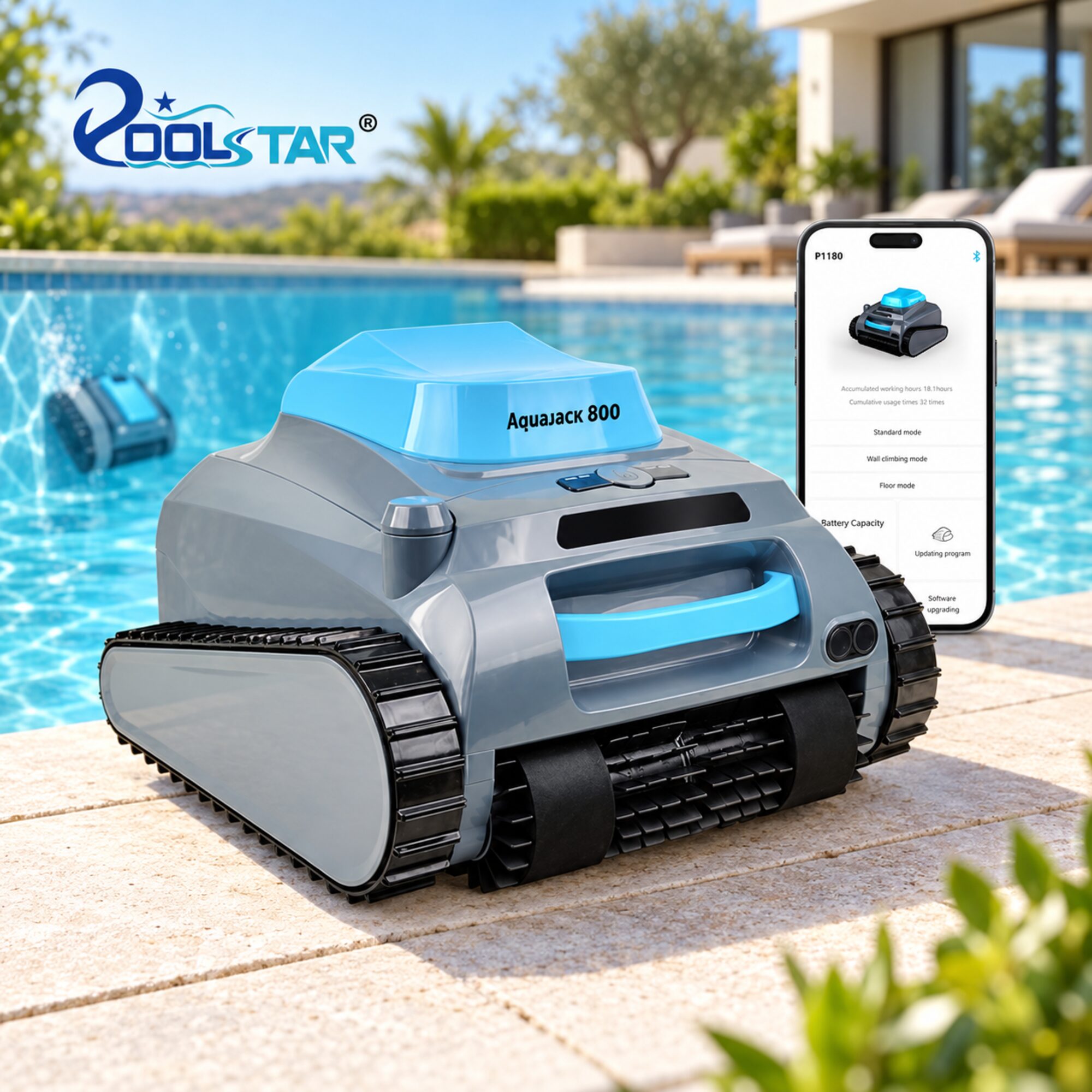
A robotic pool cleaner is designed exactly for this class. The Poolstar robotic pool cleaner range — including the Aquajack 800 cordless robotic cleaner and the cordless vacuum cleaners in the Aquajack 410 / 221 family — uses onboard filtration with a fine-mesh filter bag or canister to capture fine sediment as it travels the floor. The robot's strength is depth: it runs where the debris settles, and it filters with a mesh density that catches particles a surface skimmer would never see. The reference window for fine-mesh characterisation in industrial filtration is captured in ASTM E23 (Charpy notched-bar impact testing of metallic filter components) and the broader ASTM standards portal, which together set the mechanical-test vocabulary behind the published filter-mesh specs.
The verdict for class 3 is robot cleaner wins decisively. The two product classes separate cleanly by depth: skimmer on the surface, robot on the floor. A buyer asking a solar skimmer to handle sinking sediment is asking the wrong tool to work in the wrong column of water.
Debris Class #4 — Wall, Waterline, and Biofilm
Verdict: robot cleaner wins exclusively
Biofilm is the debris class that nobody talks about until they see it. It is the thin, sometimes discoloured microbial layer that forms on pool walls and especially along the waterline — the band where water surface meets wall and the sun-warmed ring of constantly-wet surface is exactly where biofilm grows fastest. Biofilm is a health-code issue (it harbours bacteria and reduces the effectiveness of sanitiser chemistry), not just a cosmetic one; it is the debris class that turns a nice pool into a pool with a problem if it is not scrubbed on a cycle. The OSHA pool-safety reference covers the broader pool-safety and water-quality framework.
A solar skimmer cannot touch biofilm. The skimmer drifts across the surface; the biofilm is on the vertical wall. Even at the waterline, the skimmer's contact is at the air-water interface, not on the wall itself. The skimmer is a horizontal tool trying to clean a vertical surface.
A robotic pool cleaner is the only category that handles biofilm. The Poolstar robotic cleaner range — the Aquajack 800 climbing cleaner in particular, which is engineered to track up vertical pool walls — uses its scrubbing brushes and the friction of its wheels to lift biofilm off the wall surface. Biofilm responds to repeated mechanical scrubbing on a cycle (typically every couple of days for a residential pool), and that is exactly what a robotic pool cleaner is designed to deliver.
The verdict for class 4 is robot cleaner wins exclusively. There is no solar skimmer class that competes for this job, because no solar skimmer is designed to scrub a wall. A buyer asking a solar skimmer to handle biofilm is asking the wrong tool to work on the wrong axis. The mechanical-test vocabulary behind the scrubber material is captured in ASTM A370, and the broader worker-safety framework around manual and automated pool operations is captured in OSHA's general standards.
Debris Class #5 — Large / Bulky Debris (Twigs, Acorns, Storm Debris)
Verdict: neither wins; manual scoop wins
A twig from an overhead tree. An acorn that fell before the storm. A clump of wet leaves that arrived in a single drop. A pine needle cluster. A small inflatable that escaped the swim school. These are the bulky, larger-than-mesh-basket debris items that show up after a windstorm or a heavy leaf-fall event, and they are the debris class that neither the solar skimmer nor the robotic pool cleaner handles particularly well.
A solar skimmer's mesh basket is sized for floating leaves, petals, and surface film. A twig wider than the basket mesh simply rides past on the water surface; the skimmer pushes it around rather than scooping it. The skimmer is excellent at its job but its job is not twigs.
A robotic pool cleaner's onboard filter is sized for fine sediment and small particles. A twig or acorn either clogs the filter immediately or jams the brush mechanism. The robot has to be retrieved, the filter cleared, and the cycle restarted. The robot is excellent at its job but its job is not twigs either.
The right answer for class 5 is a manual mesh scoop or a pre-filter basket mounted at the skimmer intake. Most pools come with a manual leaf rake or net; the pre-filter basket is a smaller coarse-mesh strainer that fits in the pool's existing skimmer port and catches bulky debris before it reaches the pump basket. Both are inexpensive, do the job in under five minutes per session, and leave the solar skimmer and robot cleaner to do what they do best. The pool-side safety framework is covered in OSHA's pool-safety reference, and the related ASTM F2208 standard covers pool-alarm safety equipment that complements the manual-scooping protocol.
The verdict for class 5 is neither product wins. The honest buyer deploys all three: solar skimmer for the surface, robotic cleaner for depth and walls, manual scoop for bulky debris. The trap is to expect any single product to cover all five classes; none of them can.
The Split That Wins — What the Poolstar Deployment Looks Like
The diagnostic lands here: five debris classes, five verdicts, one deployment. The deployment that wins is the one that respects what each product class does best and stops asking any single product to cover the others.
The AquaJack 900 solar-powered robotic pool skimmer covers classes 1 and 2 passively. Once deployed in the pool with the solar panel exposed, the unit runs on the surface during daylight hours, scooping leaves, petals, pollen, and surface film into its onboard collector. The deployment is a one-time placement; the runtime is hours per day during sun, with the battery carrying the overnight work. For the buyer who cares about the surface experience between robot cycles, the AquaJack 900 is the only category that addresses it.
The Poolstar robotic pool cleaner range covers classes 3 and 4 on a scheduled cycle. The Aquajack 800 cordless climbing cleaner is engineered for vertical surfaces and class 4 (biofilm) in particular; the Aquajack 410 and Aquajack 221 cordless vacuums cover class 3 (sinking sediment) on a quick cycle; the Inspiration L4 automatic pool cleaner covers both on a longer interval. The schedule that works for a typical residential pool is two to three cycles per week — frequent enough to suppress class 4 (biofilm) before it becomes a health-code issue, light enough to keep electricity and wear reasonable.
Manual mesh scoop covers what is left. A leaf rake or net, used after a storm or a heavy leaf-fall event, picks up the twigs and acorns that no automated product handles cleanly.
The solar robotic skimmer in action on the Poolstar site shows the AquaJack 900 doing exactly what the diagnostic describes — drifting across the pool, scooping the surface, requiring no operator intervention. The visual proof matters here, because the strength of the solar skimmer is its passive deployment, and that strength only becomes credible when the buyer sees it work without supervision.
That is the deployment that wins. Not one product, but the split — passive skimmer, scheduled robot, manual scoop for the bulky stuff. The split keeps the pool clean without either product being asked to do the other's job.
Three Buyer Questions Before You Buy
Before buying either product, three questions save a lot of regret.
The first question is what is your debris profile. A pool under a deciduous tree is class 1 and class 2 dominated — surface debris, pollen in spring, surface film from organic matter. A pool near a beach, a construction site, or a dirt road is class 3 dominated — sinking sediment that reaches the floor before the surface skimmer can catch it. A pool under a pine tree is class 5 dominated — pine needles overwhelm mesh baskets. The right deployment is the one that matches the dominant class, not the one that ignores the dominant class because the buyer wanted to buy only one product.
The second question is pool size and use frequency. The AquaJack 900 and its class competitors run longer in a smaller pool (less surface area per drift pass) and shorter in a larger one. A heavily-used pool accumulates all five classes faster than a lightly-used pool; the deployment that wins for a family-of-four pool is different from the deployment that wins for a vacation home used seasonally.
The third question is electricity and labour budget. A solar skimmer runs on daylight and battery, with no operator cost beyond placement and an occasional basket empty. A robotic pool cleaner consumes modest electricity per cycle and modest operator time. A manual scoop is no electricity, modest operator time per event. The deployment that wins for the budget-conscious buyer is the one that respects the cost structure of each product class. The relevant efficiency benchmarks are captured in EPA WaterSense and the U.S. Department of Energy residential-equipment guidance, both of which the AquaJack 900's solar-powered operating model aligns with.
These three questions answer themselves. A buyer who asks the three questions ends up with the right deployment; a buyer who does not ends up with the deployment they saw in a video and wonders why their machine, leaves, and acorns do not match the video. The reference framework for measurement and calibration behind any pool-equipment buying process is captured in NIST traceability standards.
Do I really need both a solar skimmer and a robot cleaner, or can one do the whole job?
One cannot do the whole job. The five debris classes split the work cleanly: floating organic (skimmer), sinking fine sediment (robot), wall and waterline biofilm (robot only), surface film (skimmer), bulky storm debris (manual scoop). A buyer who buys only a robot cleaner ends up with leaves on the surface every morning; a buyer who buys only a solar skimmer ends up with biofilm on the wall within a week.
Will a solar skimmer work in winter or in low-sun conditions?
Most solar pool skimmers include a battery that carries overnight and low-sun operation. A deep-winter pool at high latitudes does not run a skimmer; the deployment for a winterized pool is to drain and store the skimmer before freeze-up. In mild-winter climates where the pool runs year-round, the solar skimmer runs in the available sun, with the battery carrying the gaps.
How long does an AquaJack 900 run on a full solar charge?
The AquaJack 900 charges during daylight hours from the integrated solar panel and runs from its on-board battery during low-light periods. Typical daily runtime in fair-weather conditions is several hours of active surface work.
Can a robot cleaner replace the manual brushing of the wall and waterline?
For inground pools with smooth tile or vinyl surfaces, the Aquajack 800 climbing cleaner and similar robotic pool cleaners come close to replacing manual brushing. For tile pools with grout lines or pools with persistent biofilm in corners, periodic manual brushing is still the most reliable method. The robotic cleaner reduces the frequency of manual brushing from weekly to monthly or quarterly in most residential settings.
How often should a robotic cleaner run for a residential pool — daily, weekly, or only when needed?
Two to three cycles per week is the typical schedule for a residential pool with average debris load. Heavier use shifts the schedule to every other day; lighter use shifts to weekly. The schedule is a dial the buyer sets.
What about above-ground pools — does the same split apply?
The same split applies with one adjustment. Above-ground pools are shallower than inground, which makes the biofilm class (class 4) less of an issue but the surface debris class the same. The deployment is typically solar skimmer plus manual scoop plus occasional robotic cleaner or cordless handheld vacuum.
The Five-Class Split Is the Answer
The "solar skimmer vs robot cleaner" question, asked as a winner-take-all, has no honest answer. Asked as "which debris class does each tool win," the answer is clean: floating organic wins to the solar skimmer, surface film wins to the solar skimmer, sinking sediment wins to the robot cleaner, wall biofilm wins to the robot cleaner exclusively, and bulky storm debris wins to neither — the manual scoop is the right answer.
The deployment that wins is the split. Passive solar skimmer on the surface. Scheduled robotic cleaner for depth and walls. Manual scoop for the bulky. The split keeps the pool clean without either product being asked to do the other's job, and that is the deployment that buyers who ask the right diagnostic question end up with.
The AquaJack 900 is the surface-skimmer choice, the Poolstar robotic pool cleaner range is the depth-and-wall choice, and the total solutions page is where the OEM and ODM conversation opens for distributors and retailers.
Talk to Poolstar about the five-class deployment
Send your debris profile (under trees / near a beach / heavy pollen / etc.), pool size and shape, and typical use frequency. Poolstar will return a deployment recommendation covering the AquaJack 900 surface skimmer, the robotic pool cleaner range, and the manual scoop / pre-filter mesh basket that closes the loop — typically within two business days.