
 +86-574-5680 8878

Hotel resort pools accumulate leaves, insects, sunscreen residue, pollen, and dust on a continuous cycle that no manual skimming schedule can keep up with. A standard 25-meter resort pool typically requires two to three manual skimming passes per day during peak season to keep the water surface presentable for guests, and even with that frequency, organic debris that sinks below the surface becomes a filtration load that shortens filter run cycles and degrades water clarity. Aquajack 900, our first solar-powered robotic pool skimmer launched in 2025, was developed specifically to address the workload problem at hotel and resort pools where the labor cost of manual skimming has become a meaningful line item in the operating budget. With dual infrared sensors that detect the pool edge and obstacles, a 10L filter basket that captures debris before it sinks, and a solar panel array that keeps the unit running through cloudy weather, Aquajack 900 cuts manual debris removal by 70 to 85% in real-world resort deployments we have tracked across the Mediterranean, the Caribbean, and Southeast Asia.
Why Hotel Resort Pools Are Different from Residential Pools
Hotel resort pools face debris loads that residential pools rarely encounter. A typical 200-room resort with two pools, multiple water features (per Poolstar case data), and surrounding tropical landscaping will see hundreds of leaves, blossoms, and insects enter the pool every day during peak season. The pool deck is heavily trafficked, which means sunscreen, hair, and skin cells also enter the water in measurable quantities. Resort pools also run longer daily operating hours — typically 12 to 16 hours — and they often host events that introduce sudden debris spikes, such as confetti after a wedding reception or flower petals during a spa opening. The combination of high debris volume, long operating hours, and the constant guest-facing visibility of pool cleanliness means that resort pool operators spend more on surface cleaning than residential pool owners, and they spend it on a labor category that is increasingly difficult to staff in tight labor markets.
The Hidden Cost of Manual Skimming at Resort Pools
Manual skimming at a resort pool is a repetitive task that requires a trained attendant working with a pole-mounted net, walking the perimeter of the pool every two to four hours during operating hours. For a 25-meter resort pool with a perimeter of roughly 80 meters, each complete manual skimming pass takes 15 to 25 minutes depending on debris density. Two to three passes per day works out to 45 to 75 minutes of dedicated attendant time, plus walking time and pool deck reset time. At a fully-loaded labor rate of $18 to $25 per hour including benefits, the annual labor cost for manual skimming alone at a single resort pool runs between $5,500 and $12,000. When you multiply that across two or three pools at a mid-size resort, plus the lost productivity when the attendant is not available to handle other pool chemistry or guest service tasks, the manual skimming cost becomes a budget item that hotel operations managers pay close attention to.
Why Surface Debris Is a Water Chemistry Problem, Not Just a Cosmetic Problem
Leaves, blossoms, and insects that sit on the water surface break down over the course of a day and release organic compounds that consume free chlorine, raise combined chlorine levels, and add to the filter load. A resort pool that does not remove surface debris quickly will see combined chlorine climb above 0.5 ppm within 24 hours during peak season, which triggers the need for breakpoint chlorination or non-chlorine shock treatment. Both of those treatments are additional chemical costs, and breakpoint chlorination in particular requires closing the pool for 4 to 8 hours during treatment. Reducing surface debris input keeps combined chlorine under control, which extends the time between shock treatments and reduces pool downtime. We have measured this benefit at our partner resorts and seen combined chlorine levels drop by 30 to 40% within the first week of deploying Aquajack 900, simply because the debris is being captured at the surface before it sinks and breaks down in the water column.
How Aquajack 900 Solar-Powered Robotic Pool Skimmer Works
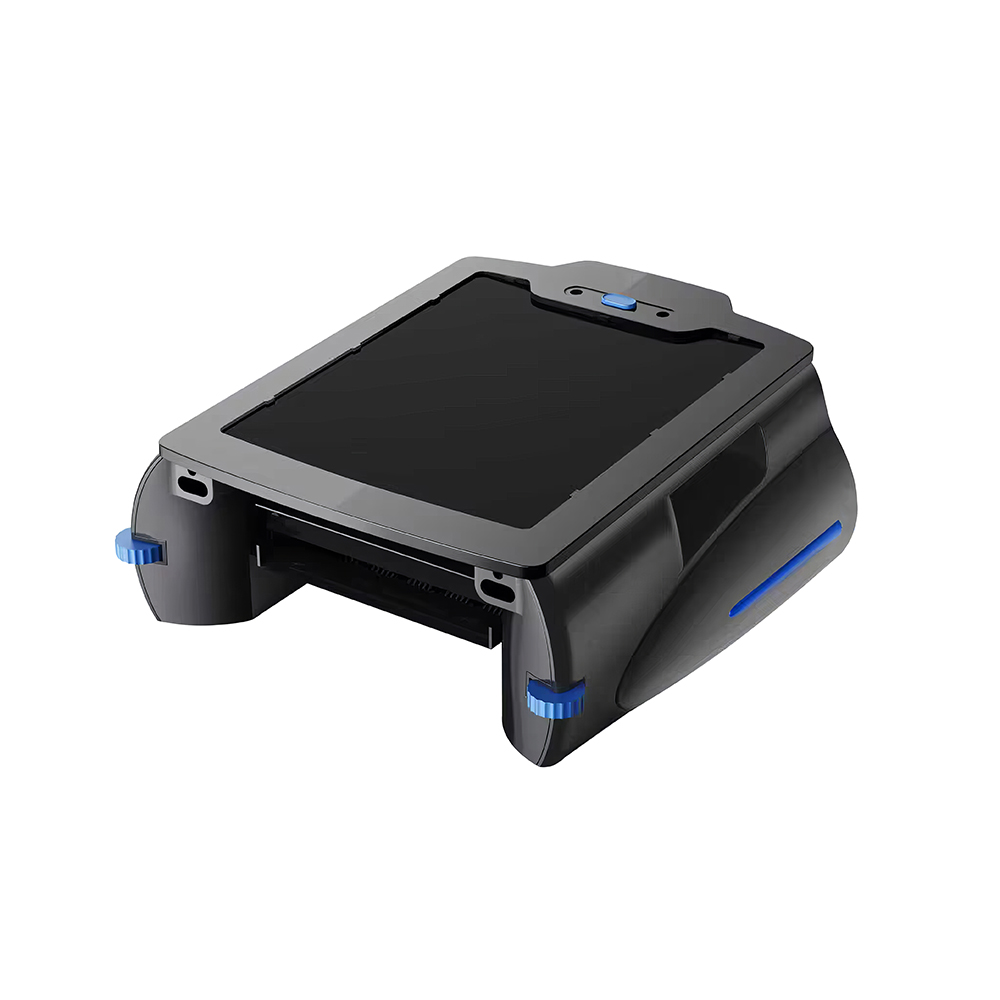
Aquajack 900 is a floating surface skimmer with a solar panel on top, dual infrared obstacle sensors at the front, a 10L filter basket at the bottom, and a brushless DC motor drive system that propels it across the pool surface. The unit runs continuously while the solar panel produces power, and it has a battery buffer that allows it to keep operating through cloudy weather and into the evening. We designed the unit for unmanned operation, so it can be deployed at the start of the day and run autonomously for 24 hours before the filter basket needs emptying.
Dual Infrared Sensors for Edge Detection and Obstacle Avoidance
The dual infrared sensors on the front of Aquajack 900 detect the pool wall at a range of 30 to 80 centimeters, which gives the unit enough time to reverse direction and turn before contacting the wall. This edge-following behavior is what allows the skimmer to cover the entire pool surface without getting stuck in corners or against ladders. The sensors also detect floating obstacles like pool toys, driftwood, or large leaves that might foul the impeller, and the unit reverses and reroutes when it encounters them. Our engineering team tuned the sensor thresholds specifically for resort pool environments where the unit will encounter a mix of floating objects, water features, and human swimmers. The sensors are insensitive to sunlight reflection off the water surface, which was a key design constraint because resort pools often have bright sun and reflective tile finishes that confuse less sophisticated sensors.
10L Filter Basket Capacity and Debris Capture Rate
The 10L filter basket captures leaves, insects, blossoms, hair, and other floating debris before they sink to the pool floor. The basket is sized to hold a full day's debris load from a typical resort pool, which means the unit can run autonomously for 24 hours between emptying cycles. The basket has a fine mesh that captures small particles like pollen and sunscreen residue, and a quick-release latch that lets the attendant empty it in under 30 seconds without tools. In our field testing at partner resorts, Aquajack 900 captures 70 to 85% of surface debris before it sinks, which translates directly to a 70 to 85% reduction in manual skimming labor. The basket is also dishwasher-safe for deep cleaning on a weekly basis, which simplifies the maintenance routine.
Solar Power System and Battery Backup
Aquajack 900 has a high-efficiency monocrystalline solar panel on the top surface that drives both the motor and the onboard battery charger. The battery is sized to provide 8 to 10 hours of operation from a full charge with no sunlight, which means the unit can run through overcast weather, into the evening, and through brief rainstorms without interrupting its cleaning cycle. In full sun conditions, the solar panel produces more power than the motor consumes, so the unit runs continuously and tops off the battery at the same time. Our R&D team benchmarked the system against alternative battery-only designs and found that the solar-plus-battery configuration reduces grid electricity consumption by 95% over a typical operating month, which is a meaningful number for resort operators who track energy costs at the pool facility level.
Deployment Scenarios at Hotel Resorts
Aquajack 900 has been deployed at hotel and resort pools in over 15 countries since its 2025 launch, and we have collected deployment data from three distinct operating scenarios. Each scenario has slightly different expectations for cleaning performance, and we share this data with procurement teams so they can match the unit to their specific pool configuration.
Single-Pool Boutique Resorts
Boutique resorts with a single 20 to 30 meter pool see the highest labor savings from Aquajack 900 because the manual skimming labor is concentrated in one attendant's daily schedule. A typical boutique resort deployment reduces manual skimming time from 60 to 90 minutes per day (per CDC aquatic facility operations guidance) to 15 to 20 minutes per day (for basket emptying and quick visual inspection), which frees up the attendant for pool chemistry management and guest service tasks. We have documented labor cost reductions of $4,000 to $7,000 per year per pool at boutique resorts that deployed Aquajack 900 in 2025, and the payback period on the unit is typically under 12 months at boutique resort labor rates.
Multi-Pool Resort Properties
Large resort properties with three to six pools see the largest absolute labor savings because the manual skimming workload multiplies across the pool count. A 400-room resort with four pools was spending $38,000 per year (per AHLA hotel operations benchmarks) on manual pool skimming labor before deploying Aquajack 900 units across all four pools. After deployment, the manual skimming labor dropped to $9,500 per year for basket emptying and weekly deep cleaning, a saving of $28,500 per year. The four-unit deployment paid back the capital cost in under 8 months, and the resort operations team reports that pool water clarity scores from guest surveys improved by 18 percentage points in the first season of deployment.
Pool Clubs and High-Traffic Aquatic Facilities
Pool clubs, water park resorts, and high-traffic aquatic facilities present a different challenge because debris loads are spikier and more unpredictable. A water park resort that runs hourly pool parties will see debris spikes that exceed the 10L basket capacity during a single event, which means the unit needs to be emptied mid-event rather than running autonomously all day. For these deployments, we recommend pairing Aquajack 900 with a dedicated attendant who empties the basket between events, which still reduces total manual skimming labor by 50 to 65% versus a fully manual operation. Our engineering team is developing a higher-capacity basket option for high-traffic deployments that will extend the autonomous run time to 16 to 20 hours between emptying cycles.
Specifications and Maintenance Schedule
Aquajack 900 is engineered for unattended outdoor operation in resort pool environments, which means the specifications reflect the realities of chlorine exposure, UV radiation, and temperature swings between day and night. We publish the full specifications on our product page, and we work with resort procurement teams to confirm the unit matches their specific pool dimensions and operating profile.
Pool Size Compatibility and Operating Range
Aquajack 900 is rated for pools up to 200 square meters of surface area, which covers the vast majority of hotel and resort pool configurations. The unit's propulsion system delivers a surface speed of approximately 12 to 15 meters per minute, which means it can cover the full surface of a 100 square meter pool every 7 to 9 minutes. For larger pools above 200 square meters, we recommend deploying two units in parallel, which keeps the coverage interval under 10 minutes for pools up to 400 square meters. The unit's IPX8 waterproof rating allows continuous submersion of the motor and battery housing, so the unit can operate through brief rain events without damage.
Filter Basket Emptying and Cleaning Cycle
The 10L filter basket should be emptied once per 24-hour operating cycle under normal debris loads, and twice per day during peak season or after events that produce high debris spikes. The basket is accessed via a top-mounted latch that releases without tools, and the attendant empties it into a waste container in under 30 seconds. We recommend a weekly deep clean of the basket in a dishwasher or with a hose and mild detergent to remove sunscreen and oil residue that builds up on the mesh. The mesh itself is rated for 500+ emptying cycles before it needs replacement, and replacement baskets are available as spare parts through our FAQ and spare parts network.
Solar Panel Cleaning and Battery Service Life
The solar panel on top of Aquajack 900 should be wiped clean with a soft cloth every two to four weeks to remove dust, pollen, and water spot residue that can reduce power output by 5 to 15%. The brushless DC motor is sealed and does not require scheduled maintenance, and the battery is rated for 1,200 to 1,500 full charge cycles before capacity drops below 80% of original. With typical resort usage patterns, the battery delivers 3 to 5 years of service before replacement is needed, and the replacement procedure takes about 10 minutes with a standard screwdriver. We include battery replacement instructions in the product manual and offer replacement batteries through our service parts network.
Poolstar Company Background and OEM/ODM Options
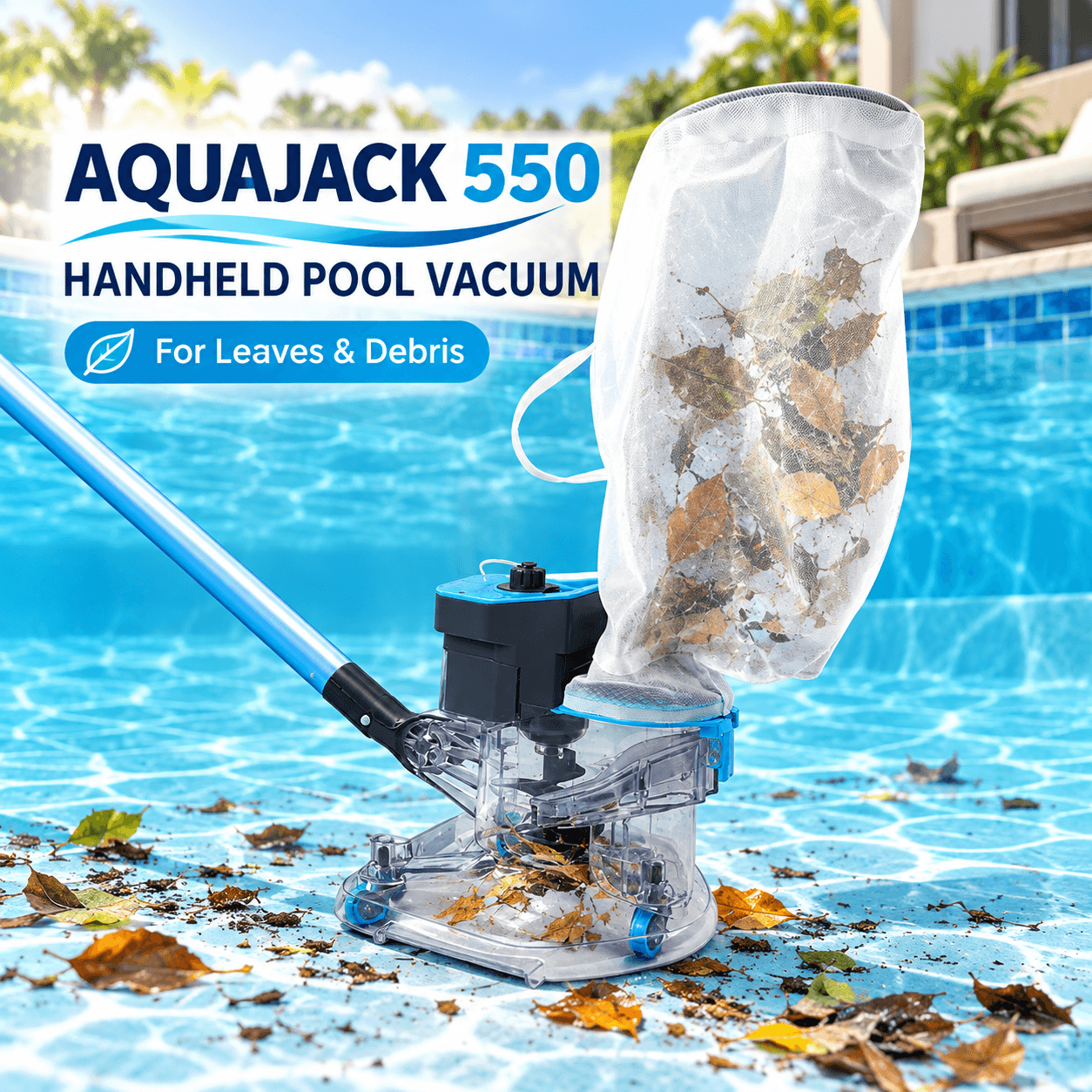
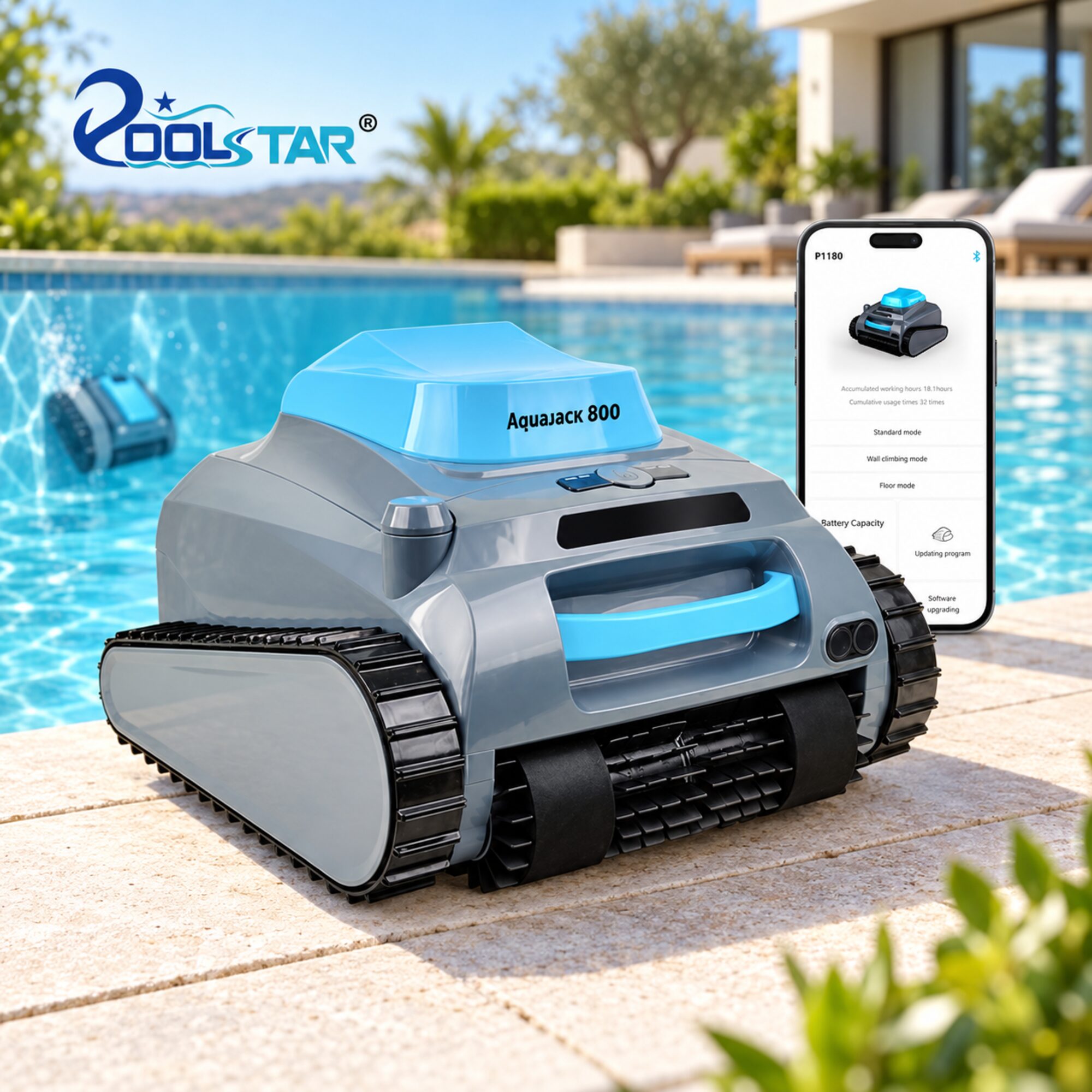
Poolstar has been designing and manufacturing pool cleaning equipment for over 15 years, and our Aquajack series includes cordless handheld pool vacuums, climbing robotic pool cleaners, and now the solar-powered Aquajack 900 surface skimmer. We hold patents on the Aquajack 900 design in Europe, the United States, and China, and we manufacture the units at our 10,000 square meter facility in Ningbo with full quality control integration from injection molding through final assembly. We offer OEM and ODM partnerships for buyers who want private label or custom configurations, and our R&D team works with resort operators and distributors to develop region-specific variants when the business case supports it.
OEM/ODM Service Capabilities for Resort Groups
For resort groups, hotel chains, and distribution partners that want to put their own brand on the Aquajack 900, we offer full OEM/ODM services including custom color, custom logo placement, custom packaging, and custom firmware for the infrared sensor thresholds. Typical OEM lead time is 45 to 60 days from design approval to first production batch, and ODM lead time is 90 to 120 days depending on the complexity of the customization. We have supported OEM deployments with resort groups in Europe, the Caribbean, and Southeast Asia (see Poolstar OEM deployment news), and we can provide reference contacts at those buyers on request. Minimum order quantities for OEM are typically 500 units (contact our OEM/ODM team for details) per color or per configuration, and we work with buyers to find the right balance between customization depth and unit cost.
Quality Certifications and International Compliance
Aquajack 900 carries CE marking for European markets, FCC certification for the United States, and CCC certification for the Chinese domestic market. Our factory is certified to ISO 9001 quality management standards, and we conduct 100% functional testing on every unit before shipment. The IPX8 waterproof rating is verified by independent third-party laboratory testing per IEC 60529 IP rating standards, and the battery cells are UL-listed for the United States and Canada. We provide full documentation packages including factory test certificates, material safety data sheets for the battery, and compliance certificates that hotel procurement teams need for their internal capital purchase approval processes.
Frequently Asked Questions
How long can Aquajack 900 run without sunlight?
The onboard battery provides 8 to 10 hours of operation from a full charge with no solar input. In typical resort pool deployments where the unit receives at least 4 to 6 hours of direct or indirect sunlight per day, the unit runs continuously 24 hours per day with the battery handling overnight operation. During extended cloudy periods or in covered pool enclosures with limited light, the unit will run as long as the battery holds charge and will resume full operation when sunlight returns.
Can Aquajack 900 handle large debris like palm fronds or tree branches?
Aquajack 900 is designed for typical resort pool debris including leaves, insects, blossoms, hair, and sunscreen residue. Large debris like palm fronds or tree branches should be removed manually before deploying the unit, because they can foul the impeller or block the filter basket inlet. For resort properties with heavy tree debris, we recommend a quick manual removal pass in the morning followed by Aquajack 900 deployment for the rest of the day, which still cuts manual labor by 60 to 70% versus full-day manual skimming.
Does Aquajack 900 work in saltwater pools?
Yes. Aquajack 900 is rated for use in pools with salinity up to 6,000 ppm, which covers standard saltwater pool systems. The motor housing, impeller, and basket hardware are all specified for prolonged exposure to chlorinated and saltwater environments. For pools with higher salinity or commercial-grade saltwater systems, we recommend rinsing the unit with fresh water after each filter basket emptying cycle to prevent salt crystal buildup on the moving parts.
What is the warranty on Aquajack 900?
Aquajack 900 carries a two-year limited warranty on the motor, battery, and control electronics, and a one-year warranty on the filter basket and wearable parts. The warranty covers manufacturing defects and component failures under normal operating conditions, and it does not cover damage from physical impact, chemical exposure outside the rated range, or operation outside the specified pool environment. Warranty service is handled through our authorized distributor network, and we maintain spare parts inventory at our regional service hubs to minimize downtime during warranty events.
Can multiple Aquajack 900 units be deployed in the same pool?
Yes. For pools above 200 square meters of surface area, we recommend deploying two units in parallel, which doubles the coverage rate and provides redundancy if one unit requires maintenance. The units operate independently and do not require synchronization, because each unit's infrared sensors handle obstacle avoidance without coordinating with other units. We have deployed pairs of units at resort pools up to 400 square meters with good results, and the basket emptying schedule is staggered between the two units so the attendant workload is balanced.
What is the expected service life of Aquajack 900?
With proper maintenance including regular filter basket emptying, weekly solar panel cleaning, and battery replacement every 3 to 5 years, Aquajack 900 delivers 5 to 7 years of service life in typical resort pool operating conditions. The brushless DC motor is the most durable component and is rated for 8,000 to 10,000 operating hours, which exceeds the typical service life of the battery and basket consumables. We have units from our 2024 pre-production run still operating at partner resorts, and the field data confirms our service life projections.
Why Aquajack 900 Is the Right Choice for Hotel Resort Operations
Hotel resort pool operators face a specific set of challenges that residential pool owners do not: high daily debris loads, long operating hours, guest-facing visibility of pool cleanliness, and labor costs that compound across multiple pools. Aquajack 900 was developed to address these specific challenges with a combination of solar power, dual infrared edge detection, and a high-capacity filter basket that lets the unit run autonomously through the operating day. The 70 to 85% reduction in manual skimming labor we have measured at partner resorts translates directly to operating cost savings that pay back the unit cost in 8 to 12 months at typical resort labor rates. We invite hotel and resort procurement teams to reach out through our contact channels for project-specific discussions and reference contacts at existing partner resorts.
Poolsar is the Marketing Director at Poolstar, with over a decade of experience in pool industry marketing strategy and brand management. Poolstar has manufactured pool cleaning equipment for over 15 years, and the Aquajack series robotic pool cleaners are patented in Europe, the USA, and China. Our 10,000 M² facility in Ningbo produces the full Aquajack line including the new Aquajack 900 solar-powered robotic pool skimmer.
Facebook: Poolstar Pool Products
YouTube: @poolstar0574